
An acrylic sheet weight calculator is useful only when the density behind it is stated. The arithmetic is one line: area in square metres, times thickness in millimetres, times 1.19, gives kilograms. Everything else in this article is about the places where that line is wrong by enough to matter on a freight invoice.
The table an acrylic sheet weight calculator should reproduce
- 2 mm: 2.38 kg per square metre
- 3 mm: 3.57 kg
- 4 mm: 4.76 kg
- 5 mm: 5.95 kg
- 6 mm: 7.14 kg
- 8 mm: 9.52 kg
- 10 mm: 11.90 kg
- 12 mm: 14.28 kg
- 20 mm: 23.80 kg
- 30 mm: 35.70 kg
- 50 mm: 59.50 kg
A 1220 x 2440 mm sheet is 2.977 square metres, so the same numbers multiplied by 2.98 apply directly: 10.6 kg at 3 mm, 35.4 kg at 10 mm.
Cut panels, offcuts and the crate
Cut panels are priced by the panel, but they travel by the crate. The crate weight is the sum of every panel plus packing, and packing for acrylic is more than people expect: interleaving film at roughly 0.05 kg per square metre, plywood crates at 25 to 40 kg for a standard 2 x 3 m box, and dunnage.
A 500 kg panel order commonly ships as a 620 kg crate. Freight quoted on the panel weight alone will be short by about 20 per cent.
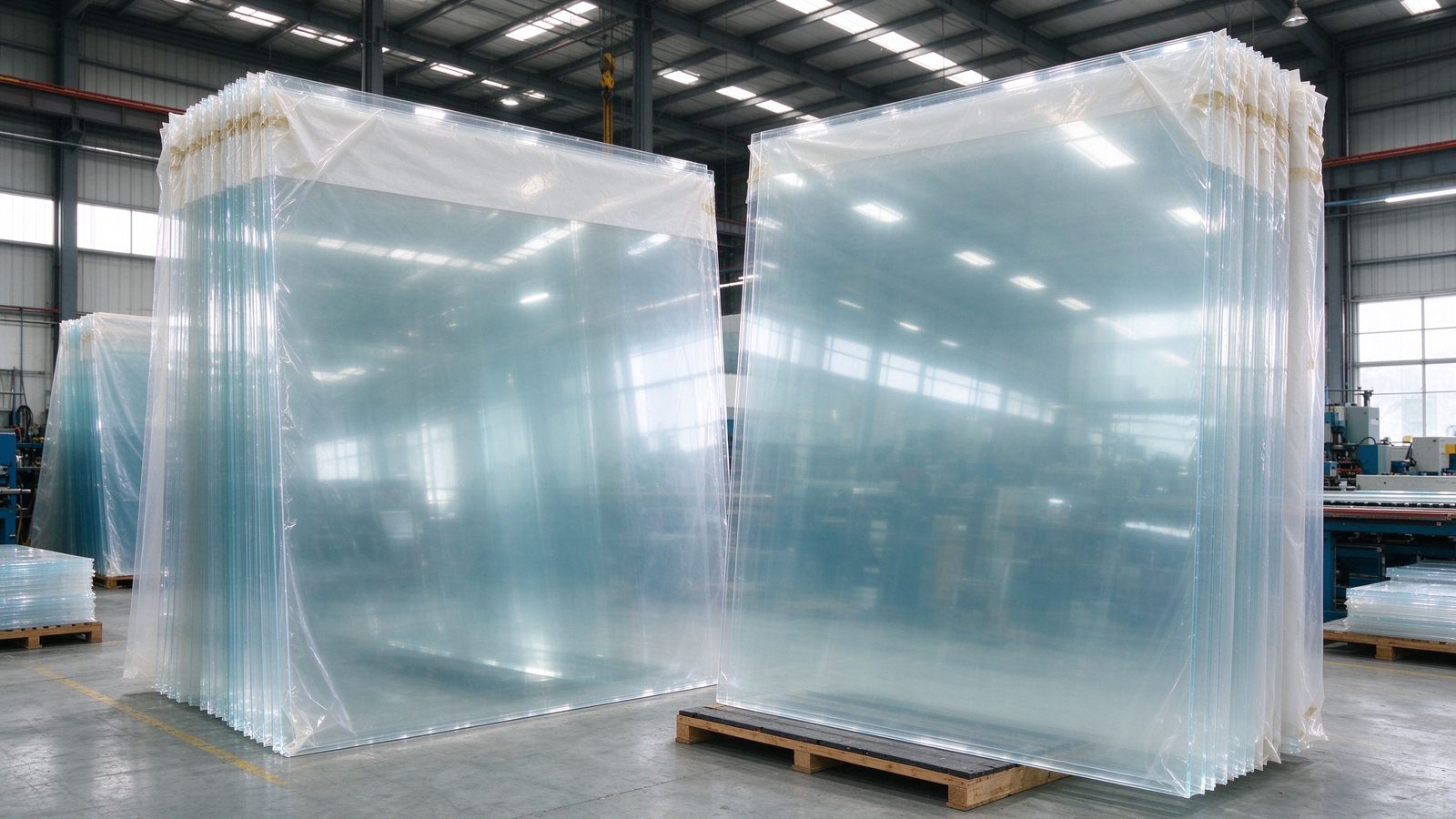
The weighed sheet as a thickness gauge
A calibrated scale is a more honest thickness check than a pair of calipers used by three different people. Weigh one sheet from each crate, divide by area, divide by 1.19, and the result is the average thickness in millimetres.
A nominal 5 mm sheet that weighs 5.4 kg per square metre measures 4.5 mm. That is outside most tolerance bands and worth raising before the sheet is cut, because after cutting the evidence is in the offcut bin.
Where the arithmetic breaks down
Three cases: coloured sheet, where pigment adds a fraction of a per cent and can be ignored; mirrored sheet, where the coating adds about 0.02 kg per square metre and can also be ignored; and thick cast block, where the cast surface is not perfectly parallel and a single weighing gives an average rather than a minimum.
For anything above 30 mm, weigh and measure at nine points. The average is what the invoice uses; the minimum is what the engineer needs.
Freight classes and the volumetric trap
Acrylic is light and bulky, so sea freight is charged on volume and air freight on volumetric weight, usually 1 cubic metre to 167 kg. A crate of 10 mm sheet is heavy enough to be charged on actual weight; a crate of 2 mm sheet is almost always charged on volume.
That inverts the usual intuition: thin sheet is expensive to fly, thick sheet is not. If a project needs a small quantity quickly, shipping 8 mm instead of 4 mm can cost less per square metre in the air.
Ordering with the number in hand
Freight forwarders ask for three figures: net weight, gross weight and volume. A supplier who can give all three at quotation stage is a supplier who has shipped the product before.
The dimension conventions that make those figures reliable are set out in the acrylic sheet dimensions note, and the tolerance side of the same question is covered in the thickness tolerance guide.
Check the first crate with a scale before signing. It takes ten minutes and settles both the thickness question and the freight question at once.
Need weights for a freight quote? Send dimensions and thicknesses to oversales@rpplexiglass.com and we will return the crate and pallet figures.
Frequently Asked Questions
What is the density of acrylic sheet?
Cast PMMA is about 1.19 g per cubic centimetre, or 1190 kg per cubic metre. Extruded sheet runs marginally lighter at 1.16 to 1.18, which is a rounding error in freight terms.
How much does a 1220 x 2440 mm sheet weigh?
At 3 mm about 10.6 kg, at 5 mm 17.7 kg, at 10 mm 35.4 kg and at 20 mm 70.8 kg. Multiply area in square metres by thickness in millimetres by 1.19 to check any size.
Why is my sheet lighter than the calculator says?
Usually a thickness shortfall, not a density difference. A nominal 5 mm sheet at 4.6 mm weighs about 8 per cent less, which is exactly the kind of saving a thin tolerance band provides.