
An acrylic orchid cabinet panel passes light, holds warmth and has to stay clear of condensation.
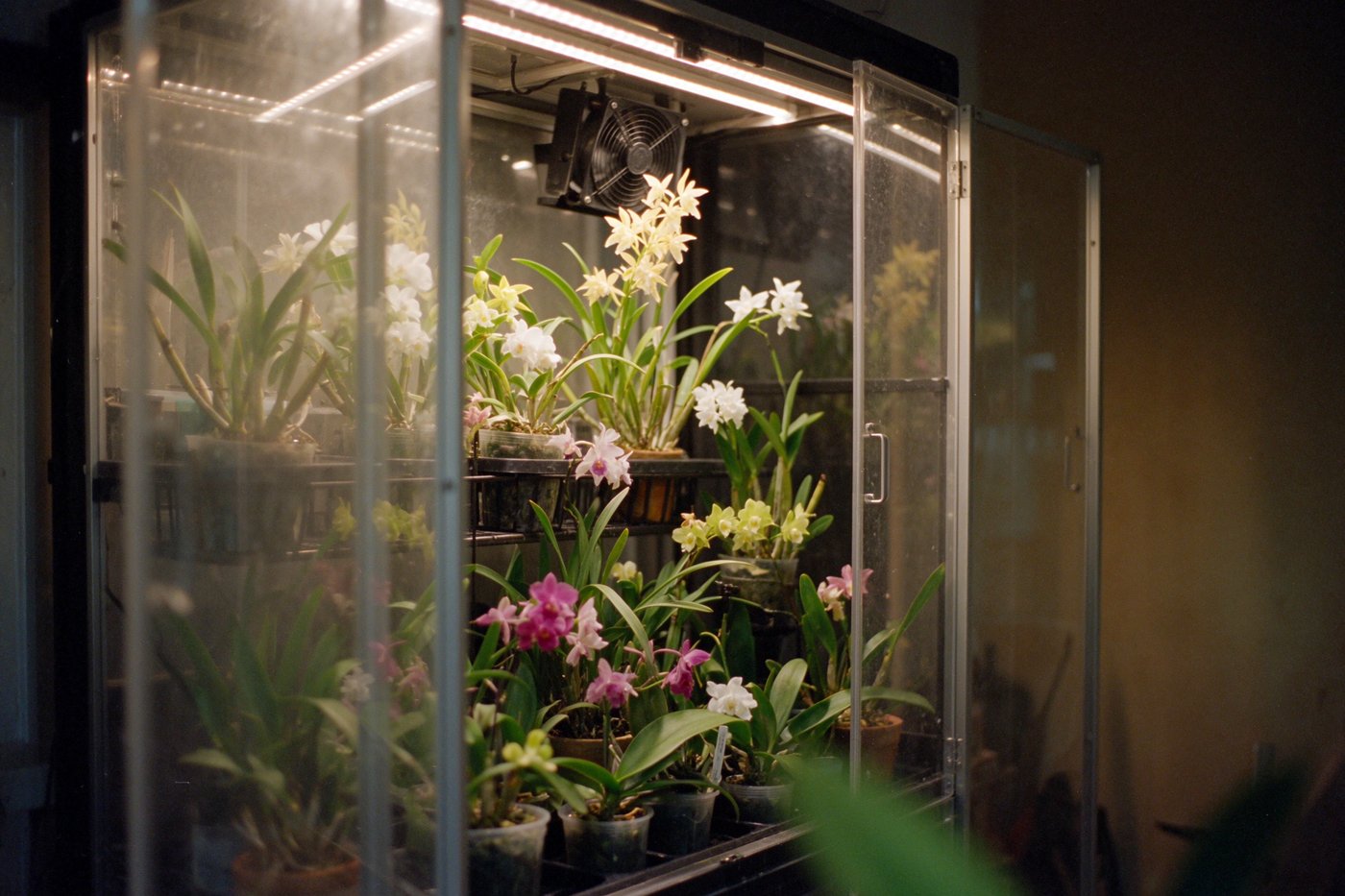
A grower in Singapore built four orchid cabinets with 6 mm glass and replaced all of them within a year. The problem was not the plants: the glass cut light by roughly 12 percent more than the acrylic cabinets next to it, and the condensation on the inner face dripped onto the crowns. The acrylic version, with a slight slope and a fan, has run for three years.
An acrylic orchid cabinet panel does three jobs at once. It passes light with less loss than glass, it holds warmth and humidity, and it can be cut and drilled to take fans and vents without a glazing frame. The detail that decides success is airflow, not the panel.
Light transmission and the colour of the sheet
Clear cast acrylic transmits around 92 percent of visible light at 5 mm, which is several points ahead of ordinary float glass and well ahead of frosted or tinted sheet. For orchids under LED, that difference shows in leaf colour and in flowering within a season. Keep the panel clear unless the cabinet sits in a room with too much sun.
Where the cabinet faces a bright window, a bronze or grey tint reduces heat load without cutting the blue band orchids use. Approve the tint on a sample against the room light, because a tint that looks neutral in the shop can read green in a warm room.
Airflow, vents and the condensation line
- Put the intake low and the exhaust high, with a small fan moving air across the panel face rather than into it
- Slope the front panel a few degrees so condensate runs to the base instead of dropping on plants
- Size vents for a full air change every few minutes in a humid cabinet, not for a sealed box
- Keep the fan off the leaf zone; orchids dislike direct draught as much as stagnant air
The Singapore cabinets failed because the inner face was the coldest surface in the box. Warm humid air met it, condensed, and the drops fell. A fan aimed along the panel keeps the surface closer to air temperature and the drops never form.
Cutting, drilling and the frame
Fan holes need 3 mm clearance around the body and a rubber grommet, not a bare hole. Any hole within 50 mm of a corner should be moved: that is where the panel is weakest and where cracks start. If the cabinet has a metal frame, do not clamp the panel on all four sides; leave one edge free for movement.
RP River People Plexiglass cuts orchid cabinet panels to the drawing, drills fan and vent openings and polishes edges. Send the cabinet elevation, the light source and the vent layout for a quotation.
Send the cabinet drawing, light source and vent layout to oversales@rpplexiglass.com for a cut and drilled panel quotation.
Light transmission and UV exposure are covered together in our note on UV-resistant acrylic sheet.
Frequently Asked Questions
Is acrylic better than glass for an orchid cabinet?
It transmits more visible light at the same thickness, weighs less, and can be drilled for fans without a frame. Glass is harder to scratch but heavier and less flexible to build around.
Why does condensation form on the inside of the panel?
The panel is the coldest surface in a warm humid box. Moving air across the face with a small fan keeps it closer to air temperature and stops the drops.
What thickness should the panels be?
Five millimetre cast is enough for most cabinets up to about 900 mm wide. Larger fronts need 6 mm or a mid-rail so the panel does not bow under fan pressure.