
An acrylic reptile terrarium panel holds humidity and heat at the same time, which is where most builds fail.
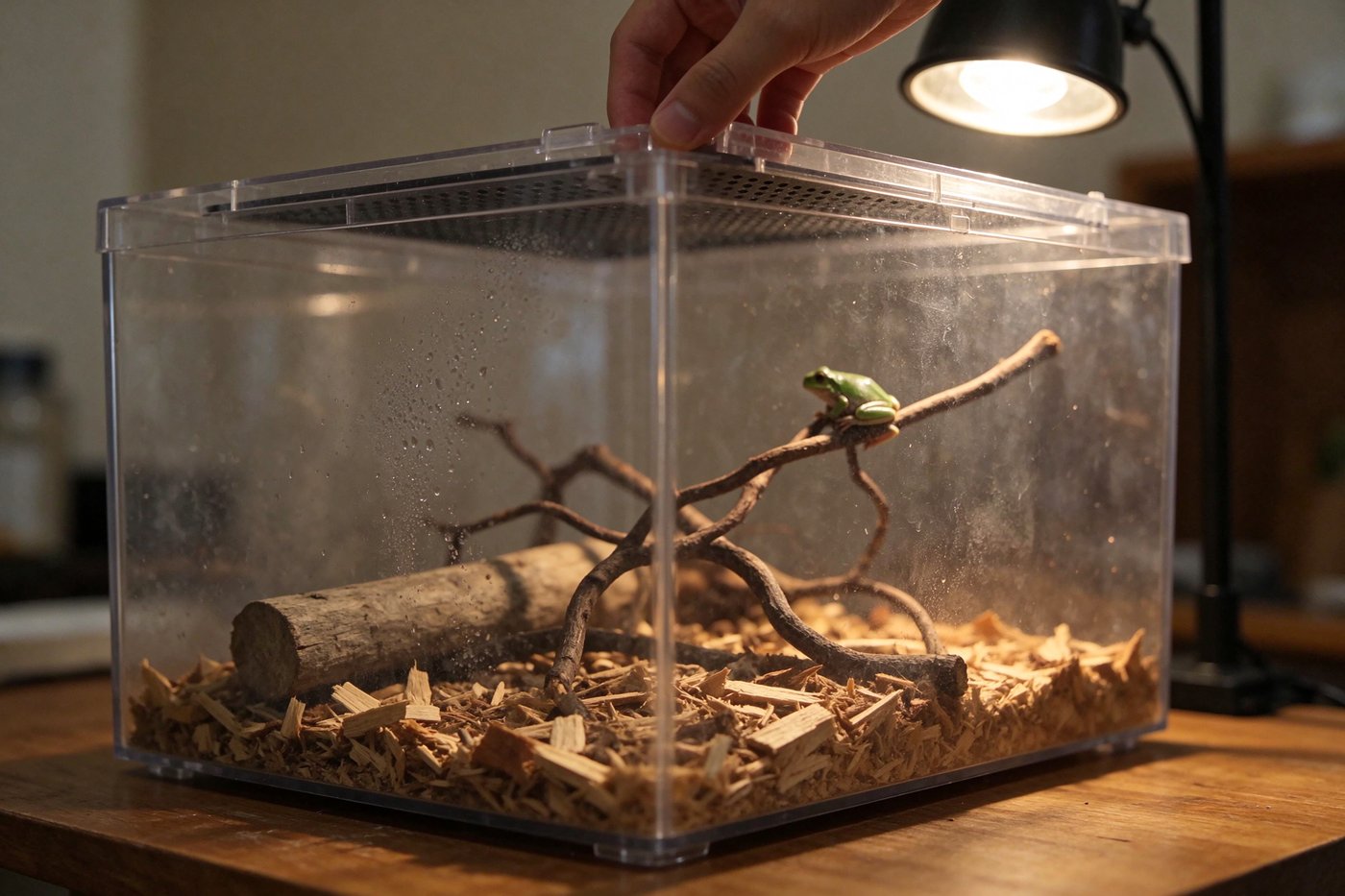
A breeder in Birmingham lost three juvenile geckos in one week when a terrarium lid warped and left a gap at the front edge. The box was a wooden frame with an acrylic front, and the heat lamp sat 40 mm above the acrylic. The panel had bowed toward the lamp and pulled the seal apart.
An acrylic reptile terrarium panel has to hold humidity in, let light and heat through, and stay stable while both are happening. Acrylic does the first two well and struggles with the third if the lamp is too close or the panel is bonded rigidly into a frame that moves differently.
Plate, vents and the humidity balance
Five millimetre cast acrylic is the practical wall for a 600 mm wide terrarium at 400 mm height. The top should be a vented acrylic lid rather than a mesh screen if the species needs 60 to 80 percent humidity; mesh dries the air too fast and forces constant misting. Two sliding vent plates give control without a draught.
Bond the corners with a solvent adhesive and fillet the inside joint. A butt joint alone will fail at the bottom where the substrate presses against the wall. Avoid silicone as the only joint on a humid box: it holds initially and then peels from the acrylic at the water line.
Heat, distance and thermal expansion
- Keep a ceramic heat emitter at least 150 mm above the acrylic, with a reflector, or the panel will bow and yellow
- Leave 2 mm of clearance at each edge where the panel sits in a frame
- Put a thermostat probe inside the box, not on the glass, so the lamp does not run flat out
- Use a UVB tube for the light the animal needs; acrylic blocks most UVB, so the tube must sit inside the box
The Birmingham failure had two causes: the lamp was far too close, and the panel had been sealed into the frame with silicone on all four edges. The fix was a standoff bracket, a different lamp position and a panel held on two edges only, free to move on the other two.
Cleaning without crazing the panel
Reptile enclosures get wiped often. Chlorine-based disinfectants, alcohol and vinegar all attack acrylic over time, and the crazing appears first along the bottom edge where substrate and moisture meet. Use a mild soap, a soft cloth, and a full rinse, and keep the panel dry where it meets the frame.
RP River People Plexiglass supplies terrarium panels cut to size, with vented lids, bonded corners and edge polishing. Send the enclosure dimensions, species humidity target and lamp position for a quotation.
Send the enclosure dimensions, target humidity and lamp position to oversales@rpplexiglass.com for a panel and lid quotation.
Vent placement and lid geometry for a humid box are worked through in our acrylic terrarium panel guide.
Frequently Asked Questions
Does acrylic block the UVB my reptile needs?
Most of it, yes. A UVB tube has to be mounted inside the enclosure, under the acrylic, or the animal gets very little of the useful band.
Is 5 mm enough for a large terrarium?
Up to about 600 mm wide and 400 mm high, 5 mm is adequate. Larger boxes need 6 to 8 mm or a frame, because a long unsupported side bows under humidity and heat.
Can I use a glass terrarium instead?
Glass is heavier, harder to cut, and fogs more readily. Acrylic is lighter, bonds into a sealed box and insulates slightly, which helps hold humidity.