
An acrylic butterfly display case is a working drawer that gets opened, stacked and moved.
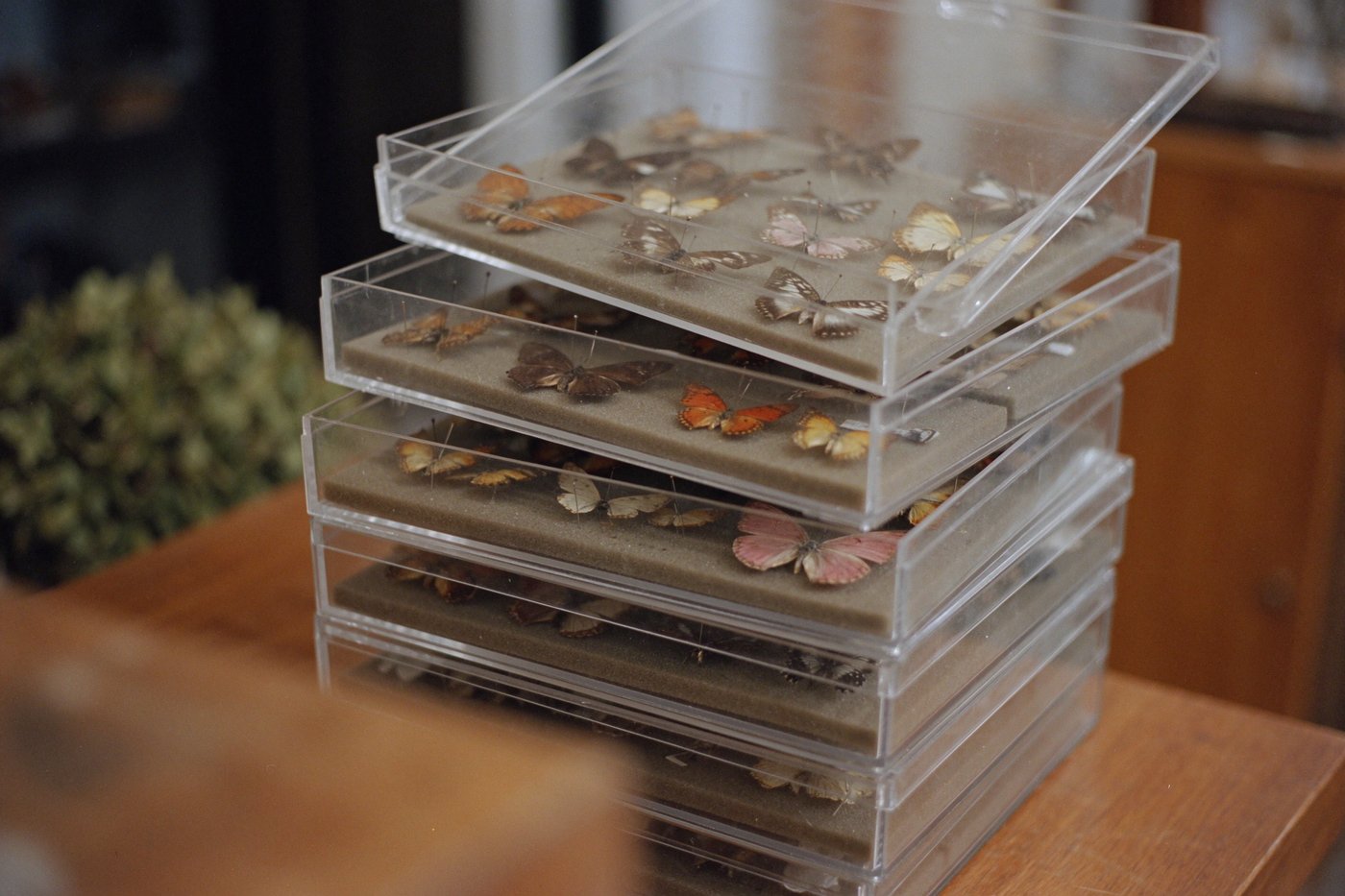
A natural history society in the Netherlands moved 1,400 butterflies from wooden drawers into acrylic boxes over one winter. Two years later, 40 of the boxes had warped lids and 12 had dermestid damage around the lid line. The boxes were 3 mm extruded sheet, built as a simple five-sided box with a flat lid and no locating lip.
An acrylic butterfly display case is a working storage unit, not a decorative dome. It gets opened for inspection, stacked, moved, and stored in a room where the humidity changes with the season. The design has to survive all of that with a lid that still seats after a hundred openings.
Why cast 4 mm rather than extruded 3 mm
Cast acrylic holds its shape better under a stack and does not develop the internal stress that makes extruded sheet crack at a bonded corner. Four millimetre is stiff enough for a drawer up to about 300 x 400 mm without a frame, and it still keeps the case light enough to lift with one hand.
The lid needs a locating lip, not just a flat plate. A 15 mm deep acrylic skirt around the lid, sitting outside the box walls with 0.5 mm clearance, stops the lid sliding and closes the dust path that a flat lid leaves at the joint. Add a small tab so the lid can be lifted without prying at a corner.
Inside the drawer: pinning board, labels, desiccant
- Use a 10 mm foam or cork pinning board, cut to sit loose in the base so it can be replaced without rebuilding the box
- Label the base with a waterproof printed slip under the board, not on the outside where it gets worn
- Keep a small desiccant sachet in a corner compartment for humid stores
- Leave 25 mm of clear space above the tallest specimen so wings are never touched by the lid
Dermestid beetles are the real enemy of a butterfly collection. They enter through the lid joint and through the pinning board. Sealing the lid line and freezing incoming specimens before they go into the drawer does more than any chemical treatment.
Stacking, light and handling
Stacked drawers carry load through the walls, so the base of each box should be 4 mm and the walls 4 mm, with the corners filleted. Do not stack more than five high without a shelf. Keep the collection out of direct sun: even with acrylic blocking part of the UV, mounted specimens fade at the wing tips first.
RP River People Plexiglass produces butterfly and insect drawers cut to a standard footprint, with locating lids, pinning boards and label slips. Send the drawer size and the number of units for a quotation.
Send the drawer footprint, depth and unit count to oversales@rpplexiglass.com for a bonded drawer quotation with lids and boards.
Collections that are stacked rather than hung need a framed case, and the build detail is in our acrylic model case guide.
Frequently Asked Questions
Why not use glass for a butterfly drawer?
Glass is heavier, breaks in handling and cannot be bonded into a light drawer. Acrylic is lighter, safer in a stacked collection and easy to cut to a standard footprint.
How do I keep dermestids out?
Seal the lid line with a locating lip, freeze incoming specimens before storage, and keep the pinning board replaceable. Chemicals are a supplement, not the primary defence.
Can the drawers be stacked?
Yes, up to about five high on a shelf, provided the base is 4 mm and the corners are filleted. Beyond that the load is carried by the shelf, not the boxes.