
Acrylic rod cut to length is a tolerance conversation disguised as a cutting service. A display manufacturer ordered 4,000 clear acrylic rods, 12 mm diameter, 380 mm long, for a modular shelving system. The first container arrived with 6% of the rods 2 to 3 mm over length, which jammed the assembly jig, and 11% with a chipped end that showed through the clear shelf. The order was technically to drawing and commercially unusable.
Cutting acrylic rod to length is not a saw operation with a tape measure. The diameter tolerance, the cut method, the end finish and the packing each contribute to whether the part fits, and they are usually quoted as one line item called cutting.
Cast rod for machining, extruded rod for volume
Cast rod machines cleanly, bonds with solvent cement and holds a flame-polished end without bubbling. It is available from 3 mm to 100 mm and is the right choice for anything structural, bonded or visible under light. Extruded rod is cheaper in long runs, holds a tighter diameter, and carries stress that shows as crazing when the end is machined or the rod is drilled.
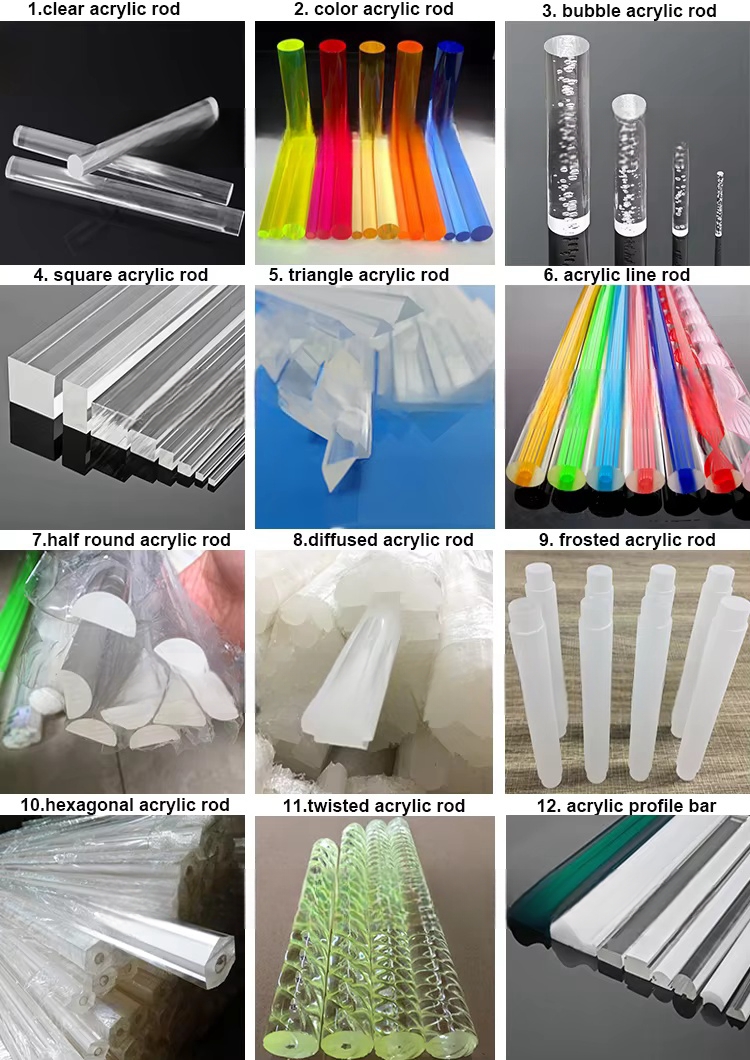
Diameter tolerance is normally plus or minus 0.3 mm for cast rod below 30 mm and plus or minus 0.5 mm above. If the rod has to slide inside a tube or a bore, specify the fit rather than the nominal: a 12 mm rod in a 12.2 mm bore will rattle, and an h9 tolerance on the rod is a different product from a stock length.
Acrylic rod cut to length: cutting method and tolerance
A fine-tooth carbide blade at 3,000 rpm with a slow feed gives a clean cut with minimal chip-out on rod up to 30 mm. Above that, a cold saw with a clamp and a backer is the reliable method, because a 60 mm rod that is not clamped will grab and shatter. Never cut a bundle of rods in one pass: the rods roll, the blade grabs and the ends chip.
Length tolerance of plus or minus 0.5 mm is realistic for cut rod; plus or minus 0.1 mm requires milling both ends, which is a different price. State which one the assembly needs. Most display systems work at plus or minus 1 mm, and paying for 0.1 mm is money spent on a jig that will not use it.
End finish and what it does to the price
A sawn end is matte and shows tool marks. A flame-polished end is clear and slightly domed, and it is what a visible rod end needs. A machined and buffed end is the highest finish and the only one that holds a precise length and a square face at the same time. Each step adds cost, so specify per face: a rod seen from one end only needs one polished face.
The polishing sequence for a clear end, including flame temperature and buffing compounds, is covered in our note on polishing acrylic rod ends.
Packing: straight, dry and separated
Rods scratch each other in transit. Wrap in a soft interleaving film, bundle in a rigid tube or a lined crate, and support the bundle every 600 mm so it cannot bow. Label the crate with the length and the diameter, and state the bundles per carton on the packing list, because a mixed carton is where the wrong length ends up on the line.
For a bonded assembly, order the rods 2 mm over length and trim after the frame is set. That allowance costs a fraction of a remake and removes the tolerance argument at the assembly bench.
Send the rod diameter, cut length, end finish and annual quantity to oversales@rpplexiglass.com, and we will quote cast acrylic rod cut to length with the tolerance and packing that match your assembly.
Frequently Asked Questions
What is the tolerance on cut acrylic rod?
Plus or minus 0.5 mm is standard for a sawn cut. Plus or minus 0.1 mm requires milling both ends and is quoted separately. Diameter tolerance is typically plus or minus 0.3 mm below 30 mm and plus or minus 0.5 mm above.
Can acrylic rod be cut on site?
Yes, with a fine-tooth blade and a clamp, but the end will be matte and chipped unless it is sanded and polished. For visible ends, order cut-to-length and polished rods from the supplier rather than finishing on site.
What is the maximum acrylic rod diameter?
Cast rod is commonly produced up to 100 mm, and larger diameters are usually supplied as machined bar from thick sheet. Above 60 mm, specify cast and expect a longer lead time, because the rod is cast rather than extruded.