
Acrylic tube price per meter is a weight calculation that arrives dressed as a diameter price. Two quotes for 300 mm acrylic tube arrived on the same desk within a week, one at 96 USD per metre and one at 168 USD. Both were clear cast tube, both 2,000 mm lengths. The difference was wall: 5 mm on one quote, 12 mm on the other, and neither quotation stated the wall in the line description.
Acrylic tube is priced from weight. Once the diameter, wall and length are fixed, the price per metre is a kilogram rate plus a cutting and packing allowance. Comparing two prices without the wall is comparing two different products, and the cheaper one is usually thinner.
Acrylic tube price per meter: the weight formula
Weight per metre in kilograms is pi times the mean radius in metres times the wall in metres times 1,190 kg per cubic metre, multiplied by 1,000 for a per-metre figure. A 300 mm tube with a 5 mm wall is about 5.5 kg per metre; the same diameter at 12 mm is about 12.9 kg. At a typical cast tube rate, that alone explains most of the gap between those two quotations.
Cut length is the second line. A 2,000 mm cut from a standard 2,000 mm stock length wastes nothing; a 1,950 mm cut leaves a 50 mm offcut that is scrap. Price per metre should therefore state the cut length, because a tube cut to 1,950 mm costs more per metre than one cut to 2,000 mm from the same stock.
Wall ratios that price well
Wall between 3 and 8% of diameter is the range where cast tube is efficient: thick enough to hold shape, thin enough that the extrusion or casting cost is not dominated by material. Below 3% the tube dents in handling; above 15% the wall is close to a solid rod and the price per metre climbs faster than the strength gain.
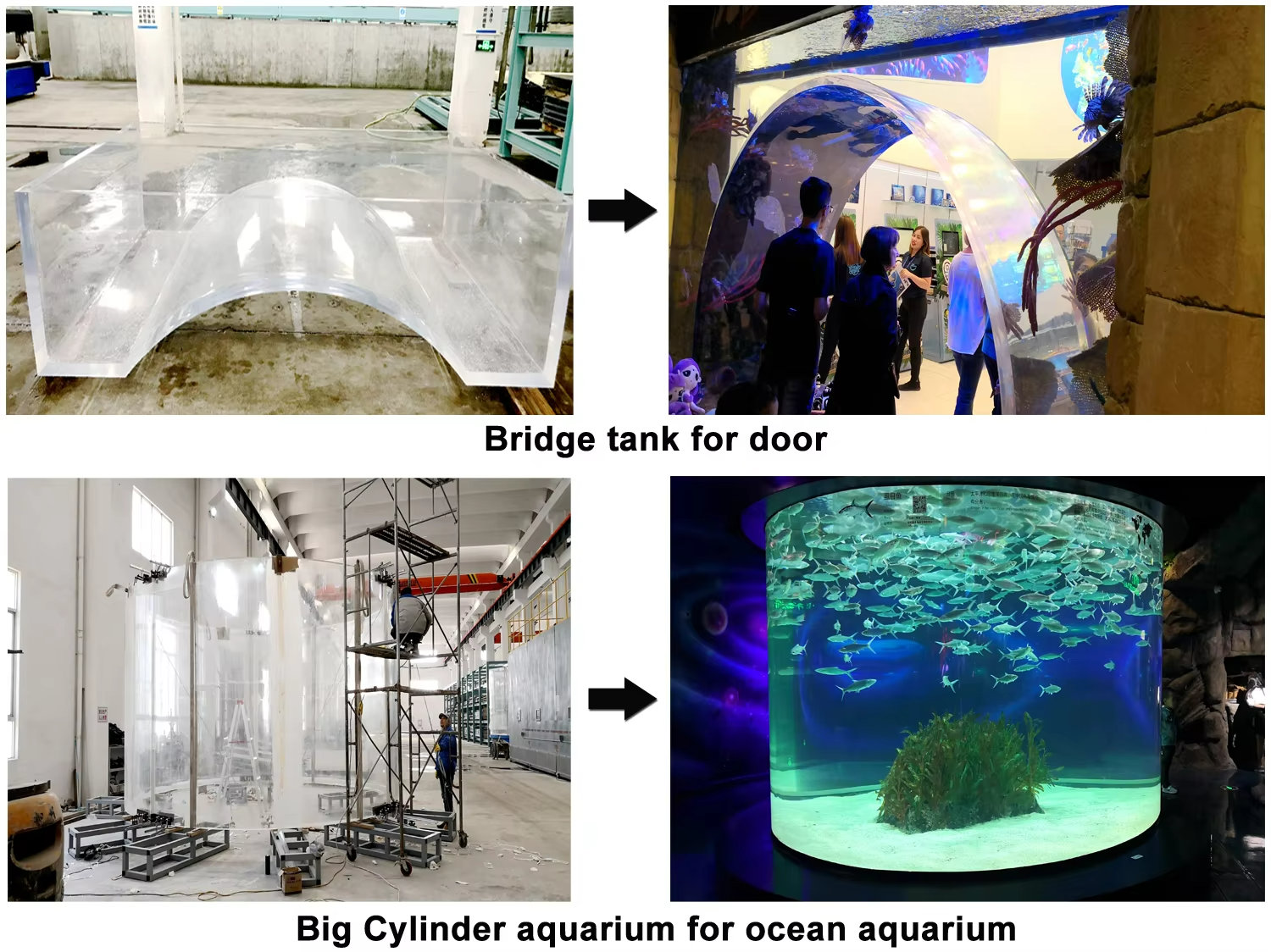
Above 400 mm diameter, stock tube generally stops. The tube is cast in a mould, the mould is specific to the diameter and wall, and the first order carries the tooling. That is why a 600 mm tube at 2,400 mm length is a project rather than a catalogue item, and why the second order is materially cheaper than the first.
Comparing quotes on equal terms
Ask for five figures on every quotation: outer diameter with tolerance, wall with tolerance, cut length, end finish and the resin grade. Then compare the kilogram rate. A supplier who quotes per metre without the wall is either assuming a standard wall or hoping the buyer will not ask, and both are a risk on a visible installation.
The ordering variables that avoid a remake, including the end finish and the packing drawing for mixed diameters, are set out in our guide to buying acrylic tube wholesale.
Freight is the last line and often the largest on a light order. A 300 mm tube at 5.5 kg per metre cubes out before it weighs out, so a container of tube is usually limited by volume rather than payload. Ask for the crate dimensions with the quotation, not after the order.
Send the outer diameter, wall, cut length and quantity to oversales@rpplexiglass.com, and we will return a per-metre price with the wall, tolerance and crate dimensions stated on the same page.
Frequently Asked Questions
How is acrylic tube priced?
By weight plus a cutting and packing allowance. Weight per metre is pi times mean radius times wall times 1,190 kg per cubic metre. Two quotes for the same diameter can differ by 70% purely because the wall thickness is different.
What wall thickness should I choose for acrylic tube?
Between 3 and 8% of the diameter for most display and protective uses, and thicker where the tube carries water or load. Below 3% the tube dents in handling; above 15% the price rises faster than the strength.
Why is large diameter acrylic tube more expensive per metre?
Because it is cast in a mould sized to that diameter and wall, and the tooling is carried by the first order. A 600 mm tube also needs thicker walls to hold shape, so the material weight per metre is high even before the mould cost.