
An acrylic sewing machine table insert is judged at the needle plate, where 0.3 mm decides whether a seam runs straight.
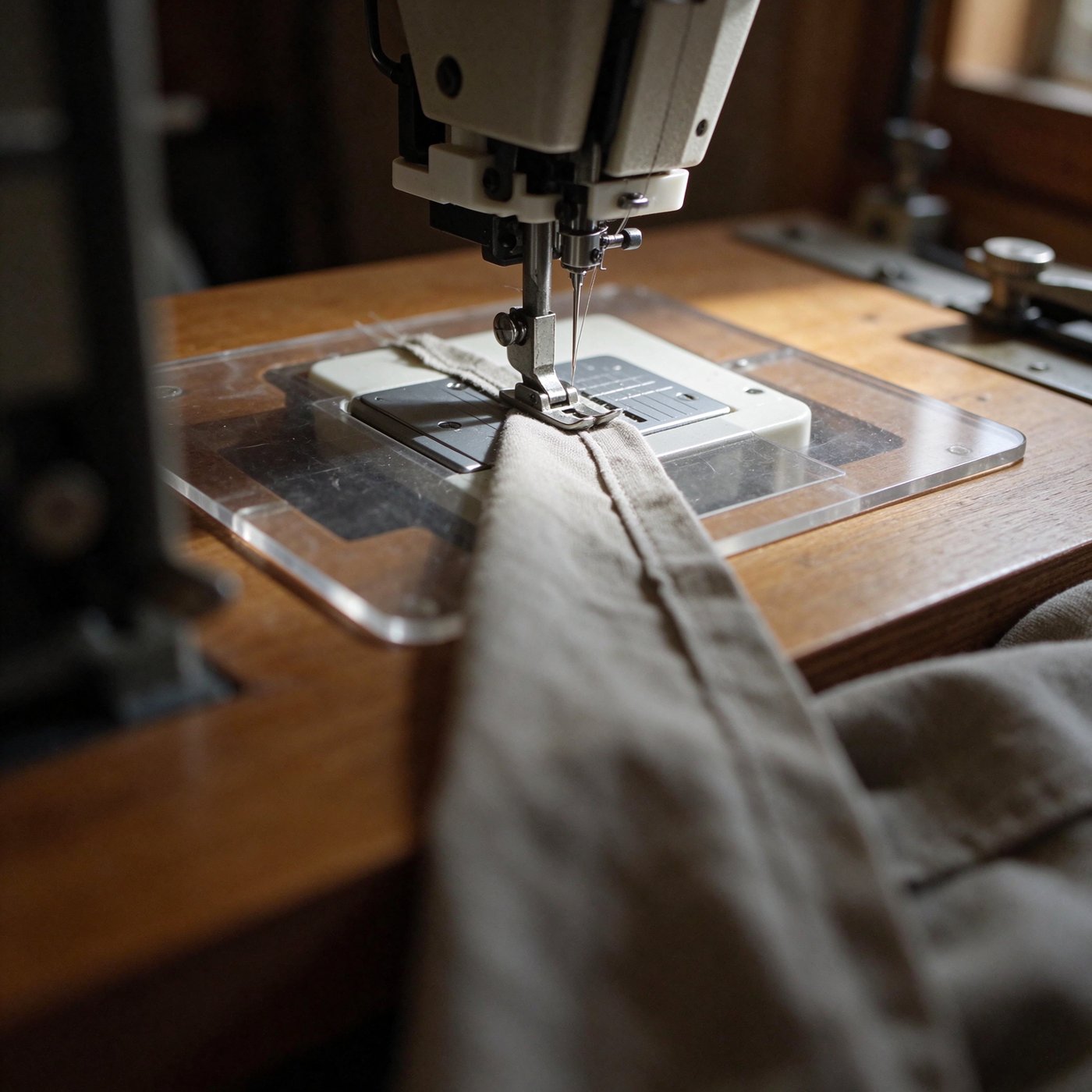
A 6 mm acrylic sewing machine table insert is a flush plate, and flush is the entire specification. The machine bed sits 0.5 mm proud of the table top, the plate has to land level with both, and the needle plate opening has to clear the feed dog by 0.3 mm on every side. Get any of those three wrong and the operator feels it in the first metre of stitching.
Why a drop-in insert beats a machined wooden bed
Timber beds move. A workshop that runs two shifts in an unheated unit will see a plywood insert swell 0.4 mm across a 600 mm span between October and February, which is enough to lift the fabric and skew a 6 mm seam. Cast acrylic moves roughly 0.2 percent between 10 C and 30 C and, more usefully, it does not absorb water. For a plate that has to stay flat to 0.3 mm, that difference decides the material.
The plate also has to be seen through. Operators line up the seam against the needle by eye, and a black or tinted insert hides the feed dog area exactly where the eye needs it. Clear 6 mm cast sheet at 92 percent light transmission keeps the bobbin area visible without glare, provided the underside is not polished to a mirror.
Thickness, edge and slot detail on an acrylic sewing machine table insert
- Thickness: 6 mm for domestic and light industrial beds; 8 mm where the span between support rails exceeds 500 mm and the plate is lifted out weekly.
- Tolerance: cast sheet to plus or minus 0.4 mm on 6 mm; the cut profile itself held to plus or minus 0.2 mm so the plate sits flush rather than rocking.
- Needle slot: 1.6 mm wide for a standard 130/705 needle, centred on the feed dog, with the slot ends drilled at 2 mm before routing to stop a crack running out.
- Edge: 1 mm chamfer on the top face only, so the fabric does not catch; bottom edge left square so the plate registers against the bed.
- Radius: every internal corner at 5 mm minimum. A square corner in a 6 mm plate is a crack starter, not a corner.
A fourteen machine refit in Leicestershire
A sample-room contractor replaced fourteen wooden inserts with cast acrylic plates across a mixed floor of flat-bed and cylinder-arm machines. The first batch arrived with square internal corners at the needle slot and 4 mm plates; three cracked at the corner within six weeks, all on the machines with the highest stitch speed. The second batch moved to 6 mm, 5 mm corner radii and a 2 mm relief hole at each slot end, and eighteen months later none had failed.
The useful lesson was not about thickness. It was that the plate has to be supported on the machine bed, not on the table frame. Plates bolted only to the table top flexed under hand pressure, rubbed the feed dog and wore a 0.6 mm groove into the underside within a season.
For a machine where the original plate no longer exists, the reliable route is a paper template off the bed plus four measurements: bed width, bed depth, needle plate position from the left edge, and the height difference between bed and table. That is enough to cut a plate that lands flush.
acrylic sewing machine table insert: what to put in the order
Send a template, the bed height difference, the needle system in use and the number of plates per machine type. River People PLEXIGLASS cuts and routes cast acrylic inserts from 3 mm to 10 mm, flame-polishes or leaves the edge matte to your drawing, and ships them interleaved with PE film so the faces arrive unworn. Send the template and we will quote the plate and the shipping in one line.
Send a paper template or a CAD outline of the bed and we will return a quote for the insert, the edge finish and the packing within two working days: oversales@rpplexiglass.com.
Most of these plates are ordered from a template rather than a stock sheet, and the tolerance rules in our acrylic cut-to-size note apply to every insert described here.
Frequently Asked Questions
Which acrylic thickness suits a sewing machine table insert?
Six millimetre cast acrylic covers domestic and light industrial beds. Move to 8 mm when the plate spans more than 500 mm between rails or is lifted out several times a week, because handling load, not seam load, is what bows a thin plate.
Can the plate be cut without the original insert?
Yes. Four measurements are enough: bed width, bed depth, needle plate position measured from the left edge, and the height step between bed and table top. A rubbed paper template off the bed is the safer option and removes any doubt about corner radii.
Will a clear insert show scratches from the feed dog?
Not if the plate rests on the bed rather than the table frame. Plates supported only at the outer edge flex under hand pressure and wear against the feed dog; adding two 6 mm support pads under the plate removes the movement.