
An acrylic beehive observation window survives a season only if the glazing sits outside the bee space.
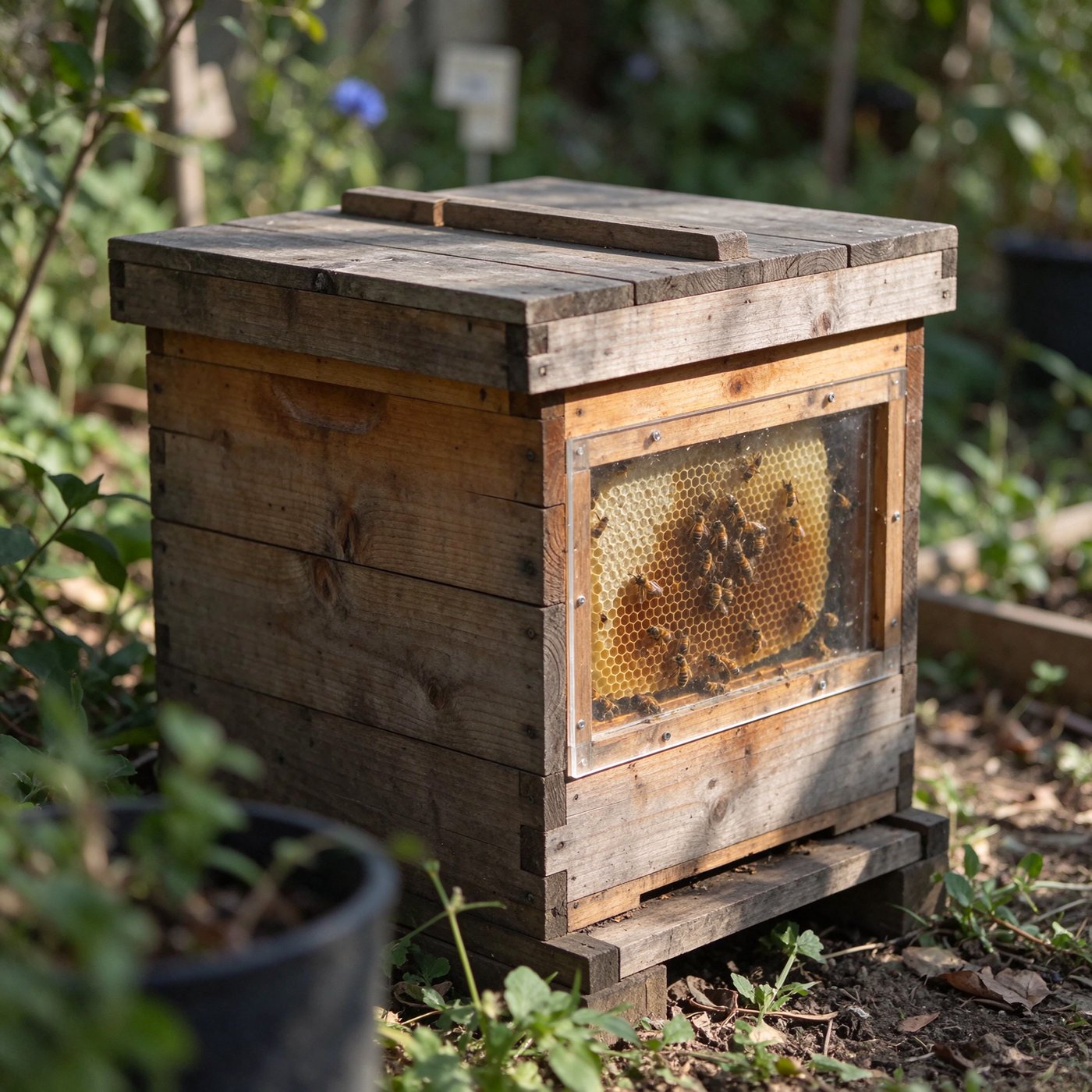
An acrylic beehive observation window is judged by what the bees do to it, not by what the visitor sees. Within one season a colony will propolise every edge, chew the frame joints and coat the inner face with a brown film. The installations that stay readable are the ones where the glazing is set outside the bee space and the frame is sealed before the colony is introduced.
Setting the window outside the bee space
A bee space of 6 to 9 mm is the gap the colony leaves open for movement. A window set inside that gap becomes a crawl surface and gets covered. The workable detail is a 5 mm cast acrylic pane fixed to the outside face of the hive wall, over a rebate cut 12 mm into the timber, so the bees see a continuous wooden surface and the glass only as a boundary.
Cast sheet rather than extruded for this job: cast acrylic resists the solvents in propolis and cleaning alcohol better, and it does not craze around screw holes as readily when a frame is tightened unevenly. Five millimetre is enough for a 300 by 400 mm pane on a national hive; 6 mm is the safer call above 400 mm span or where the hive is moved on a trailer.
Acrylic bee observation window: frame, seal and condensation
- Rebate: 12 mm deep, 8 mm wider than the pane on each side, so the acrylic never touches the bee space.
- Seal: neutral-cure silicone bead on the outer face only; solvent silicone releases acetic acid that hazes the sheet over a season.
- Fasteners: M4 stainless with 2 mm clearance holes and rubber-backed washers; a tight hole in 5 mm acrylic cracks at the first cold night.
- Vent: two 8 mm holes in the frame top and bottom, screened, to stop condensation forming on the inner face.
Two hives in Somerset and what the glazing did
A beekeeper running twelve colonies fitted observation windows to two hives as a trial. The first used 4 mm extruded sheet screwed straight into a 6 mm rebate with no seal, and by August the pane was opaque across a third of its area, with a star crack from one screw. The second used 5 mm cast sheet, a 12 mm rebate and a neutral-cure bead, and it stayed clear through two seasons with only the expected propolis line along the bottom edge.
The trial also showed that a window on the south face heats up. A dark-backed hive behind a clear pane reached 46 C at the glazing on an August afternoon, and the colony moved away from the window. A pane on the east or north face, or a 20 mm air gap behind a second pane, keeps the viewing area occupied.
Where the window is meant for teaching rather than inspection, a 5 mm pane with a 3 mm polycarbonate outer cover is worth the extra layer: the acrylic gives the optical clarity, the cover takes the knocks from a group of visitors.
Fitting a replacement pane on an existing hive
Measure the rebate, not the old pane, and order the acrylic 2 mm smaller in each direction so it drops in without forcing. If the old pane was screwed directly through the sheet, drill the new holes 2 mm oversize, fit rubber washers, and tighten to finger pressure only. River People PLEXIGLASS supplies cast acrylic observation panes from 3 mm to 8 mm, cut to the rebate dimensions with polished or matte edges and protective film on both faces. Send the rebate size and the hive type and we will quote the panes with the washers and sealant specified.
Give us the rebate dimensions and hive type and we will price the cast panes, edge finish and packing: oversales@rpplexiglass.com.
Why cast sheet suits a window that meets propolis and solvent is set out in our cast versus extruded comparison.
Frequently Asked Questions
Should the observation window be cast or extruded acrylic?
Cast. Propolis and cleaning alcohol attack extruded sheet faster, and cast acrylic crazes less around fixings when a frame is tightened unevenly. The cost difference on a 300 by 400 mm pane is small against replacing a hazed window mid-season.
How thick should an acrylic beehive observation window be?
Five millimetre cast sheet suits panes up to roughly 300 by 400 mm. Use 6 mm above that span, or where the hive is moved on a trailer and the pane sees vibration and racking loads.
How do I stop condensation on the inner face?
Two screened 8 mm vents in the frame, one high and one low, keep air moving behind the pane. A second pane with a 20 mm air gap does the same job on a hive that is sited in full sun.