
A useful acrylic sheet sample request is decided before anything is cut. A purchasing manager in Rotterdam opened with a single line last month: send a sample of your acrylic. What arrived two weeks later was a 3 mm offcut of clear extruded sheet, wrapped in bubble film, with no grade label. His project needed 12 mm cast, opal diffuser, both sides masked. The sample was free and completely useless.
That is the normal failure mode of an acrylic sheet sample request. The supplier is not being difficult. The request simply carried no information that could be answered with a physical part.
What an acrylic sheet sample has to prove
A sample is not a souvenir. It exists to settle one of four questions: does the colour match the reference, is the thickness inside tolerance, does the surface survive the customer process, and does the material behave the same way in production as it did on the bench. Each question needs a different sample.
Colour needs a chip no larger than 50 by 50 mm. Thickness needs a full-thickness offcut with the gauge printed on the masking. Surface and process questions need a piece big enough to run through the actual machine, which usually means 200 by 300 mm minimum.
The seven lines of a working acrylic sheet sample request
Write these as a short numbered list in the first email. Suppliers quote from it directly, and the sample ships without a second round of questions.
- Material and grade: cell cast PMMA, continuous cast, or extruded, and the standard you are buying against.
- Thickness: the nominal figure plus the tolerance you will accept, for example 10 mm with a plus or minus 0.3 mm band.
- Colour: a reference code, a physical chip, or a RAL and Pantone pair. Clear is not a colour specification.
- Size and quantity: 50 mm chips for colour, 200 by 300 mm for process trials, and how many of each.
- Masking: PE film on both faces, one face only, or printed branding, because this changes the surface you receive.
- Test to survive: solvent wipe, laser cut, thermoform at a stated temperature, or outdoor exposure for a stated period.
- Consignee and courier account: a street address that accepts samples, plus who pays the freight.
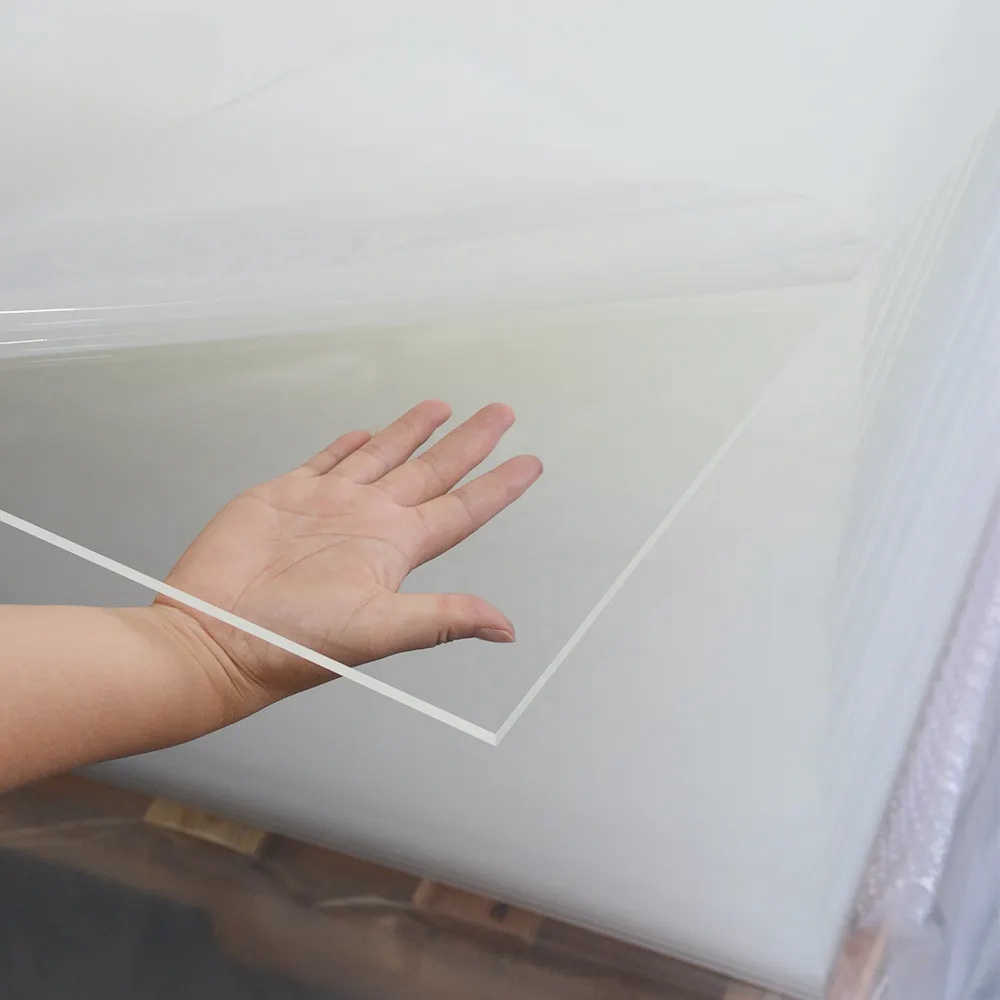
A request written this way typically returns samples in seven to ten days by air. A request that says only send acrylic returns nothing useful at all.
Reading the sample when it lands
Take the offcut out of the film in daylight, not under a warm office lamp. Hold it against a white sheet of paper to judge colour cast, and against a dark surface to judge haze. Then measure thickness at five points with a micrometer, not at the edge, because edges are sanded and read light.
Set the sample on the machine you will actually run. Cut one part, thermoform one corner if that is the process, and look at the cut edge under a raking light. A sample that machines cleanly in the supplier factory and crazes in your workshop is telling you about stress, not about quality.
Keep a written record of the sample batch, the date and the measured values. When the production order arrives six weeks later, that record is the only evidence that the delivered sheet matches what was approved.
Where samples and production sheets usually diverge
The three recurring gaps are thickness, masking and colour lot. A sample cut from a 12.2 mm sheet passes a 12 mm specification, but the production run may sit at 11.7 mm and fail the same drawing. Masking is the second trap: a printed film approved on a chip is not the same film when it is applied to a 2 by 3 metre panel and peeled under tension.
Colour lot drift is the one buyers forgive and specifiers do not. Cast acrylic is produced in batches, and a neutral grey that reads identical on a 50 mm chip can read two shades apart across a 4 by 2 metre wall. If the project is a visible elevation, approve a large panel or a set of three chips from different positions in the batch.
Buyers who want the tolerance conversation settled before sampling should read our note on acrylic sheet thickness tolerance, and those ordering mixed pallets can compare notes in the five questions buyers ask before an acrylic order.
Turning an approved sample into a purchase order
Once a sample is signed off, photograph it beside a ruler, write the batch number on the back and attach both to the purchase order. That single attachment prevents the most common claims at goods-in: this is not the colour we approved, and this is thinner than the sample.
River People keeps approval samples on file by batch, so a repeat order three months later can be matched against the same reference rather than against memory.
Send your sample request with the seven lines above, the application and the destination address to oversales@rpplexiglass.com and we will confirm grade availability, sample size and air freight cost the same working day.
Frequently Asked Questions
How long does an acrylic sheet sample request take to arrive?
With a complete specification, samples usually ship in three to five working days and arrive in seven to ten by air courier. Requests that leave out grade, thickness or colour typically lose a week to clarification before anything is cut.
Do you charge for acrylic samples?
Colour chips and standard offcuts are free. Process samples cut to your drawing, or samples in a custom colour that has to be cast, are charged at a small material cost plus freight, and that cost is credited against the first production order.
What size sample should I ask for?
Ask for 50 mm chips to judge colour and 200 by 300 mm pieces to judge machining, printing or thermoforming. Anything smaller cannot be run through production equipment, so it proves appearance only.