
Acrylic skylight glazing is a weight decision as often as it is a light decision. Replacing 42 roof lights on a 1968 atrium is a weight problem before it is a glazing problem. The existing frames were sized for 6 mm wired glass at 15 kg per square metre; a laminated glass replacement at 8.8 mm would have added 40% to the dead load on a roof structure that was never designed for it. The consultant specified acrylic for the weight, the clarity and the fact that nobody walks on that roof.
Acrylic skylight glazing is the right answer for flat and low-pitch roof lights where access is controlled and the load matters. It is the wrong answer for a walk-on rooflight, a roof subject to regular hail, or a frame that cannot accommodate thermal movement. Those three exclusions decide most specifications before price is discussed.
Acrylic skylight glazing: span and support spacing
For a roof light up to 1,200 mm span, 8 mm cast acrylic with support at the perimeter is adequate under a 0.6 kN per square metre snow load. Between 1,200 and 1,800 mm, 10 mm is the working thickness, and above 1,800 mm the panel should be broken into lights or carried on intermediate glazing bars. Deflection is the governing check, not stress: keep it under span over 200.
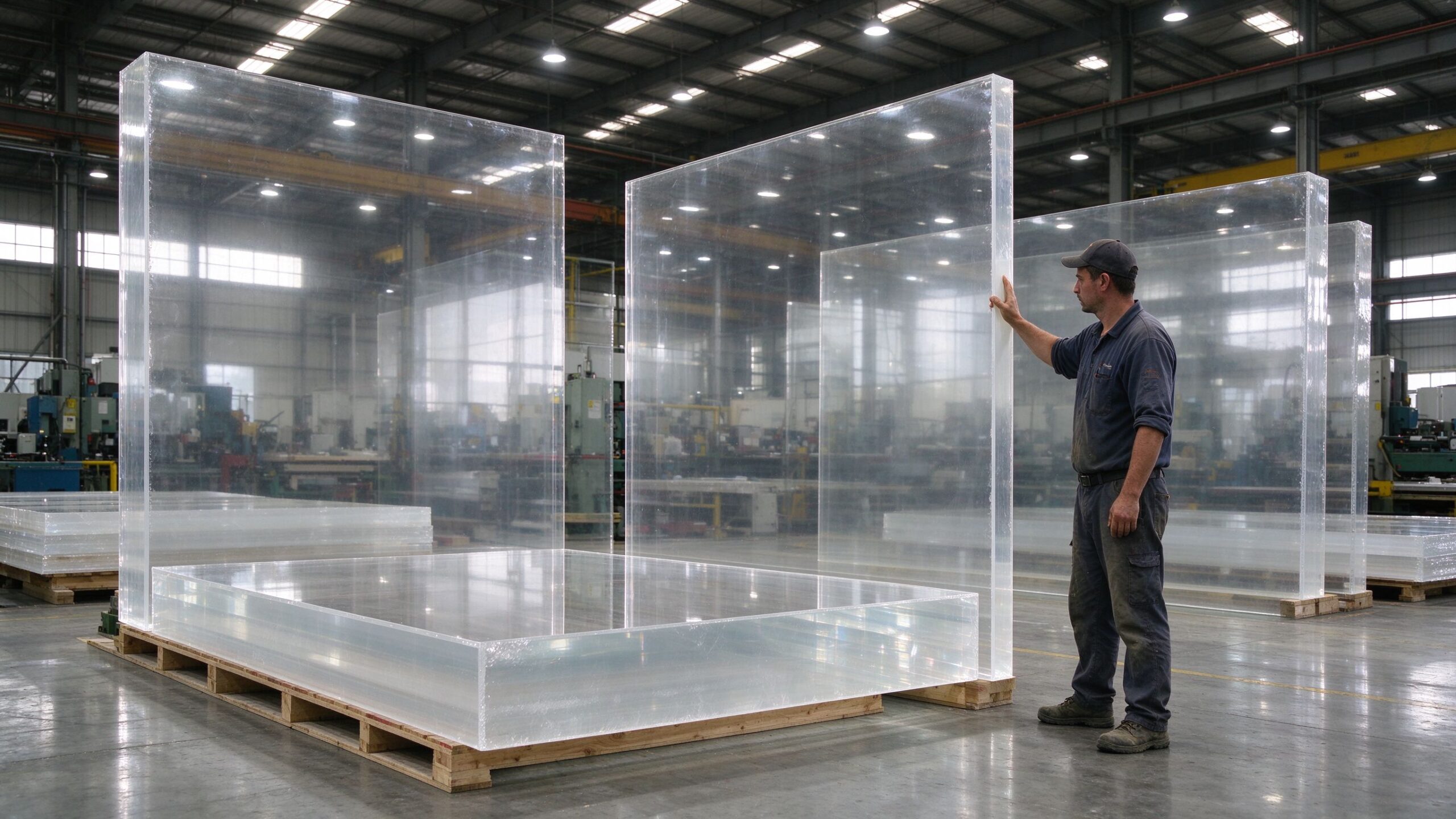
Cast sheet is the specification, not extruded. Extruded acrylic is flatter and cheaper, and it carries internal stress that shows as crazing along every fixing after a few summers of expansion and contraction. On a roof, that stress has nowhere to go.
Movement: 6 mm per metre, and a frame that allows it
PMMA moves about 6 mm per metre of length over a 50 °C surface swing, which is roughly six times the movement of glass. Fixing holes must be slotted 8 mm in the direction of expansion, with washers that let the panel slide, and the glazing rebate needs a 6 mm gap filled with a compressible gasket rather than a bead of hard silicone.
The kerb detail matters as much. A drained and vented kerb keeps water off the panel edge, and an edge that stays wet is an edge that crazes. Where the roof light sits over a warm interior, condensation forms on the underside in winter; a slight fall on the glazing bar and a vent at the high side is cheaper than a later fix.
UV grade and long-term clarity
Standard cast acrylic transmits most UV and yellows slowly outdoors. A co-extruded UV-absorbing grade filters below 380 nm and holds transmission within a few percent over fifteen years, which is the difference between a clear roof light and a yellow one at year eight. The grade is specified, not assumed; the certificate should state the UV cut-off.
The wider case for co-extruded protection, including how it is tested and what it costs against a standard sheet, is set out in our article on UV resistant acrylic for outdoor projects.
For curved roof lights, the panel is formed rather than flat, and the forming temperature and cooling schedule decide whether the curve stays clear. Our guide to acrylic sheet technical data covers that process in detail.
Cleaning and inspection
Twice a year, wash with water and a neutral detergent, rinse and leave to dry. Do not use a pressure washer on the panel edge, and do not walk on the roof light. Inspect the gaskets and the kerb drains at the same visit, because a blocked drain is what turns a fifteen-year panel into a five-year one.
Send the roof light schedule with span, pitch, snow load and frame detail to oversales@rpplexiglass.com, and we will quote cast UV-grade acrylic panels with a fixing and drainage detail for the kerb.
Frequently Asked Questions
Is acrylic suitable for skylights?
Yes for flat or low-pitch roof lights where the roof is not walked on and the frame allows thermal movement. It is about half the weight of glass, transmits 92% of visible light at 8 mm and does not shatter into blades. It is not suitable for walk-on rooflights or where regular hail impact is expected.
How thick should an acrylic skylight panel be?
8 mm up to a 1,200 mm span, 10 mm up to 1,800 mm, and anything larger should be split into smaller lights or carried on intermediate bars. Deflection should stay under span over 200 under the design snow load.
Does acrylic skylight glazing yellow?
Standard sheet yellows slowly outdoors; a co-extruded UV-absorbing grade holds clarity far longer. Ask for the UV cut-off wavelength and the transmission retention figure over ten years, and confirm the grade on the certificate rather than accepting a general UV claim.