
An acrylic sunbed panel is a filter with a structural job, and the grade decides the output.
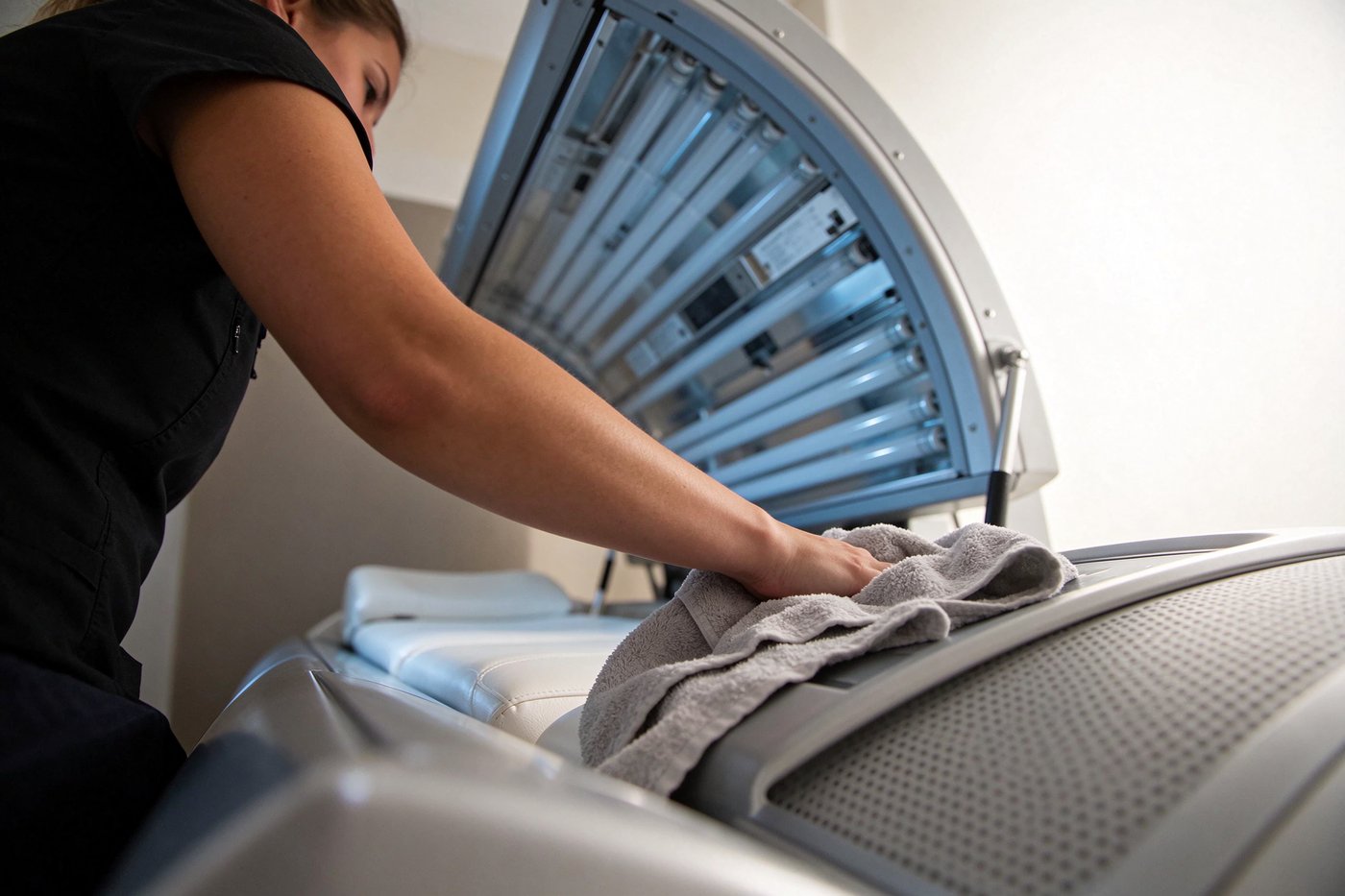
A salon in Leeds replaced the covers on six beds with standard clear acrylic because it was cheaper and available. Output readings dropped by around 30 percent within a fortnight, and the beds were taken out of service. The sheet was clear to the eye and effectively opaque to the wavelengths the lamps were producing.
An acrylic sunbed panel is a functional filter as well as a cover. It has to transmit the UV band the lamps emit, hold its shape over a lamp array that runs hot, and survive daily wiping with disinfectant. Getting any one of those wrong costs either performance or a replacement cycle.
Why the grade matters more than the thickness
Tanning beds use UV-transmitting acrylic, typically 4 to 5 mm, formulated to pass the lamp spectrum rather than block it. Standard clear cast and extruded sheet both contain UV absorbers that cut the very band the bed needs. The correct grade is specified by transmission data at the lamp wavelengths, not by a description.
Five millimetre is the common cover for a full-length bed because it spans the opening without visible sag under its own weight and the lamp heat. Thinner sheet bows toward the client, changes the lamp distance and produces an uneven tanning pattern that a salon will notice before the meter does.
Heat, distance and the shape of the cover
- Keep the manufacturer lamp-to-cover distance; moving the cover closer raises surface temperature and shortens panel life
- Allow the panel to expand in its frame: 2 to 3 mm per metre of length is typical for a bed that runs warm
- Support the centre of a long cover with a rail if the span exceeds about 1.8 m
- Ventilate the lamp compartment; trapped heat yellows the panel faster than UV alone
A cover that is clamped tight at both ends and free in the middle will bow into a shallow arc once the lamps are on. That arc is not a cosmetic issue: it changes the dose across the body and it puts a permanent bend in the sheet that will not come out when the bed cools.
Cleaning agents that end a panel early
Salon disinfectants vary enormously. Alcohol-based wipes, acetone-containing cleaners and abrasive creams all attack acrylic, and the damage shows first as a haze in the area where clients lie. Specify a quaternary-ammonium or mild soap cleaner, a soft cloth, and a rinse. Keep the spray off the lamp compartment.
Replace covers on a schedule tied to output measurement, not to visible wear. A panel can look perfect and still have lost transmission. Meter the beds quarterly, compare against the bed specification, and change the cover when the drop exceeds the tolerance the manufacturer sets.
RP River People Plexiglass supplies UV-transmitting acrylic covers cut to the bed outline, with edge polishing and protective film. Send the bed model, the cover dimensions and the transmission requirement for a quotation.
Send the bed model and cover dimensions to oversales@rpplexiglass.com, and we will quote the UV-transmitting panel against the transmission figure you need.
Transmission loss over time is covered from the material side in our note on acrylic yellowing and UV protection.
Frequently Asked Questions
Can ordinary clear acrylic be used as a sunbed cover?
No. Standard clear sheet contains UV absorbers and blocks most of the output the lamps produce. Using it cuts performance and can put the bed outside its certified output.
How often should covers be replaced?
Follow the bed manufacturer interval and confirm it with output readings. Most salons meter quarterly; a cover that shows a haze or a visible bow should be replaced regardless of the calendar.
Which cleaner is safe?
Mild soap or a quaternary-ammonium disinfectant, wiped with a soft cloth and rinsed. Alcohol, acetone and abrasive creams all damage the surface and should stay away from the panel.