
A buyer shopping for ballistic grade polycarbonate will hear the words “rated”, “UL 752” and “ASTM” thrown around as if they were interchangeable. They are not. The rating only means something when the test method, the weapon and the panel thickness are all tied to the same standard — and that is the first thing to pin down before any comparison.
What a ballistic rating actually says
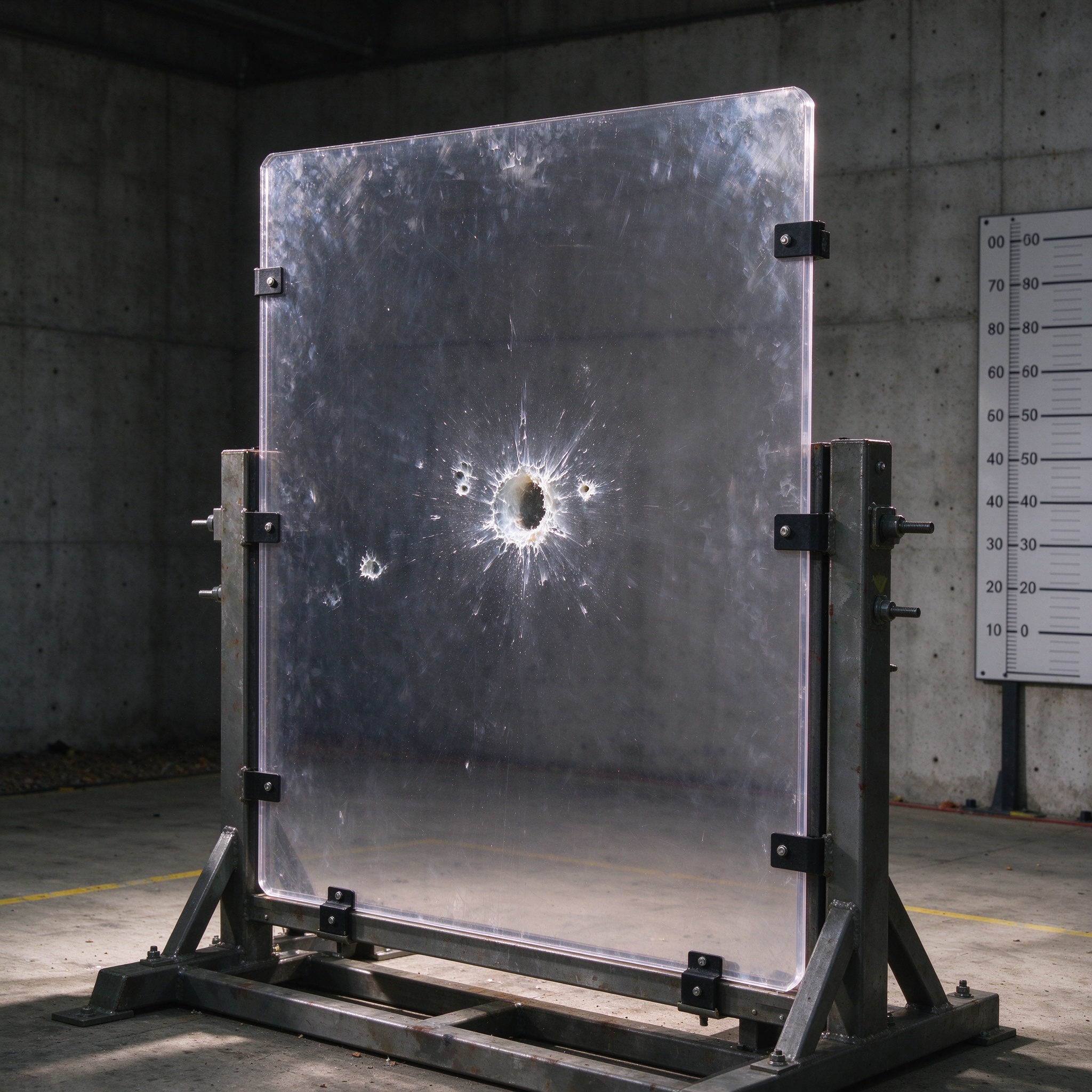
A ballistic grade is defined by a test: a specific threat weapon is fired at a panel of a defined thickness, and the panel must stop the round without spall that injures the person behind it. UL 752 and ASTM are the two families most often named, and each has levels tied to specific weapons. The number is only valid for the thickness and construction tested, so a “level 3” from one maker only matches a “level 3” from another if the test and thickness agree.
Reading the rating before you order
- Confirm the exact test standard and the level for your threat.
- Check the thickness and construction the rating applies to.
- Ask whether spall (behind-panel debris) is controlled.
- Match the level to the actual risk, not the highest number.
For how the levels map to threats, see UL 752 ratings explained for polycarbonate, and for the glass alternative, polycarbonate versus glass for security glazing.
Frequently Asked Questions
Q: How do I compare ballistic grade polycarbonate ratings?
A:Only compare ratings when the test standard, threat weapon, thickness and construction are the same; otherwise a matching level number means nothing.
Q: Should I buy the highest ballistic level available?
A:No. Higher levels mean thicker and heavier panels; match the level to the real threat so you do not pay for protection the site will never face.
For a ballistic or security glazing quote with the threat level and panel size, email oversales@rpplexiglass.com with the location, threat and panel dimensions.