
The moment an aquarium designer realises a large acrylic aquarium cannot use stock sheet is the moment the job becomes engineering. Once the viewing panel exceeds the width of a standard sheet, every assumption changes: thickness, bonding, transport and the number of seams.
When the panel outgrows the sheet
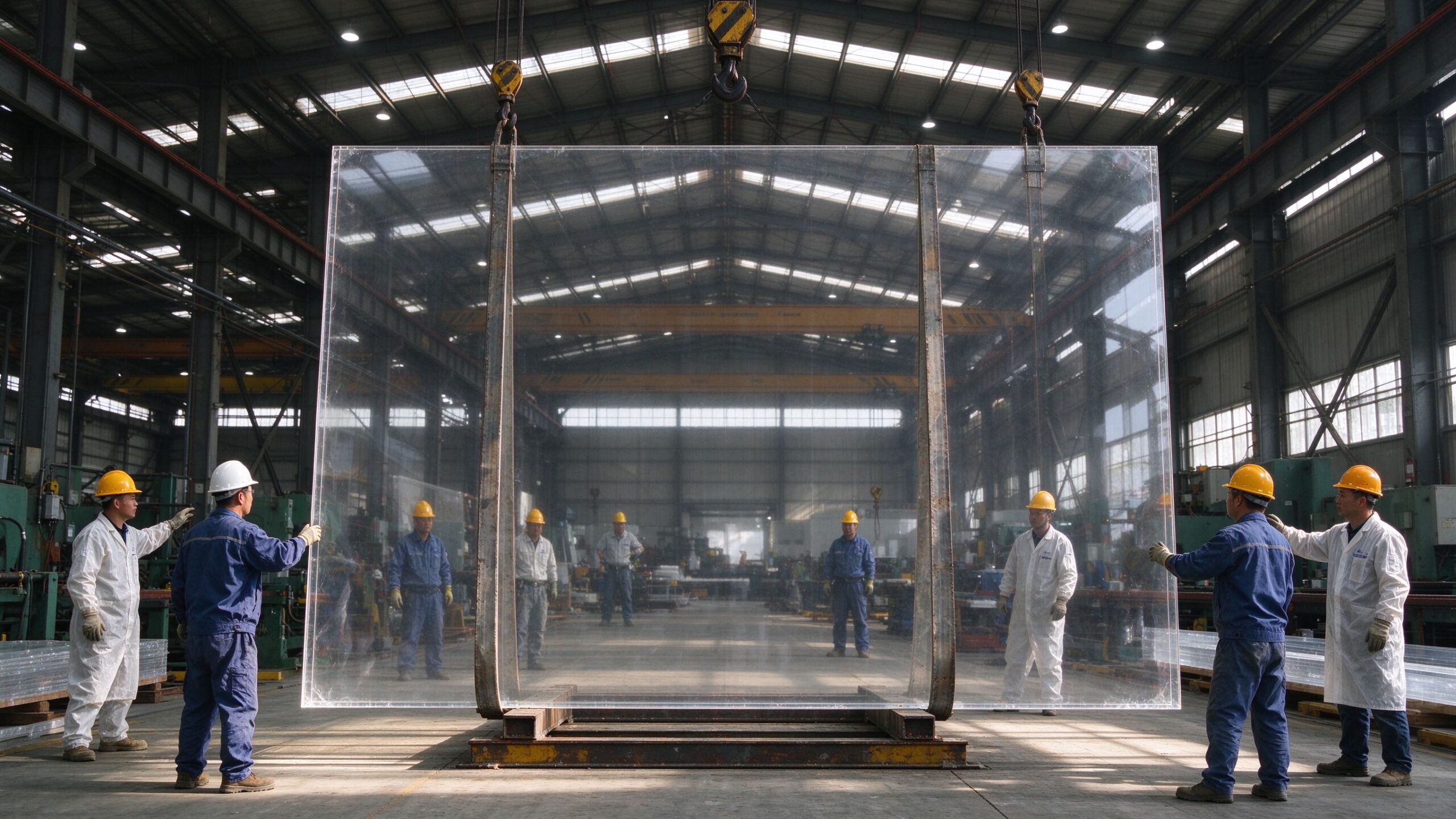
Standard acrylic sheet has practical width limits, so a large commercial tank is built from thick cast sections bonded together, and each seam is a structural decision, not a convenience. The thickness follows the water depth and the unsupported span, and the bonding has to be done so the joined panel behaves as one piece. A design that starts from “what is stock” will make the wrong choices; one that starts from “what the water requires” gets the tank right.
Engineering the large tank
- Calculate thickness from water depth and unsupported span.
- Plan the seams as structural joints, not conveniences.
- Size the bonded panel to act as one continuous piece.
- Arrange handling for panels beyond stock limits.
For how thick cast aquarium panels are specced, see thick cast panel specs for large aquariums, and for bonding the sections, seamless acrylic splicing guide.
Frequently Asked Questions
Q: Why can’t I use stock acrylic sheet for a large aquarium?
A:Standard sheet has practical width limits, so large tanks need bonded cast sections and thickness sized to depth and span — a structural job, not a stock item.
Q: Do the seams weaken a large aquarium panel?
A:Properly bonded and QC’d seams act as one continuous piece; the risk is only in rushed bonds, which become leaks and weak points under water pressure.
For a cast acrylic sheet or thick panel quote with grade, thickness and size confirmation, email oversales@rpplexiglass.com with your sheet size, thickness and application.