
A client asked for blast resistant polycarbonate and pictured a panel that stops an explosion cold. The honest engineering answer is different: blast-resistant glazing is about controlling what happens after the blast, especially stopping the glazing from becoming flying glass.
What blast resistance really controls
Most blast injury comes from flying fragments, not the blast wave itself. A blast-resistant polycarbonate panel stays in one piece under the pressure and keeps glass and debris in place, and a laminated or multi-layer build controls how far the panel deflects before it recovers. Thickness, layer count and the frame’s holding force all decide the result. There is no single panel that resists every blast; the spec is matched to the charge size and standoff distance the site expects.
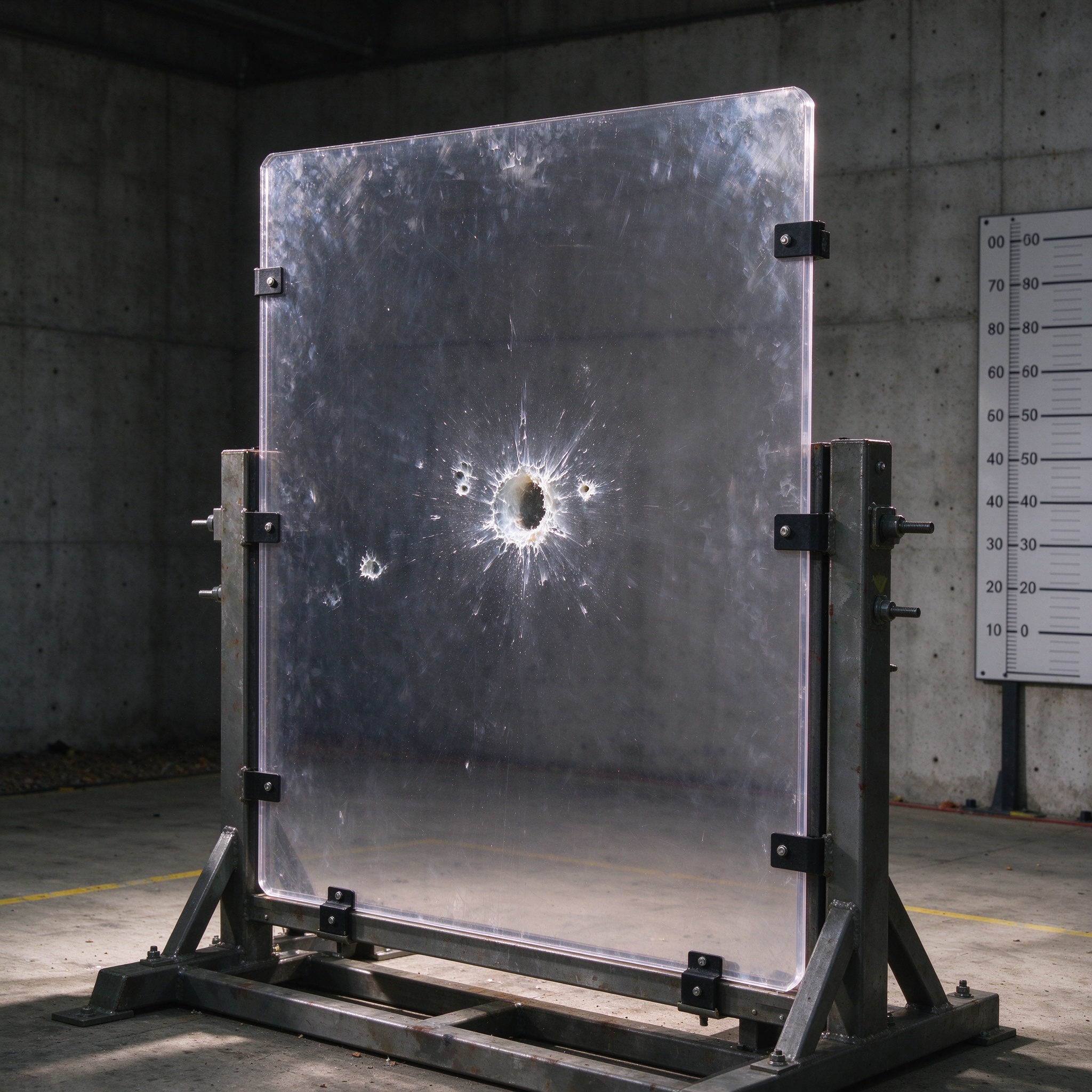
Designing a blast-resistant panel
- Match thickness and layers to the charge and standoff.
- Control deflection so the panel stays in its frame.
- Frame holding force strong enough to keep the panel seated.
- Lamination that stops the glazing becoming flying debris.
How the ballistic side of the material is rated is covered in the ballistic polycarbonate overview, and the UL 752 levels that also apply to blast thinking in UL 752 ratings explained.
Frequently Asked Questions
Q: Does blast resistant polycarbonate stop an explosion?
A:It controls the result, not the blast. The panel stays in one piece and keeps glass from becoming flying fragments, and the layers and frame control how far it deflects.
Q: What decides how blast resistant a polycarbonate panel is?
A:Thickness, layer count, the frame’s holding force and how the panel is laminated. The spec is matched to the charge size and standoff distance the site expects.
For a bullet-resistant or security polycarbonate glazing quoted to your threat level, panel size and frame system, email oversales@rpplexiglass.com with the threat level, panel dimensions and the opening type you need to protect.