
The appeal of an infinity pool acrylic panel is the illusion — water that seems to run to a transparent edge with nothing in the way. Delivering that illusion is an engineering problem: the panel has to hold the pool’s water pressure, stay clear through chlorine and UV, and be sealed so the “endless” edge does not leak or grow cloudy.
What an infinity pool panel actually does
At the overflow edge or a viewing wall, the acrylic panel is a structural water barrier that must be sized to the pool’s depth and pressure, not chosen for looks. It faces chlorinated water and direct sun, so a cast, UV-stable grade with a sealed joint is essential, and the seal between panel and pool structure has to be certified for permanent submersion. Done right, the panel stays clear and watertight for the life of the pool.
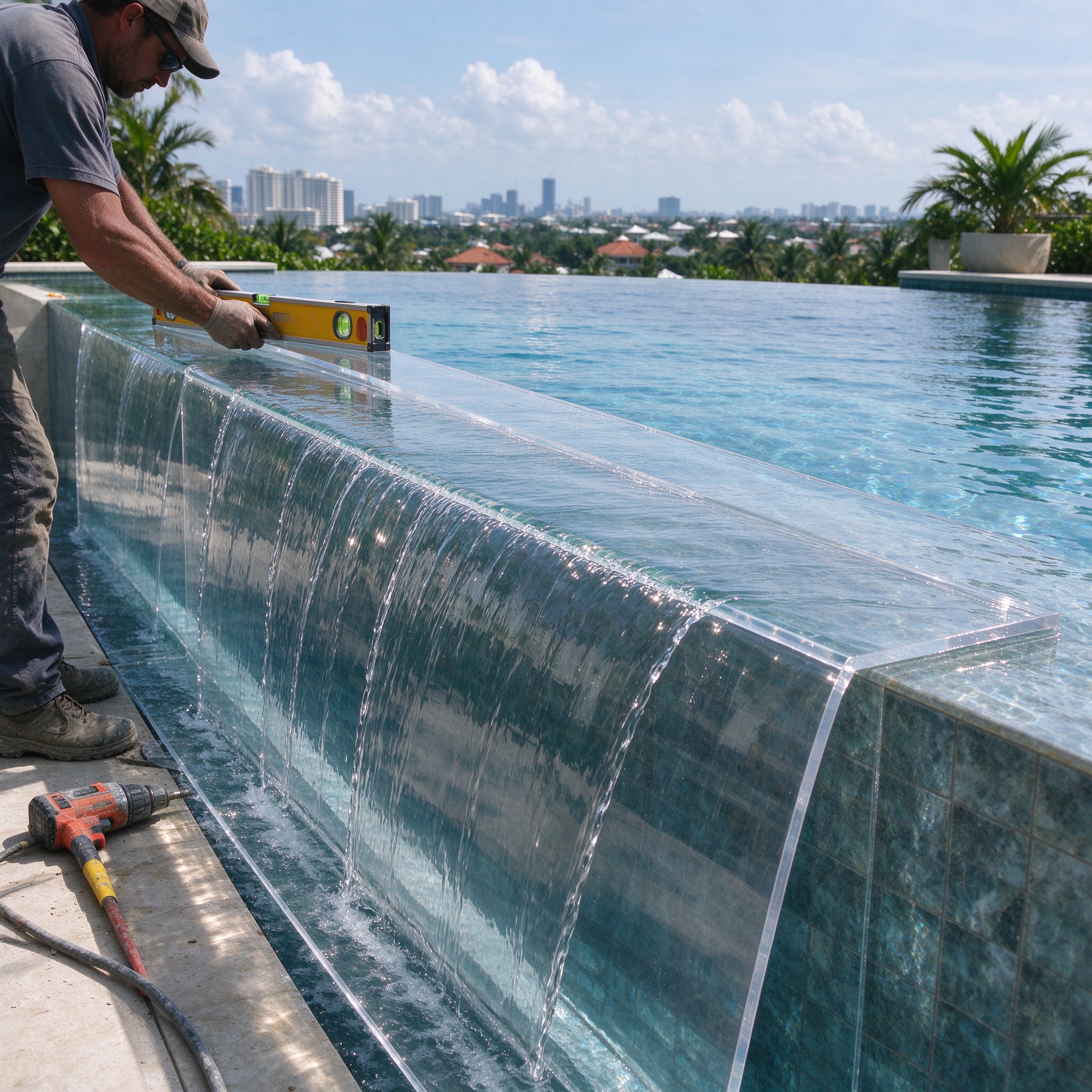
Designing the transparent edge
- Size thickness to the water depth at the overflow edge.
- Specify UV-stable cast acrylic that resists chlorine.
- Seal the panel-to-structure joint for permanent submersion.
- Confirm the edge profile so the “infinity” effect stays clean.
For how pool windows are sized, see the acrylic pool window thickness guide, and for the pressure side of the design, water pressure and load design for transparent panels.
Frequently Asked Questions
Q: Can acrylic be used for an infinity pool edge?
A:Yes. A cast, UV-stable acrylic panel sized to the water depth frames the transparent edge, provided the panel-to-structure seal is certified for permanent submersion.
Q: Will pool chlorine damage an acrylic panel?
A:Cast, UV-stable acrylic resists chlorinated water and sun well; plain extruded sheet is not the right choice for a permanent pool edge.
For an aquarium or pool acrylic panel quote with thickness calculation, email oversales@rpplexiglass.com with the tank depth, panel span and water pressure.