
Most large aquarium panels fail before they ever touch water — not in the tank, but on the truck or during the lift. Acrylic aquarium panel shipping and installation is a sequence where every stage can undo the engineering: a warped panel from bad packing, a scratched face from careless rigging, or a seam that leaks because bonding was rushed on site.
Where the panel is most at risk
A cast acrylic panel is strong in service but vulnerable in transit: it is heavy, large and easily scratched, and it must lie flat or be supported so it does not bow under its own weight. At the site, rigging has to lift it without point-loading, and bonding — the chemical weld that joins panels into one structure — has to be done in controlled conditions, because a rushed seam is a permanent leak. Every one of these steps is a decision, not an afterthought.
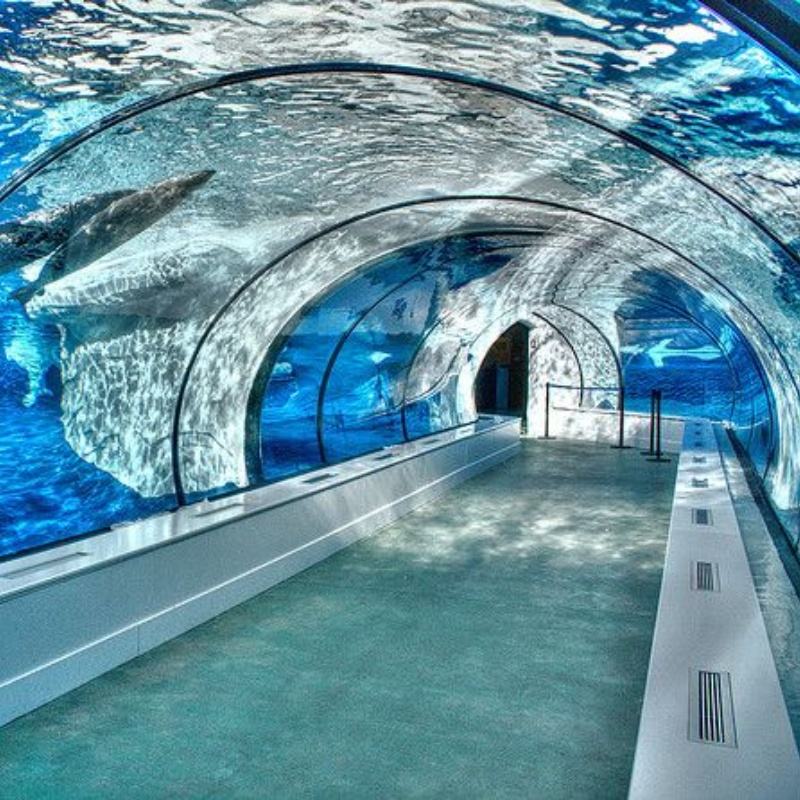
Protecting the panel at each stage
- Pack so the panel lies flat or fully supported, never bowing.
- Protect the face film until the panel is in place.
- Rig the lift without point-loading the sheet.
- Bond seams in controlled conditions and allow full cure.
For how panels are joined into one structure, see the seamless acrylic splicing and bonding guide, and for the size limits at play, acrylic aquarium panel supplier capability.
Frequently Asked Questions
Q: How should large aquarium panels be shipped?
A:Flat or fully supported so they do not bow, with the face film intact; bad packing that lets a panel warp or scratch is the most common cause of early failure.
Q: Can aquarium panels be bonded on site?
A:Yes, but the chemical weld needs clean, controlled conditions and full cure time; a rushed on-site seam becomes a permanent leak under water pressure.
For an aquarium or pool acrylic panel quote with thickness calculation, email oversales@rpplexiglass.com with the tank depth, panel span and water pressure.