
A swimming pool refurbishment in southern France specified polycarbonate sheet 10mm for a balustrade infill on the simple reasoning that thicker must be safer. It was thicker, and it was also 75 kg per panel, which meant the two-person installation crew could not place it without a hoist, and the frame had been designed for 6 mm.
What polycarbonate sheet 10mm is actually for
- Machine guarding where a part can be thrown at speed
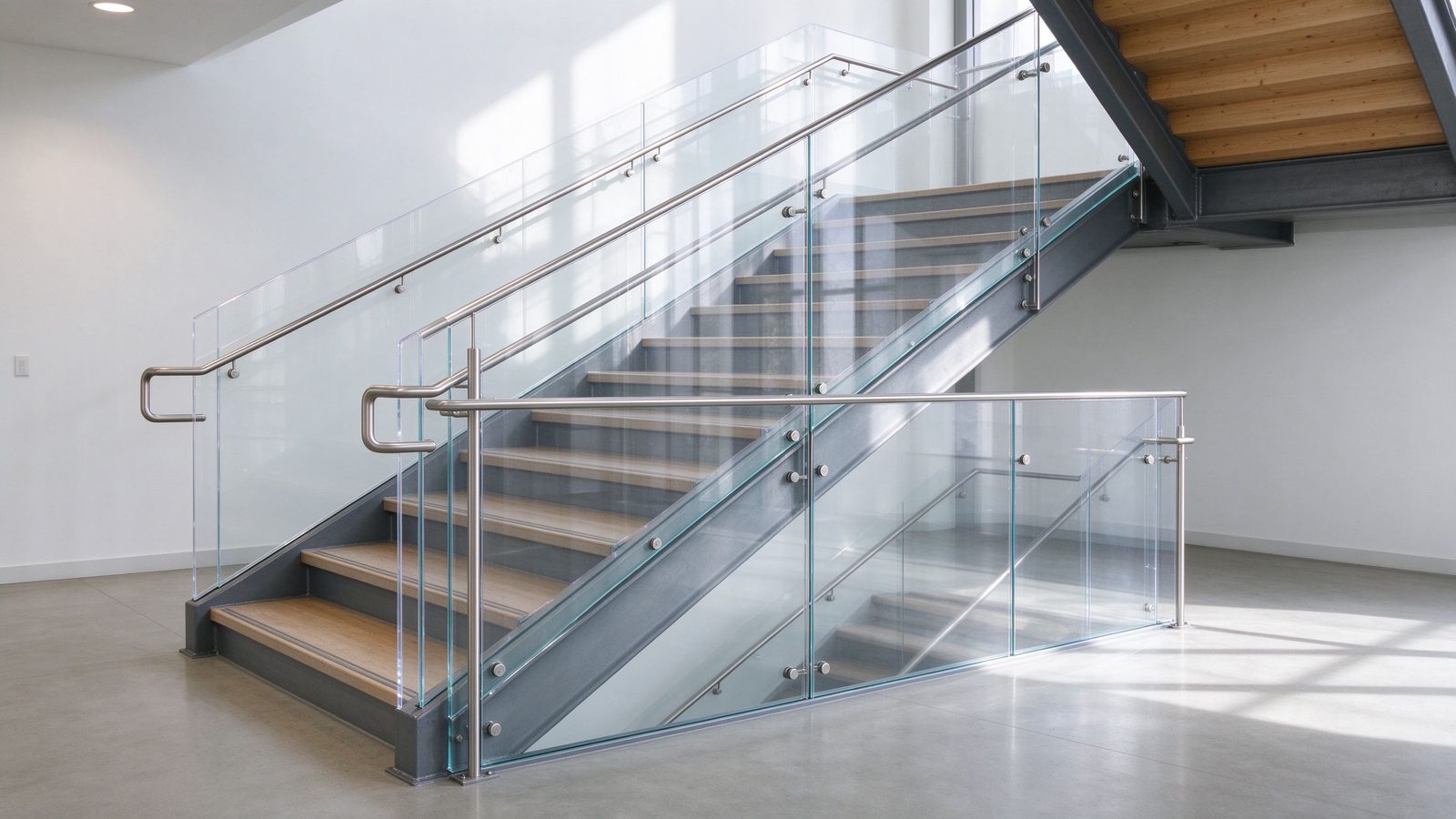
- Balustrade infill with a supported edge and a defined load case
- Vehicle and equipment screens exposed to stone strike
- Skylight or canopy glazing where maintenance access is restricted
Those four duties share a property: something hits the panel, or something leans on it, and the consequence of failure is serious. Thickness follows from the load case, not from a preference for robust.
Load, span and the frame
A 10 mm polycarbonate panel at 600 mm span resists a firm lean comfortably. At 900 mm it deflects visibly, and at 1.2 m it is relying on the frame rather than on itself. If the design needs a 1.2 m clear opening, the answer is a stiffer frame or a thicker panel, and usually the frame is cheaper.
Wind is the other load. A 2 square metre panel on an exposed site sees design pressures that make a 10 mm sheet flex several millimetres, which is fine if the edges are captured and the fixings allow movement.
Thermal movement is larger than most frames allow
Polycarbonate expands roughly 0.065 mm per metre per degree Celsius, about three times acrylic and far more than aluminium. A 2 m panel moving through 40 degrees wants 5 mm of freedom. Frames designed for glass give 2 mm and the panel buckles or pulls a fixing out.
Fixing detail that keeps the panel in service
- Hole diameter at least fastener plus 3 mm for movement
- Elastomer washer both sides, never metal directly against the sheet
- Edge distance 2.5 times hole diameter minimum
- No notches or sharp internal corners; radius everything
- Never use the panel to pull a frame into alignment
Polycarbonate is notch sensitive in a different way to acrylic: it does not crack from a scratch, but it does tear from a sharp corner under load. Radiused corners are not cosmetic details on this material.
Surface, and why it matters at this thickness
At 10 mm the panel is expensive enough that scratches become a maintenance issue. Hard-coated grades carry a thin abrasion-resistant layer and cost fifteen to thirty per cent more; uncoated sheet is fine where nobody touches it, and a poor choice for a handrail-height panel in a public space.
Weight is the other practical constraint. At about 12 kg per square metre, a 2 x 3 m panel is 75 kg and cannot be handled by two people on a ladder. Plan the lifting, not just the specification; the weight guide gives per-thickness figures for freight and handling.
Where 10 mm is the wrong answer
Signage, retail display, greenhouse glazing and any span where 6 mm with a proper frame would do. Moving from 6 to 10 mm raises material cost by roughly two thirds and adds handling risk, and it does not improve a duty that was never load-limited.
For guarding specifically, the surface matters as much as the thickness; the hard-coated guard note covers when the coating pays for itself.
If the load case is unclear, send the drawing. A thickness chosen by feel is either overpriced or unsafe, and both are avoidable with one calculation.
Send the span, load case and fixing layout to oversales@rpplexiglass.com and we will confirm whether 10 mm holds or whether the frame has to change.
Frequently Asked Questions
What span can 10 mm polycarbonate cover unsupported?
Without a frame, roughly 600 mm is a practical limit for a person leaning on the panel; 900 mm needs intermediate support. Wind and impact loads shorten that further. Thickness is not a substitute for a frame.
Is 10 mm polycarbonate bullet resistant?
No. Bullet resistance is defined by UL 752 levels and requires laminated or glass-clad construction at 20 mm and above. A single 10 mm extruded sheet is impact resistant, not ballistic.
How much does a 10 mm sheet weigh?
Polycarbonate density is about 1.2 g per cubic centimetre, so a 10 mm sheet weighs roughly 12 kg per square metre. A 2050 x 3050 mm panel is around 75 kg and needs two handlers and a lifting frame.