
A food packer in Lyon rejected three tooling trials in a row. The lids sealed, looked right, and jammed the denester every 40 lids because the rims had curled 2 mm after forming. The material was correct PETG. The forming temperature was 20 C too low, and the PETG thermoformed lid was being pulled cold at the rim.
Thermoforming a lid is a three variable problem: sheet gauge, forming temperature, and the cooling fixture. Get all three right and the part is boring, which is exactly what a packaging line wants.
Starting point for a PETG thermoformed lid
A 190 x 140 mm lid for a 500 g food tray is commonly formed from 0.8 mm PETG. The sheet has to be dry, since PETG absorbs moisture and forms bubbles at the surface when the water flashes at 120 C.
- Sheet: 0.8 mm PETG for lids up to 200 x 150 mm; 1.0 mm for larger or deeper lids.
- Drying: 4 hours at 65 C in a desiccant dryer before forming.
- Forming: 115 to 125 C sheet temperature, with a plug assist for the rim so the wall does not thin below 0.6 mm.
- Cooling: a cooled fixture for 8 to 12 seconds, which is what actually sets the rim.
Why the rim curls, and why the denester notices first
PETG has a memory. If the rim is formed cold and demoulded warm, the stretched molecules relax back and pull the rim inward over the next 24 hours. A 2 mm curl is invisible on a single lid and fatal in a stack of 500, because the nest depth changes and the denester picks two lids at once.
The cure is not a stiffer sheet. It is forming hot enough that the strain is relaxed in the tool, then cooling the rim in the fixture so it sets in the formed shape. Trials that skip the cooled fixture will pass a visual check and fail on the line a day later.
Seal and stack geometry
A lid seals on a land, not on a point. The common profile is a 3 mm land with a 0.5 mm step, so the lid seats on the tray rim and the stack depth is set by the shoulder. Nest depth of 6 to 8 mm per lid gives a stable stack of 500 at about 3.4 m, which fits a standard denester magazine.
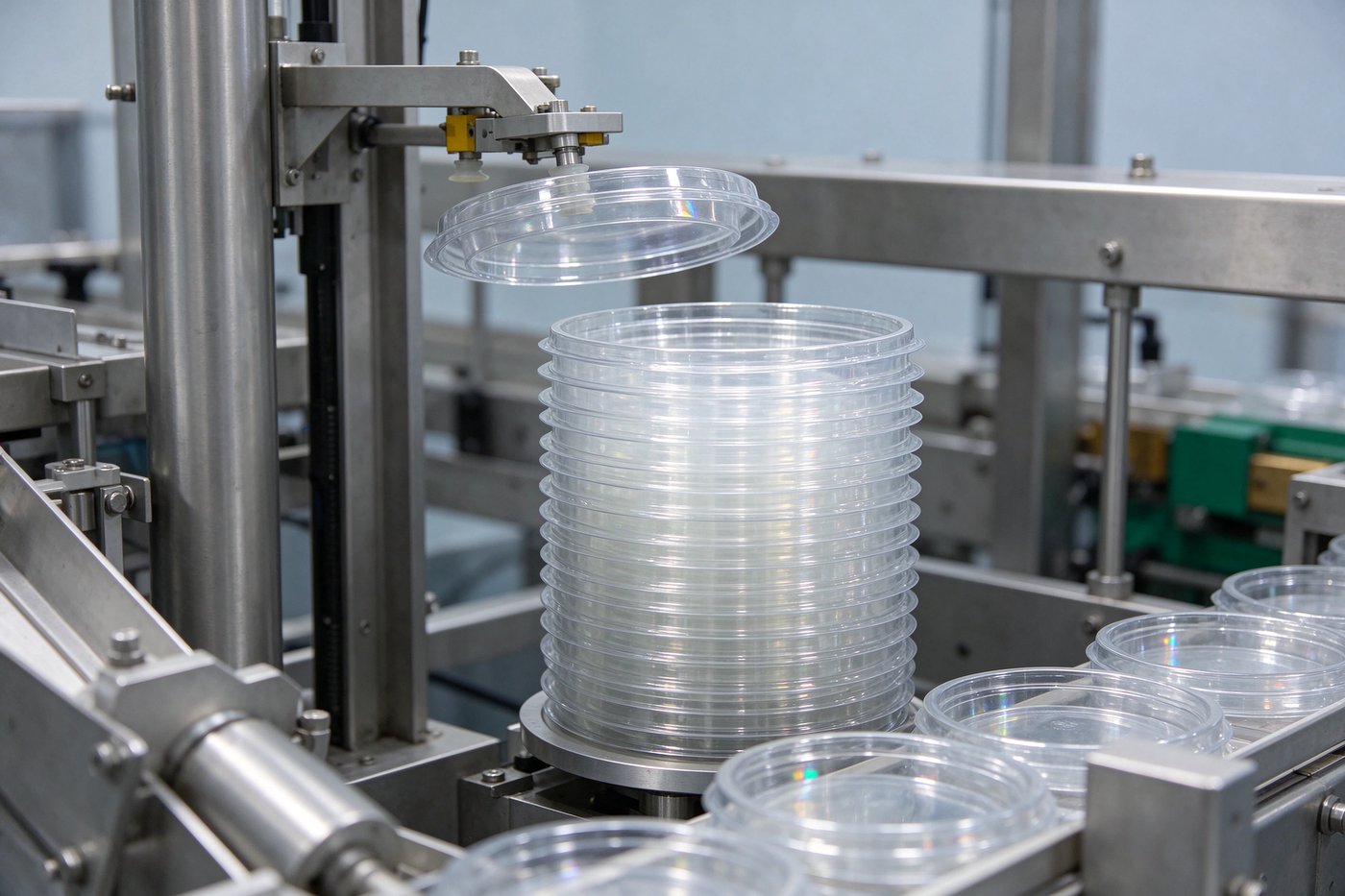
River People and forming partners
River People supplies PETG sheet for lid tooling in 0.8 and 1.0 mm, cut to the tool blank size with consistent gauge across the pallet, which is the variable that most often breaks a forming trial. Sheet is supplied dry-packed in PE bags with desiccant, and lots are traceable so a forming issue can be tied back to one extrusion run.
Send your lid drawing and denester stack height to oversales@rpplexiglass.com for a sheet specification and sample programme.
Lid tooling usually sits beside clamshell formats, and the wall and rim rules are in our PETG clamshell packaging guide.
Frequently Asked Questions
Is PETG suitable for direct food contact lids?
PETG is widely used for food contact packaging and is accepted in most markets when supplied with the correct declaration. Confirm the local requirement and request a food contact statement with the lot.
Can the lid be formed from 0.6 mm sheet?
For a shallow lid under 150 mm, yes, but the rim thins below 0.4 mm and the seal becomes marginal. 0.8 mm gives a better land and a more stable stack.
Why do bubbles appear on the lid surface?
Moisture in the sheet flashing at forming temperature. Four hours of drying at 65 C before the sheet reaches the oven prevents it.