
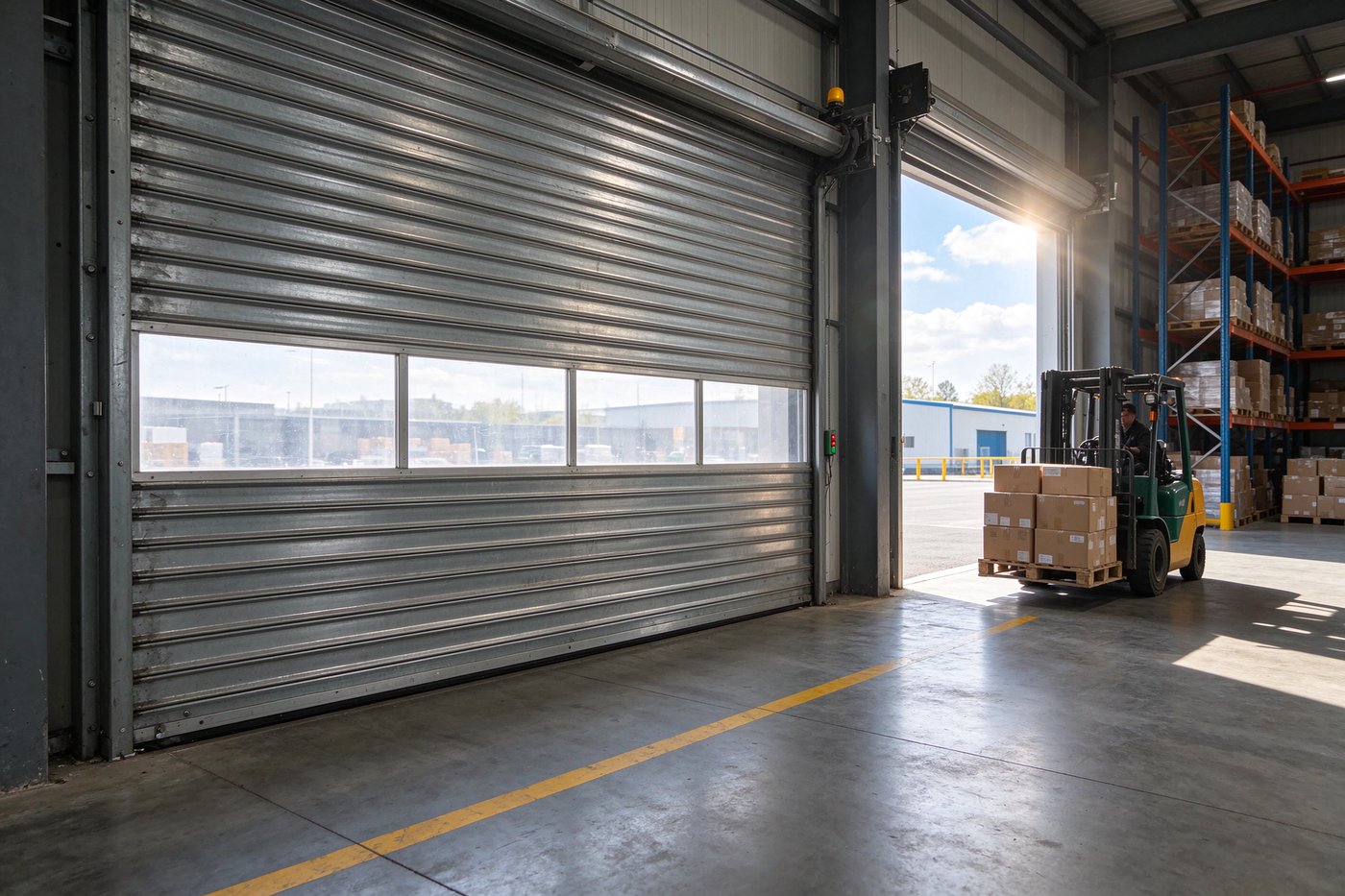
At a distribution centre near Leeds, a forklift clipped a roller door vision panel and the toughened glass exploded into the aisle. Nobody was hurt, but the line stopped for 40 minutes and the door was out of service for a day. The retrofit replaced 60 panels with a 6 mm polycarbonate warehouse door vision panel, and the next impact cost a panel and a ten minute swap instead of a shutdown.
Loading bay glazing is a safety component with a service life measured in impacts.
Opening size and panel thickness for a vision panel
The standard opening on a roller or sectional door is 500 x 700 mm, sometimes 600 x 900. At that size, 6 mm polycarbonate holds a 1 kN point load with under 8 mm deflection and does not shatter, which is the requirement that matters when a mast or a pallet strikes the door.
- Panel: 6 mm polycarbonate, clear, with a scratch-resistant face on the aisle side.
- Opening: 500 x 700 mm typical, 25 mm frame engagement on each side.
- Insert: a 2 mm gasket under the panel edge so the panel does not sit directly on a steel lip.
- Fixings: M6 at 150 mm centres, 12 mm edge distance, with sealing washers.
The frame detail that decides panel life
Most retrofits fail at the frame, not the panel. A panel pressed against a bare steel lip and bolted through creates a line load that cracks the sheet on the first heavy impact. A 2 mm EPDM gasket spreads that load and keeps water out of the joint. On older doors with a 3 mm steel lip, a 1.5 mm aluminium insert brings the engagement back to a workable 25 mm.
Door flex is the second factor. A roller door panel moves as the curtain travels, and a vision panel bolted rigidly through the slat will crack at the corners within a season. The panel should be fitted into a slat with a gasket and clearance, so it moves with the slat rather than fighting it.
Replacement as a stock item
At 60 panels and 10 to 20 impacts a year, the panel has to be a stocked spare. Cutting panels to one size, marking them with the door number, and keeping six on the shelf turns a day of downtime into a ten minute swap.
River People supply
River People cuts 6 mm polycarbonate vision panels to door drawings with sealed edges and pre-drilled fixing holes, and can supply them with the gasket cut to the same outline. Orders of 50 to 500 panels ship in 12 to 16 days, flat-packed with the coated face protected.
Send your door slat drawing and impact history to oversales@rpplexiglass.com for a retrofit panel specification.
Door glazing across a site usually includes machine enclosures, and the guarding detail is in our polycarbonate machine guard sheet guide.
Frequently Asked Questions
Will polycarbonate yellow in a loading bay?
Polycarbonate resists yellowing better than acrylic, but a hard coat with a UV screen is still specified for south-facing bays. Panels without a coat haze from cleaning long before they yellow.
Can the panel be fitted into an existing glass frame?
Usually yes, if the rebate is at least 20 mm and the frame can take a gasket. The panel is thinner than the glass it replaces, so a spacer or a thicker gasket is needed to hold it in the rebate.
What thickness for a 900 mm wide opening?
At 900 mm width, 8 mm is the safer choice. A 6 mm panel at that span deflects enough to pull away from the gasket on a heavy strike.