
A workshop asked us to look at a polycarbonate bandsaw blade guard after an operator removed one. The guard was steel mesh, it hid the cut line, and the saw had run without it for eight months. The replacement had to be transparent, and it had to survive a blade break, which is a harder brief than it sounds.
We built three prototypes before the workshop accepted one. What follows is what each prototype taught.
Prototype one: the polycarbonate bandsaw blade guard that flexed
The first guard was 6 mm sheet on a single bracket at the top. It passed the visibility test and failed the impact test. A blade break at tension drove the sheet back 20 mm and the bracket twisted. Six millimetres is not enough over a 400 mm span, and one mounting point lets the sheet rotate rather than absorb.
Prototype two: thickness, span and the polycarbonate bandsaw blade guard
- Sheet: 10 mm clear polycarbonate for wheels above 350 mm
- Span: 300 mm maximum between supports
- Bracket: two 4 mm steel arms, bolted to the machine frame not the table
- Window: 180 mm tall opening, cut with a 6 mm radius at each corner
- Chip gap: 15 mm between sheet and blade path
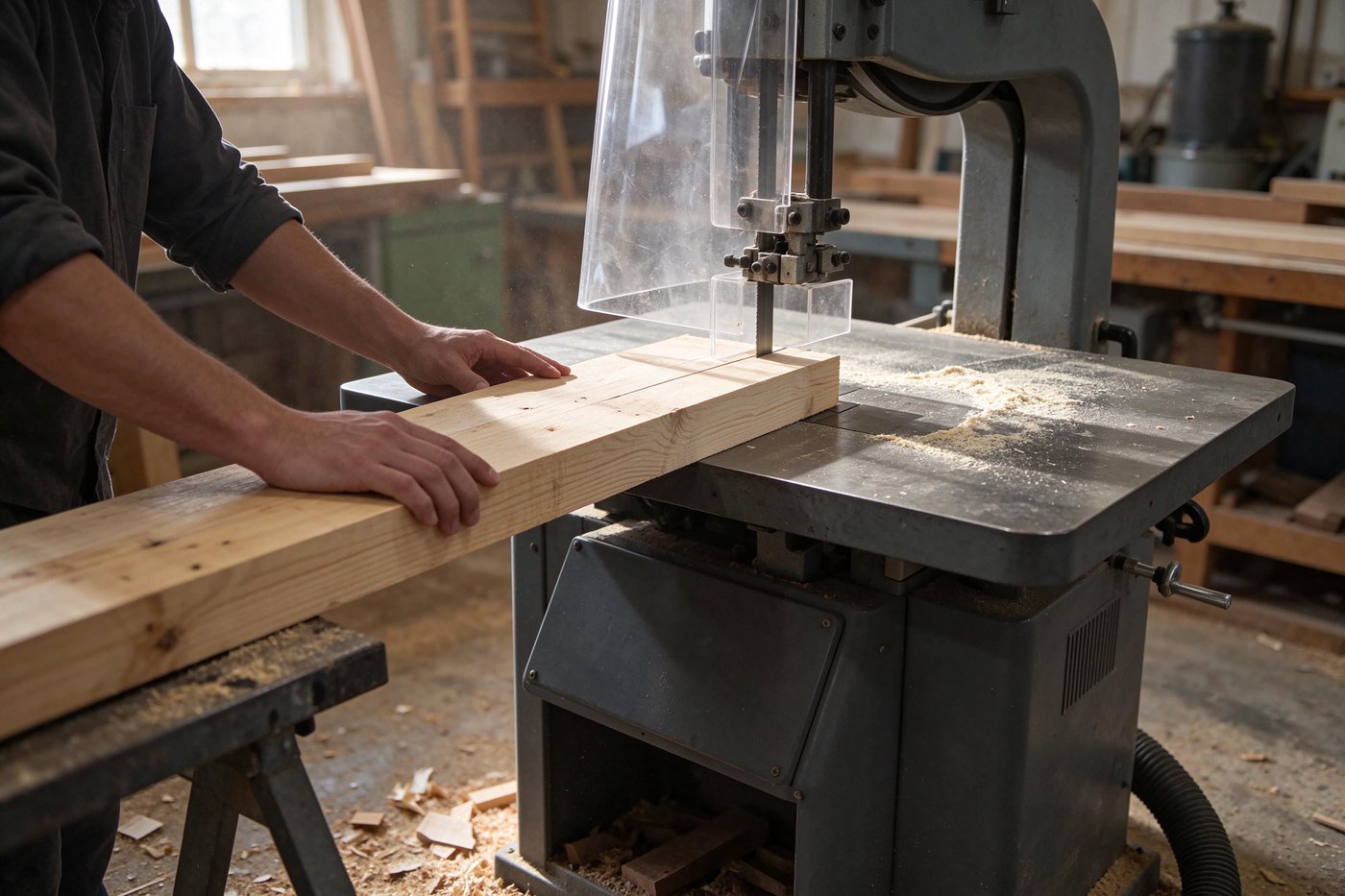
Ten millimetres with a 300 mm span passed the break test with visible deformation but no penetration. Two arms stopped the rotation. Mounting to the machine frame rather than the table matters because a tilting table moves relative to the blade and a guard tied to it changes clearance every cut.
Prototype three: corners, chips and the polycarbonate bandsaw blade guard
The third change was the window corners. A square corner in a machined sheet is a stress riser, and the second prototype cracked from a corner within a week of production use. A 6 mm radius, routed rather than sawn, removed the failure. The 15 mm chip gap came from the same trial: chips packed behind the window in two shifts on a resaw job and the operator could not see the blade.
Guards are cut to a machine outline with bracket holes drilled to pattern, and we recommend a spare window for any saw running two shifts.
Send the machine make, wheel size and existing guard drawing to oversales@rpplexiglass.com for a guard cut and drilled to fit.
Workshops that guard a saw often guard a baler or a shear to the same standard, and the baler case deals with a larger span and a heavier fragment load. polycarbonate baler guards for recycling plants covers that part of the specification.
Frequently Asked Questions
Will 8 mm stop a broken blade?
A 10 mm sheet contains a blade break at normal tension for a 400 mm throat machine. An 8 mm guard is adequate for a small hobby saw but we specify 10 mm above 350 mm wheels.
Why polycarbonate and not steel mesh?
Operators defeat a guard they cannot see through. A clear guard keeps the cut line visible, which is the only reason a guard stays in place on a working saw.
Does the guard need chip clearance?
Yes, a 15 mm gap behind the window. Chips packed against the sheet abrade it and hide the blade, and a saw that looks blind gets the guard removed.