
The safety officer for a vegetation control crew sent three incident reports in one season, each describing a blade tip through a guard. The steel guards had been patched and re-worn, and the fragments were passing through the weld heat zone. The replacement was a formed polycarbonate brush cutter guard, and the reasoning behind the material change is worth setting down.
Impact behaviour of a polycarbonate brush cutter guard
The measured comparison was between a 3 mm steel guard and a 6 mm polycarbonate guard of identical coverage.
- Mass: 2.4 kg steel against 1.3 kg polycarbonate for the same wrap
- Failure mode: steel spalls at the weld; polycarbonate cracks visibly
- Cold: polycarbonate holds impact down to minus 30 C, steel embrittles
- Repair: cracked polycarbonate is replaced, never welded
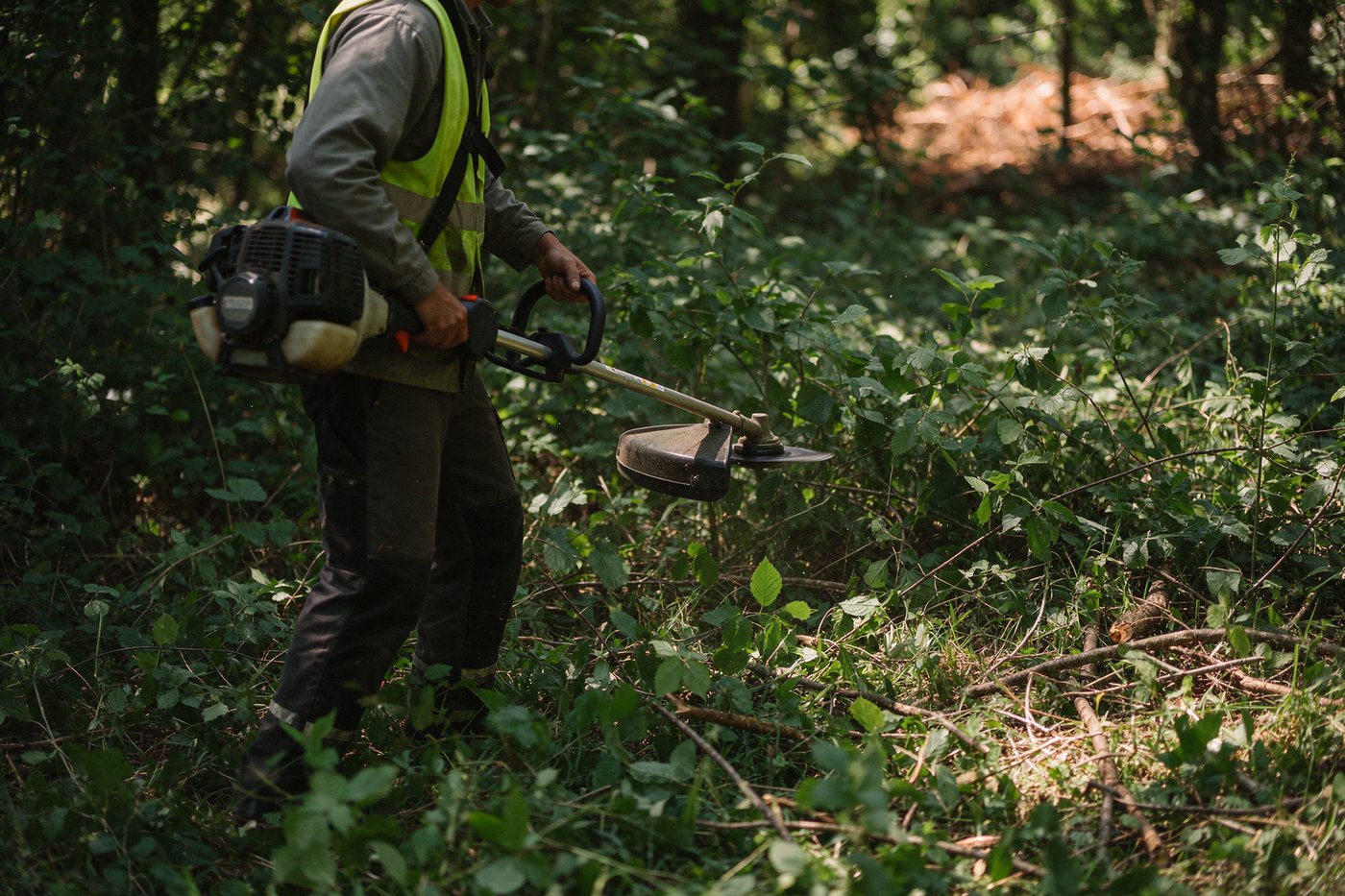
The weight figure is the practical one. On a harness hung clearing saw, 1.1 kg off the guard reduces the torque the operator carries on a side swing through a full shift, and fatigue is where the risky hand positions come from.
Mounting and profile of the polycarbonate brush cutter guard
Four mounting points, not two. A two point mount lets the guard rotate under a strike and exposes the blade quadrant it was supposed to cover. The guard is formed with a 5 mm lip at the outer edge, which stiffens the panel without adding a welded frame.
Wrap angle is set from the blade exit, not from the gearbox centre. A 120 degree wrap puts the chip stream below the operator hip on both swing directions, and a 90 degree wrap does not.
Guards are formed to the machine deck profile in 6 mm or 8 mm sheet, with mounting holes drilled to the existing bracket so a fleet can be retrofitted without welding.
Send blade diameter, machine model and guard profile to oversales@rpplexiglass.com for a formed guard quote.
Guarding a blade and guarding a band wheel are one engineering question, covered in the bandsaw blade guard note covers that part of the specification.
Frequently Asked Questions
Why polycarbonate for a blade guard?
It absorbs impact without spalling and weighs about half a steel guard of the same coverage, which matters on a harness hung machine. A 6 mm polycarbonate brush cutter guard also shows cracks before it fails, where steel hides them.
What wrap angle is needed?
A guard covering 120 degrees from the blade exit to the operator side is the minimum for a clearing saw. Below 90 degrees the chip stream reaches the lower leg on a side swing.
How often should the guard be inspected?
At every refuel. Look for crazing at the mounting points and a lip that has gone opaque. A guard with visible crazing is replaced, not repaired, because the crack grows fast in cold weather.