
A blasting shop in Sheffield tracked its consumables for a year and found the viewing pane was the third largest line item after grit and nozzles. Glass panes were lasting about three weeks. The fix combined a thicker structural pane with a cheap sacrificial layer, and the polycarbonate sandblast cabinet window that resulted now runs four months on the structural sheet.
Two layer design in a polycarbonate sandblast cabinet window
- Structural pane: 8 mm polycarbonate, hard coated outer face
- Sacrificial pane: 3 mm clear polycarbonate, inner position
- Frame: 20 mm aluminium channel with a gasket seat
- Viewing height: 300 mm, set to the operator eye line at the glove ports
- Swap: two screws per side, no cabinet strip down
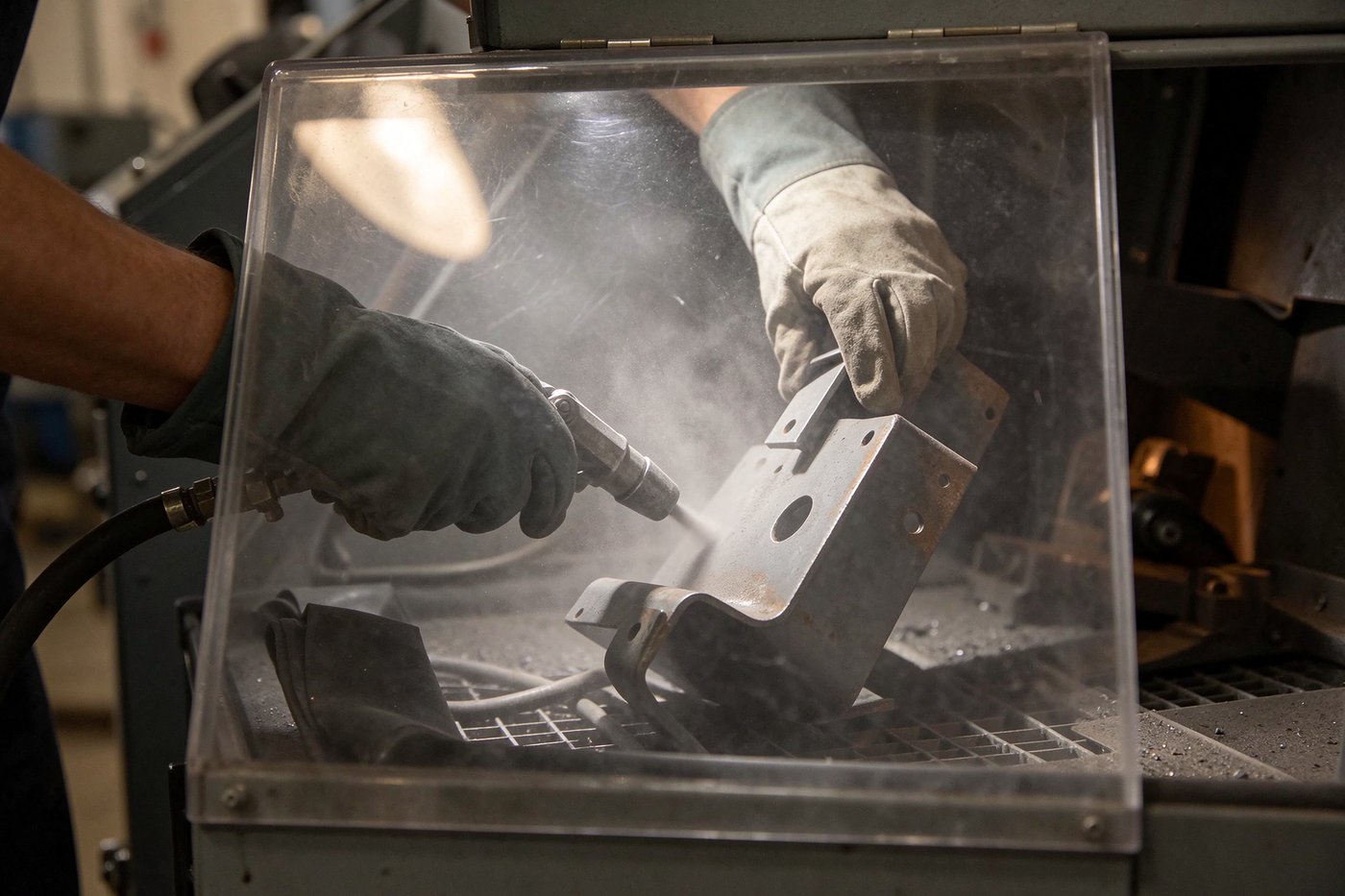
The economics live in the swap. A 3 mm pane costs a fraction of an 8 mm coated pane and is changed in under five minutes, so the shop keeps three spares on the shelf and never blasts through a frosted window because nobody had time to order one.
Abrasive type and the polycarbonate sandblast cabinet window
Alumina cuts faster than glass bead on every surface, including the window. A shop running 90 psi alumina should expect a 3 mm sacrificial pane to last about 60 blasting hours; glass bead at 60 psi stretches that to roughly 200. Quoting a pane without asking the abrasive is guesswork.
One installation error recurs: the inner pane is fitted tight to the frame, so grit works into the gap and scratches the structural pane on both sides. A 2 mm gap with a soft gasket keeps the abrasive out of the sandwich.
Panes are cut to the cabinet opening with the frame allowance, and the swap kit includes the gasket strip and screws.
Send cabinet opening size and abrasive type to oversales@rpplexiglass.com for a quote on panes and the swap kit.
Where the abrasion comes from a laser rather than grit, the laser safety window note covers that part of the specification.
Frequently Asked Questions
Why does glass fail so fast here?
Alumina grit at 90 psi etches glass at roughly the same rate as it does the workpiece. A 5 mm glass pane loses readable clarity in about 20 blasting hours; polycarbonate abrades more slowly and does not shatter.
What is the sacrificial pane for?
A 3 mm inner pane takes the abrasion and is swapped in minutes. The 8 mm structural pane behind it stays clear for months, so the shop changes the cheap layer, not the window.
Can the window be cleaned and reused?
Not once it is frosted. Abraded polycarbonate can be polished back to clarity only on the outer face; an inner face that has gone grey is replaced.