
A polycarbonate concrete mixer guard has to stay clear while being hit by stone and alkaline slurry.
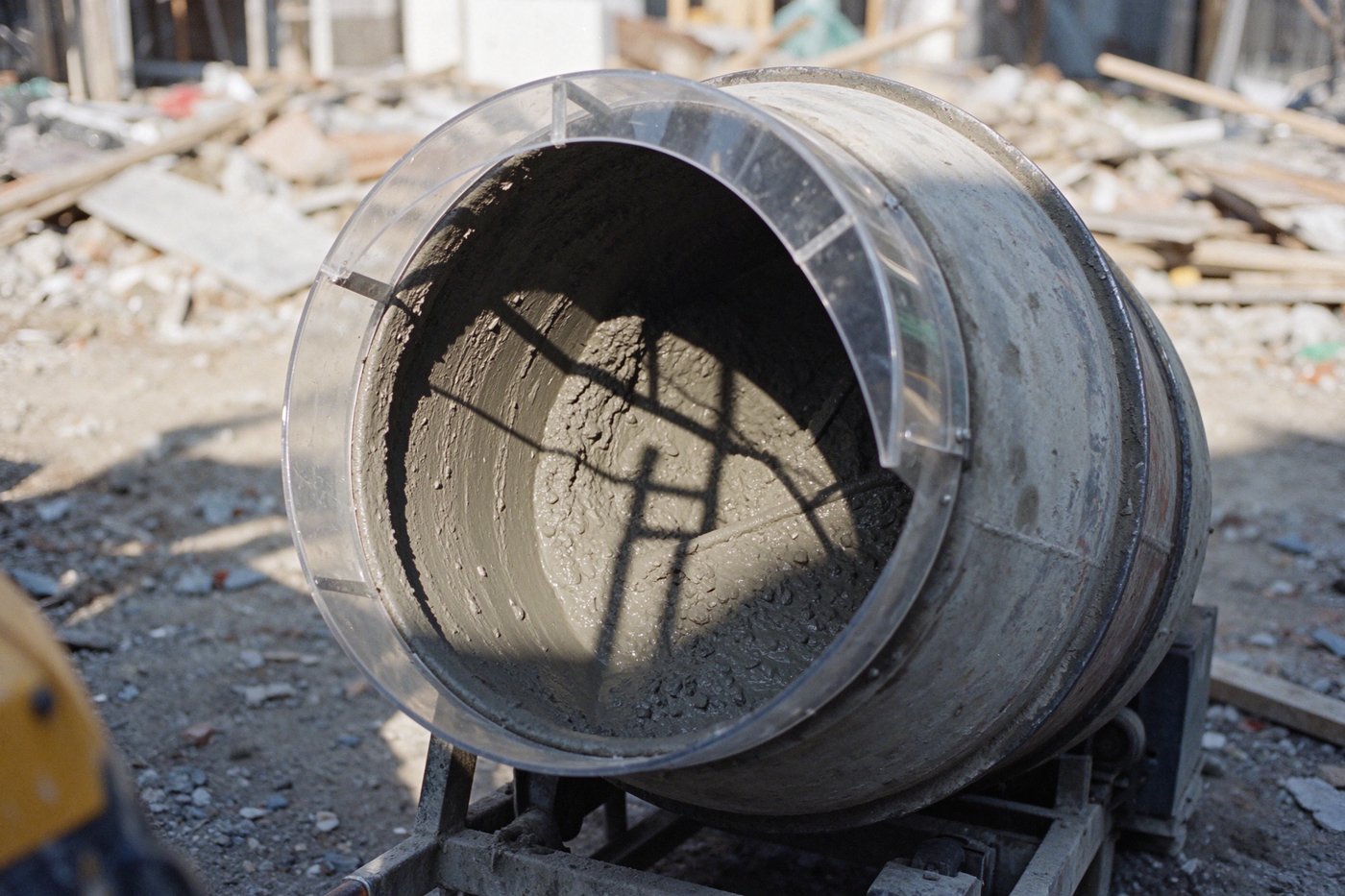
A plant in the Midlands replaced steel mesh guards on four drum mixers with 6 mm polycarbonate panels to improve visibility. Six months later two panels were opaque, one had a crack from the hinge bolt and the fourth was fine. The difference was not the sheet: it was where each mixer sat in the yard and how each guard was mounted.
A polycarbonate concrete mixer guard is asked to do something unusual: stay clear while being hit by sand, stone and alkaline slurry every day. Polycarbonate will take the impact, but the surface will haze, and the mounting has to keep the panel from being levered by the drum load.
Frame, hinge and the load path
Six millimetre polycarbonate is the practical thickness for a drum opening over 500 mm. A flat panel spanning the opening needs a steel or aluminium frame around the perimeter, because the guard is lifted and dropped dozens of times a day and a bare panel will crack at the hinge.
Hinges should be bolted to the frame, not through the panel. Where the panel must carry the hinge, use a 1.5 mm aluminium plate bonded or bolted over the hinge zone to spread the load. The latch should be a cam or a hook that pulls the guard closed against a rubber seal, not a bolt that relies on the panel edge.
Abrasion, alkali and the haze that follows
- Use a hard-coated polycarbonate where the guard faces direct aggregate throw
- Wash the panel down at the end of each shift; set slurry dries to a film that is abrasive to wipe
- Avoid acid-based descalers on the panel; they attack the coating
- Replace the panel when haze reduces visibility through the charge zone, not when it finally cracks
The two opaque panels in the Midlands were on mixers that were hosed down with a lime-rich wash and left wet. The coating survived the impact but not the chemistry. A neutral detergent and a squeegee changed the replacement interval from six months to over two years.
Visibility that actually helps the operator
The point of a clear guard is to see the mix. A panel that is clear at the top and hazy at the bottom is worse than mesh, because the operator stops looking. Set the guard height so the charge and the discharge are both visible, and keep the frame out of the viewing line.
RP River People Plexiglass supplies hard-coated polycarbonate drum guards cut to the mixer outline, with frame and hinge zones reinforced. Send the mixer model or a template for a quotation.
Send the mixer outline or a cardboard template to oversales@rpplexiglass.com for a hard-coated drum guard quotation.
Plant guards are sized the same way as machine enclosures, described in our machine guard sheet guide.
Frequently Asked Questions
Will polycarbonate survive daily aggregate impact?
Yes, at 6 mm with a perimeter frame. The sheet will haze over time, but it will not shatter like glass or crack like acrylic under the same hits.
How do I stop the hinge cracking the panel?
Bolt the hinge to a frame or to a bonded aluminium plate, not straight through the sheet. A hinge through bare polycarbonate concentrates load in two holes.
What cleaner should be used on a cement-exposed guard?
Neutral detergent and water, rinsed and squeegeed. Acid descalers attack the coating and dry slurry abrades it.