
A polycarbonate ferry wheelhouse window is a salt and steel joint problem more often than an impact problem.
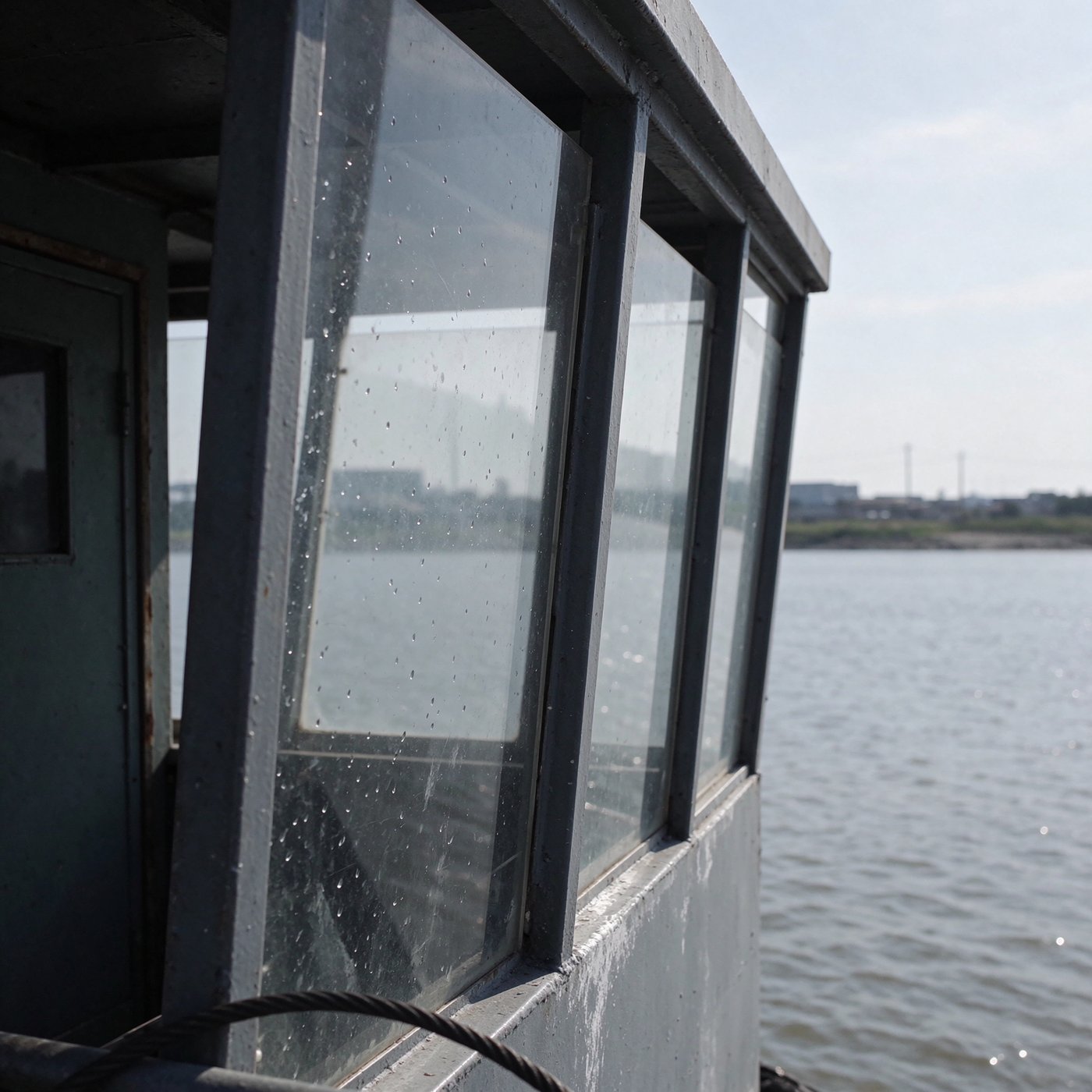
A harbour ferry on the Fal estuary had its wheelhouse windows replaced three times in five years, always after a winter. The pattern was not impact and not vandalism: the panes were crazing along the lower edge where salt spray sat against a steel rebate.
Salt, steel and a dissimilar joint
A steel rebate in a marine wheelhouse is a corrosion cell. Salt water sits in the joint, the steel rusts, expands and presses against the pane edge, and the pane crazes from the inside out. The fix is not a thicker pane; it is a 3 mm neoprene separator between the polycarbonate and the steel, with the drainage path moved below the pane rather than through the rebate.
Ten millimetre polycarbonate is the working thickness for a wheelhouse pane up to about 900 by 700 mm. It takes green water impact without cracking, weighs about 6 kg per square metre, and can be replaced by two people without a crane, which matters on a small ferry with a short refit window.
Polycarbonate ferry wheelhouse window: rebate and drainage
- Thickness: 10 mm for panes up to 900 by 700 mm; 12 mm above that or where the pane faces open water.
- Separator: 3 mm neoprene between pane and steel rebate, continuous around the perimeter.
- Clearance: 5 mm each edge for thermal movement; the pane must never be a structural filler.
- Drainage: a 6 mm weep hole at each lower corner, drilled through the rebate, not through the pane.
- Seal: neutral-cure silicone on the outer face only; no sealant along the bottom edge, so water can leave.
Fal estuary: three sets of panes, then a separator
The ferry went through three sets before the yard changed the detail. Set one was 8 mm acrylic, which crazed at the bolt holes within a season. Set two was 8 mm polycarbonate fitted into the original rebate with silicone all round, including the bottom edge, which trapped water and produced edge crazing within eighteen months.
Set three, still in service after four years, is 10 mm polycarbonate on a 3 mm neoprene separator, sealed on three sides only, with weep holes at both lower corners and the pane sitting 5 mm clear in the rebate. The lower edge is dry every time the boat comes alongside.
The yard also changed the fastening from through-bolts to clamp strips, which removed the bolt holes that had been the starting point for crazing on the first set.
Specifying wheelhouse glazing that survives a refit cycle
Send the rebate dimensions, the steel or aluminium frame material, whether the pane faces open water and the refit window available. Separator, thickness and drainage follow. River People PLEXIGLASS cuts 10 mm and 12 mm UV-stabilised polycarbonate to rebate size with clearance allowance and can supply neoprene separator strip and clamp bars with the panes. Send the rebate drawing and frame material and we will quote the glazing and the sealing set.
Send rebate dimensions, frame material and whether the pane faces open water, and we will quote 10 mm panes with neoprene separator and clamp bars: oversales@rpplexiglass.com.
Steel rebates and salt water are dealt with from another angle in our tugboat wheelhouse guide.
Frequently Asked Questions
Why do ferry wheelhouse polycarbonate windows craze at the lower edge?
Salt water trapped between the pane and a steel rebate forms a corrosion cell; the rust expands and presses into the pane edge. A 3 mm neoprene separator and a weep hole at each lower corner break the cell.
Should the bottom edge of a marine window be sealed?
No. Seal three sides and leave the bottom open with weep holes drilled through the rebate, so any water that enters can leave. Sealing all four sides traps salt against the pane edge.
What thickness for a small ferry wheelhouse?
Ten millimetre for panes up to about 900 by 700 mm, which takes green water impact and can still be handled by two people in a short refit. Go to 12 mm above that size or where the pane faces open water.