
A polycarbonate mining dump truck window usually fails from racking as the body tips, not from the rock it faces.
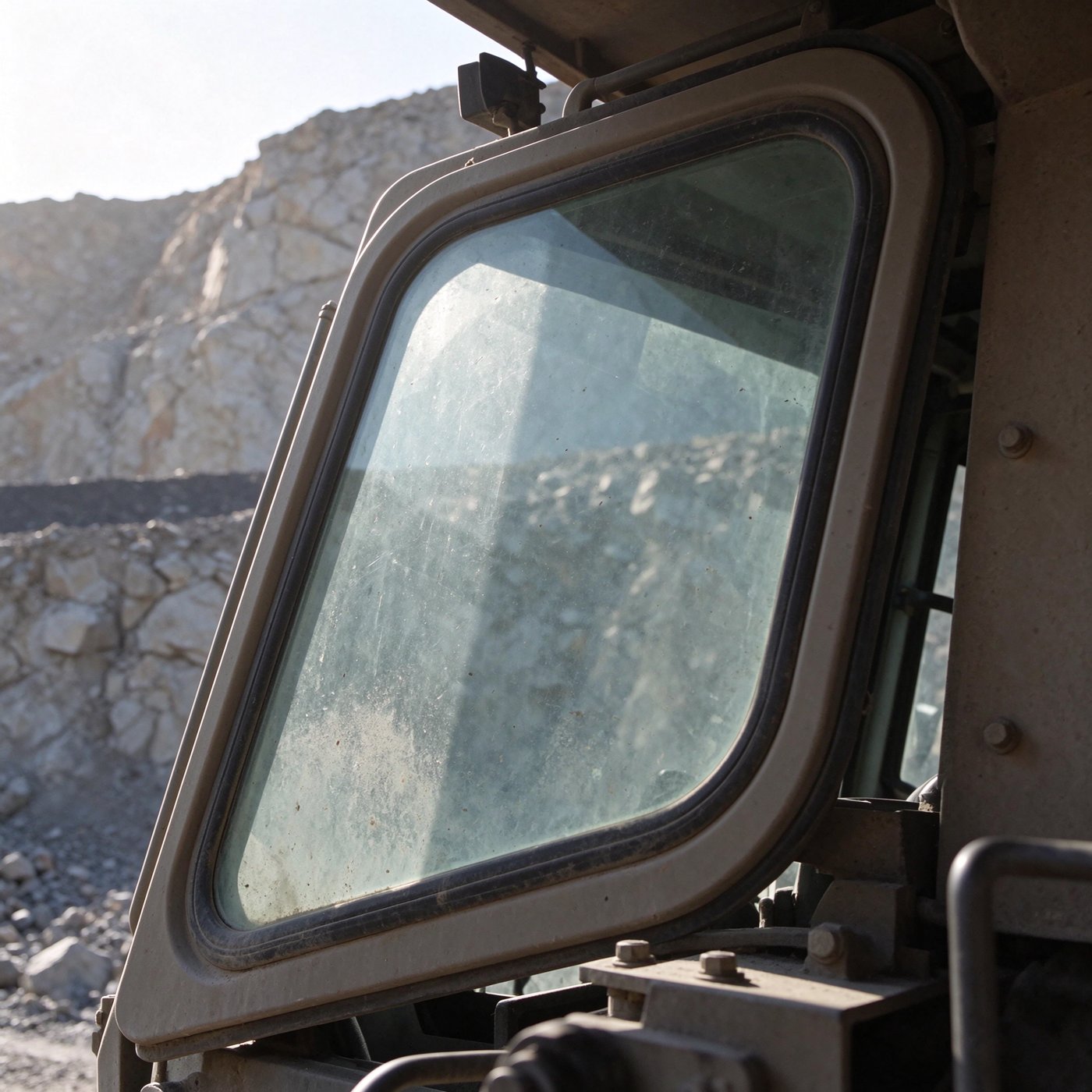
A quarry in Derbyshire was replacing the cab side windows on its haul trucks every eight to ten weeks. The windows were not being hit by rock; they were failing from the frame, where the cab flexes as the body tips and the glass takes the racking load.
Racking, not impact
A rigid quarry truck cab moves relative to its chassis by several millimetres as the body is raised and the suspension unloads. A glazed pane bolted at four corners sees that movement as a shear load, and glass has almost no capacity for it. Polycarbonate does, but only if it is allowed to move: a 10 mm pane fitted with 6 mm clearance and gasketed clamps will follow the cab without loading the fixings.
Ten millimetre is the specification for a haul truck side window. Eight millimetre is adequate for a smaller site dumper; 12 mm is used where the window is also exposed to flying rock from a stockpile blast. The thickness is set by the frame movement and the rock exposure together, not by the rock alone.
Polycarbonate mining dump truck window: frame, dust and wiper
- Thickness: 10 mm for haul trucks; 12 mm where the pane faces a blast or stockpile face.
- Clearance: 6 mm each edge, seated on EPDM blocks so the pane floats rather than bridges the frame.
- Seal: double gasket, outer dust lip and inner water lip, because quarry dust enters any single seal.
- Coating: hard coat both faces; the outer face takes the wiper, the inner face takes the daily wipe.
- Wiper band: a 25 mm clear strip kept free of clamps, or the wiper will run over a fixing and lift.
Derbyshire, from eight weeks to two years
The quarry rebuilt six cab windows with 10 mm polycarbonate, floated on EPDM blocks with a double gasket, and moved the clamp line 30 mm inboard so the wiper band stayed clear. The panes have now run two years on the same trucks, with surface scuffing on the outer face and no cracks.
The first attempt, before the frame change, had used 10 mm sheet bolted through the original glass holes. Three of six cracked at the bolt line within four months, all on trucks working the stockpile face where cab movement is greatest.
Dust was the second problem. The original single gasket let fine quarry dust into the rebate, where it sat against the pane edge and abraded a 3 mm band that read as a crack starting point. The double gasket and a 3 mm standoff from the rebate face removed the abrasive contact.
Replacing glass on a mixed fleet
Fleets rarely have one truck model. Send a template per cab, the suspension type, whether the truck works a blast face, and the wiper arc. Thickness and clamp positions follow. River People PLEXIGLASS cuts 10 mm and 12 mm polycarbonate to cab templates with clearance allowance, supplies double gaskets and clamp strips, and hard-coats both faces on request. Send the cab templates and duty description and we will quote the panes and the sealing set.
Send cab templates plus the truck duty and wiper arc and we will quote 10 mm or 12 mm panes with double gaskets and clamp strips: oversales@rpplexiglass.com.
Heavy plant cabs move against their chassis in the same way, described in our crane cab glazing note.
Frequently Asked Questions
Why do mining dump truck windows fail in weeks?
Usually racking rather than rock. The cab moves relative to the chassis as the body tips, and a pane bolted rigid at four corners takes that as shear. Polycarbonate floated on gaskets and blocks survives it.
What thickness polycarbonate for a haul truck cab window?
Ten millimetre for haul trucks, 12 mm where the pane faces a blast or stockpile face. Eight millimetre is adequate only for smaller site dumpers.
How do I stop quarry dust abrading the pane edge?
Use a double gasket with a 3 mm standoff from the rebate face. A single seal lets fines into the rebate, where they grind a band along the pane edge that looks like the start of a crack.