
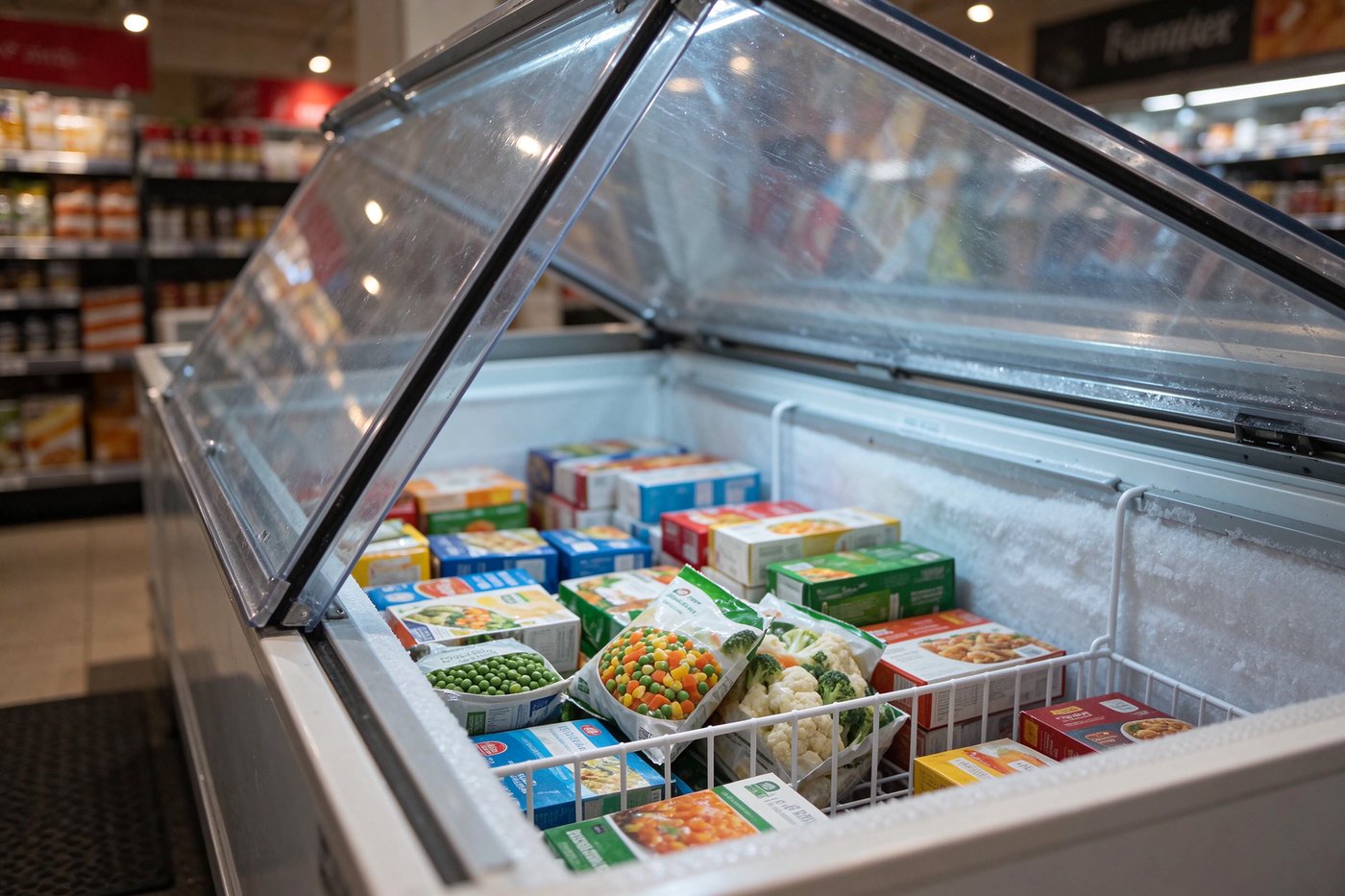
A supermarket group in Warsaw surveyed 18 stores and found that 40 percent of chest freezer lids were fogged for the first two minutes of every customer approach. Nothing was wrong with the refrigeration. The lids were single glazed, unheated and uncoated, and the polycarbonate freezer door glazing had been specified as a transparent cover rather than as part of the thermal envelope.
Freezer glazing is a condensation problem disguised as a material choice.
Why polycarbonate freezer door glazing fogs
A chest freezer holds -18 to -25 C while the shop floor sits at 22 C and 55 percent relative humidity. The glazing surface nearest the room drops below the dew point, and moisture condenses within seconds of the lid being closed. Two things control it: surface temperature and surface energy.
- Glazing: 5 mm polycarbonate for single-pane lids; 5 mm plus a 4 mm inner pane with a 12 mm air gap for low-temperature cabinets.
- Face: anti-fog coating on the room side, which spreads condensate into a film instead of droplets.
- Frame: thermally broken aluminium or PVC, with a 6 mm gasket that keeps room air off the cold edge.
- Heater: a 12 V or 24 V foil heater rated 30 to 50 W per metre along the frame, energised with the lid.
Single pane, double pane, or heated
Single 5 mm glazing with an anti-fog face is adequate for a -18 C chest freezer in a shop below 60 percent humidity. At -25 C, or in a humid store, a double-glazed unit with a 12 mm gap and a desiccant seal keeps the inner face above the dew point. The heated frame is the third lever and is usually the cheapest fix for a fogging complaint on an existing cabinet.
The interlayer in a double unit has to be sealed properly. A polycarbonate unit built without a desiccant edge will fog between the panes within a year, and that fog cannot be cleaned, only replaced.
Impact and cleaning on a retail floor
Shoppers drop baskets on lids, and trolleys hit door frames. Polycarbonate at 5 mm absorbs that without cracking, where glass would break into the food. The trade-off is scratch sensitivity, so a hard coat on the room face keeps the panel readable through a year of cleaning with a squeegee.
River People supply
River People cuts hard-coated polycarbonate to freezer lid and door drawings, and can assemble double-glazed units with a desiccant edge and a thermally broken frame. Retail orders of 100 to 1,000 lids ship in 18 to 22 days, with the anti-fog face marked so installation crews do not reverse the panel.
Send your cabinet temperature and store humidity to oversales@rpplexiglass.com for a glazing build and a fogging assessment.
The frame and heater detail overlaps with cold store doors, covered in our polycarbonate cold storage door guide.
Frequently Asked Questions
Is anti-fog coating permanent?
A factory anti-fog coat lasts three to five years under normal cleaning. Abrasive pads and ammonia cleaners shorten it sharply. Recoating is not practical in the field, so the panel is replaced when the coat fails.
Can glass be used instead?
Tempered glass has better scratch resistance but breaks on impact into a freezer, which is a food safety issue. Most retail groups now specify polycarbonate for lids and doors.
Why does the frame need a thermal break?
Without one, the aluminium conducts room heat to the cold side, the frame runs below dew point and water drips onto the product. The break costs little and removes the whole condensation path.