
A country elevator in Saskatchewan replaced four viewing panes a season. The panes were acrylic, and every one had gone from clear to milky within about 900 operating hours. The plant fitter worked out the cause with a light meter: grain dust at the boot was abrading the inner face, not the outer. The answer was a polycarbonate grain elevator window at 8 mm with a hard coat and a removable inner shield.
What the light meter showed on the polycarbonate grain elevator window
Three readings explain the choice of material and the design.
- Transmission loss: 38 percent per season on uncoated acrylic
- Abrasive: grain dust at 2 to 4 percent moisture acts as a grinding slurry
- Pressure pulse: about 0.2 bar during a leg clean-out
- Cold: minus 30 C at a prairie head house in January
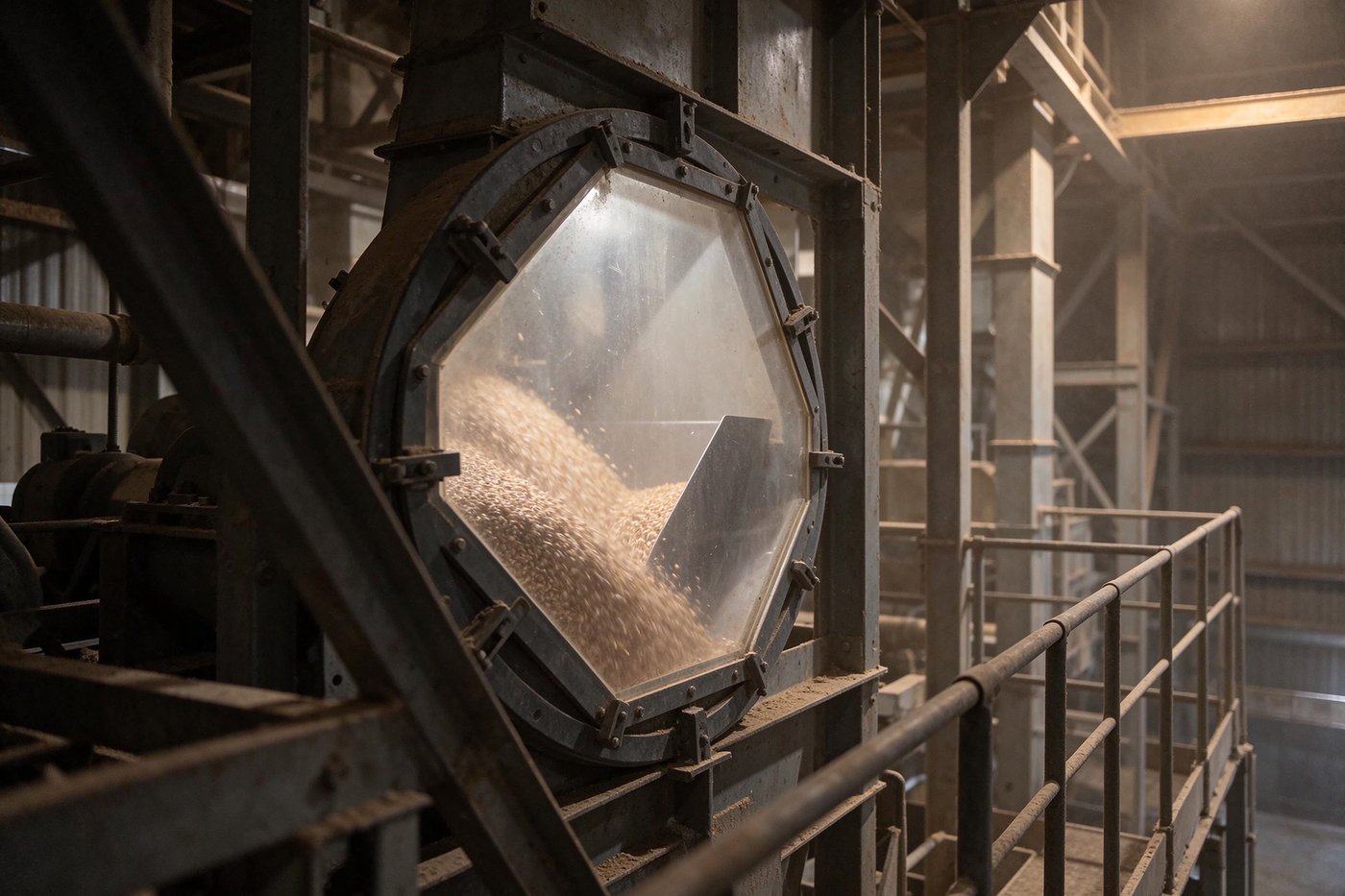
An 8 mm polycarbonate pane holds transmission far longer under the same dust load, and the impact margin matters in January, when a cracked acrylic pane can fail outright from a frozen clod.
Frame and gasket on the polycarbonate grain elevator window
The pane is clamped by an external frame over a 6 mm closed cell gasket, compressed by about 25 percent. That much compression seals against grain dust without loading the bolt holes, which is where acrylic panes were cracking in the earlier installation.
The detail that saves the most money is access. A pane bolted through sixteen holes takes an hour to change on a cold afternoon. A pane clamped by an eight bolt external frame changes in ten minutes, which is why the change actually happens rather than being deferred until the leg plugs.
Panes are supplied cut to the port pattern of the leg, with the gasket and clamping frame included for retrofits.
Send leg diameter, observation port count and dust classification to oversales@rpplexiglass.com for a quote.
Silo inspection ports carry the same clamping logic, set out in the silo inspection window guide covers that part of the specification.
Frequently Asked Questions
Why not use acrylic on a grain leg?
Grain and grit abrade acrylic faster, and acrylic is brittle at the minus temperatures of a winter elevator. An 8 mm polycarbonate grain elevator window resists both, and it holds up to the pressure pulse of a leg clean-out.
How many observation ports?
Two per leg section is typical: one at the boot, one at the head. A single port at the boot tells the operator whether grain is flowing but not whether the head is choking.
Is the window a pressure component?
No. The pane is a viewing port, not a containment device. It is fitted with a gasket and clamped by an external frame so a pane failure vents dust rather than launching it.