
The plant engineer at an indoor rink had two complaints from operators: the window fogged within ten minutes of a resurfacing pass, and the glass pane had cracked at the corner twice in three winters. The second complaint was the expensive one. The polycarbonate ice resurfacer window specified afterwards solved both, and the numbers behind the design are below.
Thermal design of a polycarbonate ice resurfacer window
- Pane: 8 mm solid polycarbonate, both faces hard coated
- Double glazing: 20 mm air gap, sealed with a desiccant strip
- Cold bend: minimum radius 400 mm at 8 mm, formed warm
- Seal: EPDM gasket with a 4 mm expansion allowance
- Cab side: anti-fog treatment on the inner face
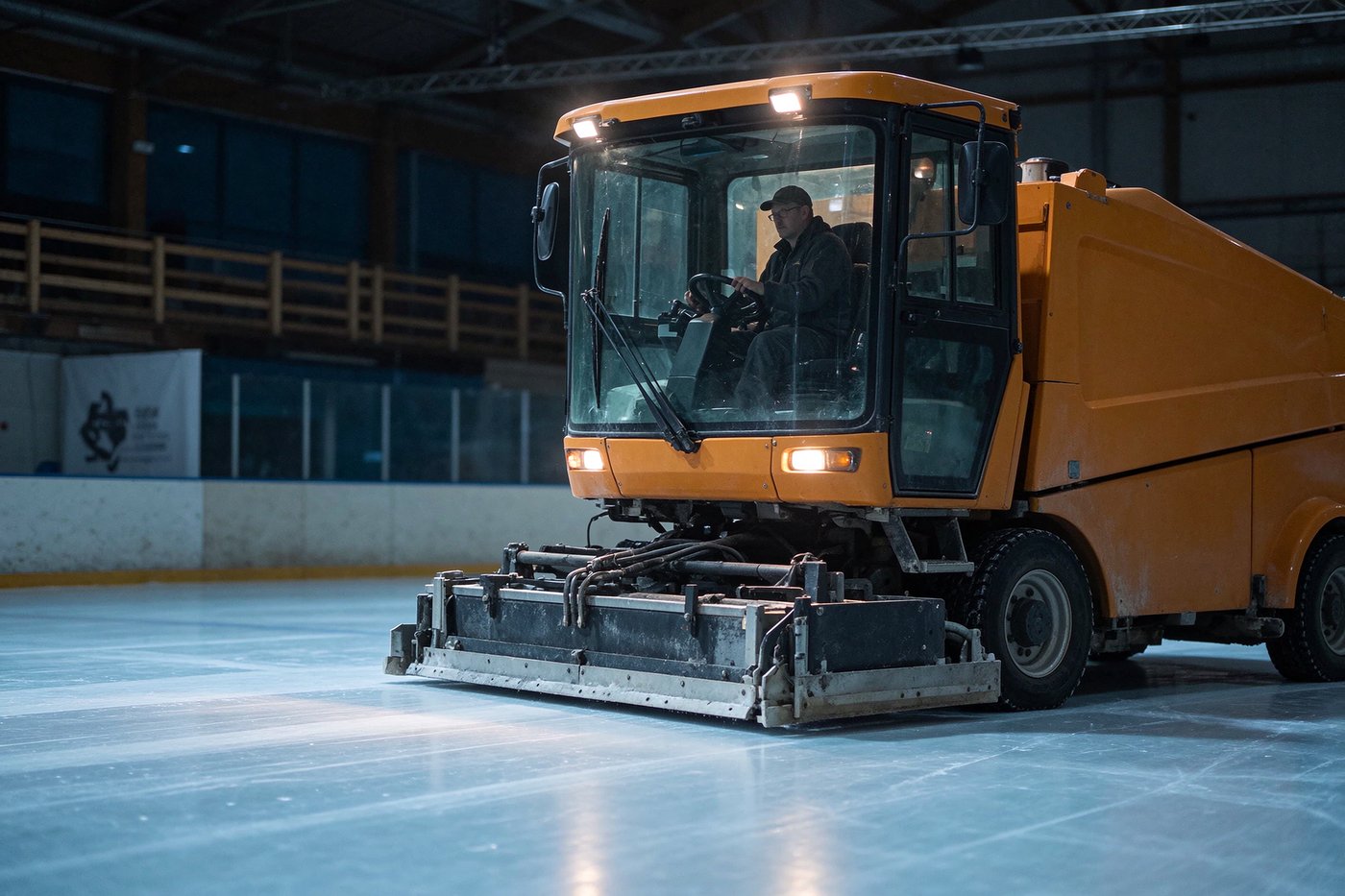
The air gap is the whole answer to fogging. Rink air sits near saturation, the cab is heated, and a single pane runs below dew point on the cold side. Two panes with 20 mm of still air keep the inner face above dew point through a full shift, so the operator stops running with the window open in a minus eighteen hall.
Forming and fitting the polycarbonate ice resurfacer window
These panes are rarely flat. A rink machine aperture curves at the corners, and polycarbonate is formed warm at 160 to 170 C rather than cold bent, because cold bending an 8 mm sheet at a 200 mm radius leaves residual stress that shows as crazing in the first cold snap. Minimum radius we work to is 400 mm.
The seal has to allow movement. Polycarbonate at minus eighteen contracts about 4 mm over a 900 mm pane compared with a cab at plus twenty, and a tight gasket turns that movement into edge load. A 4 mm allowance and a slotted fixing prevent the corner cracks that the glass panes suffered.
Panes are formed to the machine aperture or supplied flat for machines with flat glazing, with the desiccant strip and gasket included.
Send machine model, aperture size and rink temperature range to oversales@rpplexiglass.com for a glazing quote.
Cold forming affects rink side panels too, and the cold bending guide covers that part of the specification.
Frequently Asked Questions
Why does glass crack on a rink machine?
Cold glass plus a warm cab interior plus vibration from the conditioner creates a thermal gradient across the pane. Polycarbonate at 8 mm tolerates that gradient and will not shatter over the ice.
Is double glazing worth it?
On an indoor rink at high humidity, yes. A 20 mm air gap between two panes keeps the inner face above dew point, which removes the fogging that forces operators to run with the window open.
What about ammonia lines?
Ammonia is not a solvent for polycarbonate, but ammonia based cleaners attack the hard coat. Specify a pH neutral cleaner and the pane will outlast the machine.