
An airport in Doha replaced 34 windows along two boarding bridges after a single season, and the maintenance record pointed at the cause: the panels had been fixed with a rigid frame and no allowance for the bridge structure flexing as it moved to the aircraft. Every crack began at the frame edge. The polycarbonate jet bridge window that followed used a laminated build and a frame designed to let the panel move.
This is a component that sits between a moving structure and the public, so the specification has to answer three things at once: impact, crowd load, and thermal movement in 45 C apron heat.
Build of a polycarbonate jet bridge window
Laminated polycarbonate at 5 plus 5 mm gives a 10 mm total build with two hard-coated faces and a 0.76 mm aliphatic urethane interlayer. The laminate keeps a broken pane in place, which is the behaviour a bridge operator needs if a trolley or a tool hits the panel.
- Build: 5 mm hard-coated polycarbonate plus 5 mm hard-coated polycarbonate, 0.76 mm interlayer, 10 mm total.
- Panel size: typically 900 x 1200 mm, with 25 mm of frame engagement on all four sides.
- Movement: 3 mm clearance per metre of panel for thermal expansion, taken up by an EPDM gasket rather than a clamped edge.
- Edge: sealed against water ingress, since an open laminate edge delaminates in humid apron air.
Why a rigid frame cracks a flexible panel
Polycarbonate moves roughly 3 mm per metre over a 40 C swing, and an aluminium frame moves about half that. Clamping both together with a dry seal forces the panel to absorb the difference at the bolt line, which is where the stress crack starts. The fix costs almost nothing: an EPDM gasket, a 3 mm clearance and a bolt washer that lets the panel slide.
Crowd load is the second design case. Passengers lean on the glass while waiting, and a 900 x 1200 panel at 10 mm will deflect 6 to 9 mm under a 1 kN lean without permanent set. A 6 mm single panel deflects twice as far and starts to drum against the frame.
Apron lighting and visibility
Apron floodlights at night produce hard reflections on a glossy panel. A light matte etch on the cabin face reduces glare without losing the view, and it hides the fingerprints that a bridge window collects in a day.
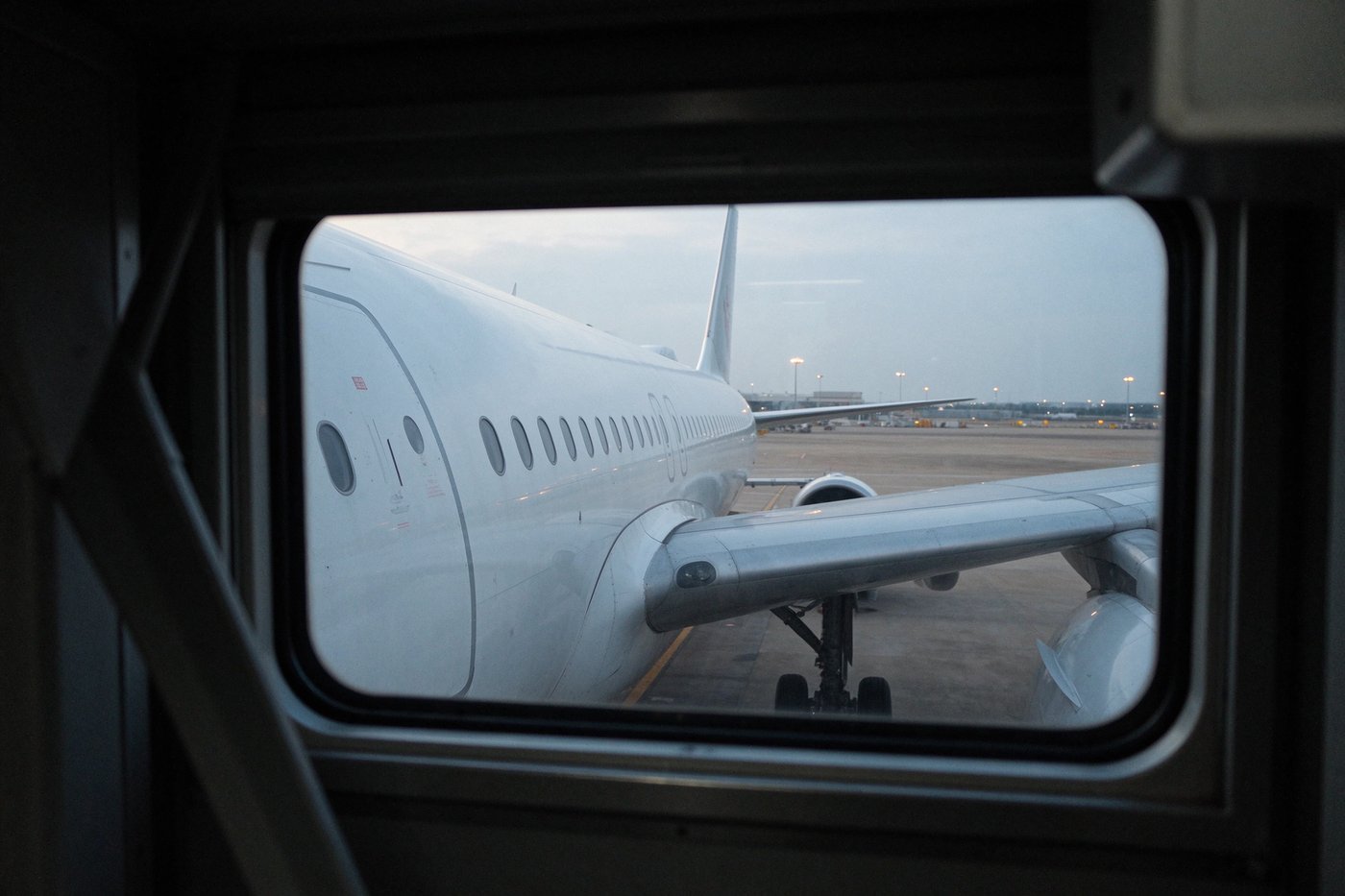
River People production
River People laminates hard-coated polycarbonate in a controlled press, edge-seals every panel, and can supply matched sets for a bridge line so panels from different batches read the same tint. Airport orders of 20 to 300 panels ship in 20 to 25 days with edge protection and a laminate certificate.
Send your frame detail and panel count to oversales@rpplexiglass.com for a laminated build sheet and pricing.
Airside glazing rarely stops at the bridge, and shelter panels are specified in our polycarbonate bus stop shelter guide.
Frequently Asked Questions
Why laminate rather than use a single 10 mm panel?
A single panel is cheaper and stronger in one piece, but it fails as one piece. The laminate holds fragments and keeps the opening closed after an impact, which is what an airport operator needs.
Can the panel be heated for a curved bridge?
Yes, but only with a controlled drape form and a radius above 200 times the thickness. Cold forcing a curve into a laminated panel risks interlayer shear.
How often should the panels be inspected?
A visual check each shift for edge seal damage and a full inspection of bolt clearances every six months is the common regime on bridge lines.