
Four hand injuries in one season at a firewood yard, all at the same point: the wedge, where a split block kicks sideways as the ram returns. The yard had a steel mesh guard on the machine. The mesh stopped the block and let the splinters through. The polycarbonate log splitter guard that replaced it was designed around that specific failure, not around general guarding.
Kick zone geometry and the polycarbonate log splitter guard
- Sheet: 8 mm solid polycarbonate, hard coated
- Wrap: 90 degrees on both sides of the wedge line
- Standoff: 300 mm from the wedge to the panel face
- Height: 250 mm above the beam, 150 mm below
- Hinge: top hinged with a latch, not a removable panel
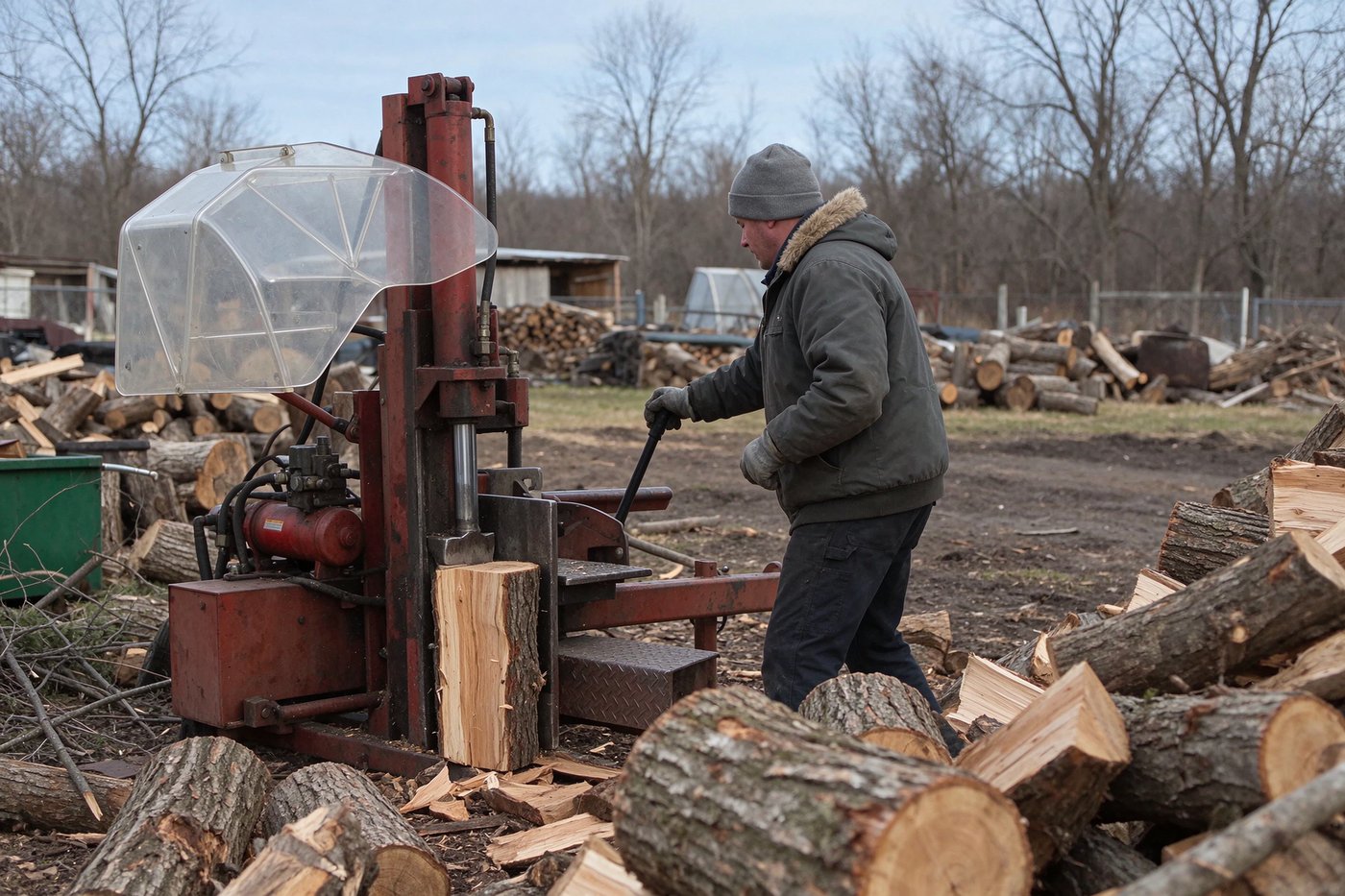
The standoff is the number that decides whether the guard works. At 300 mm a kicked block decelerates against the panel before it reaches the operator hand position, and the panel sees a distributed load rather than a point strike. At 150 mm the block rebounds.
Hinge, latch and the polycarbonate log splitter guard
A guard that has to be lifted off and set aside is a guard that ends up leaning against the machine. Top hinged with a latch keeps the panel attached, and a 4 mm polycarbonate lip at the opening edge keeps gloves from catching on a cut corner.
Visibility is the second function. The operator watches the wedge line to place a block; a panel that has gone opaque from sawdust is as bad as no panel. A hard coat plus a weekly wipe with a soft cloth keeps the line readable, and a scratched panel is replaced rather than polished down.
Guards are formed to the beam profile in 8 mm sheet, with the hinge and latch brackets supplied for the machine model.
Send splitter model, wedge height and beam width to oversales@rpplexiglass.com for a formed guard quote.
Guard geometry on a baler raises the same questions, and the baler guard guide covers that part of the specification.
Frequently Asked Questions
Why not a steel mesh guard?
Mesh stops a block but not splinters, and it hides the wedge line the operator needs to see. An 8 mm polycarbonate log splitter guard stops both and keeps the split visible.
How far should the guard stand off the wedge?
At least 300 mm, so a kicked block hits the panel rather than the frame. Closer than that and the block rebounds into the operator zone.
Does cold weather affect it?
No. Polycarbonate keeps its impact behaviour to minus 30 C, which is the condition a firewood yard works in through winter. Acrylic at that temperature would shatter on the first kick.