
A polycarbonate salt spreader window works in brine, grit and constant vibration.
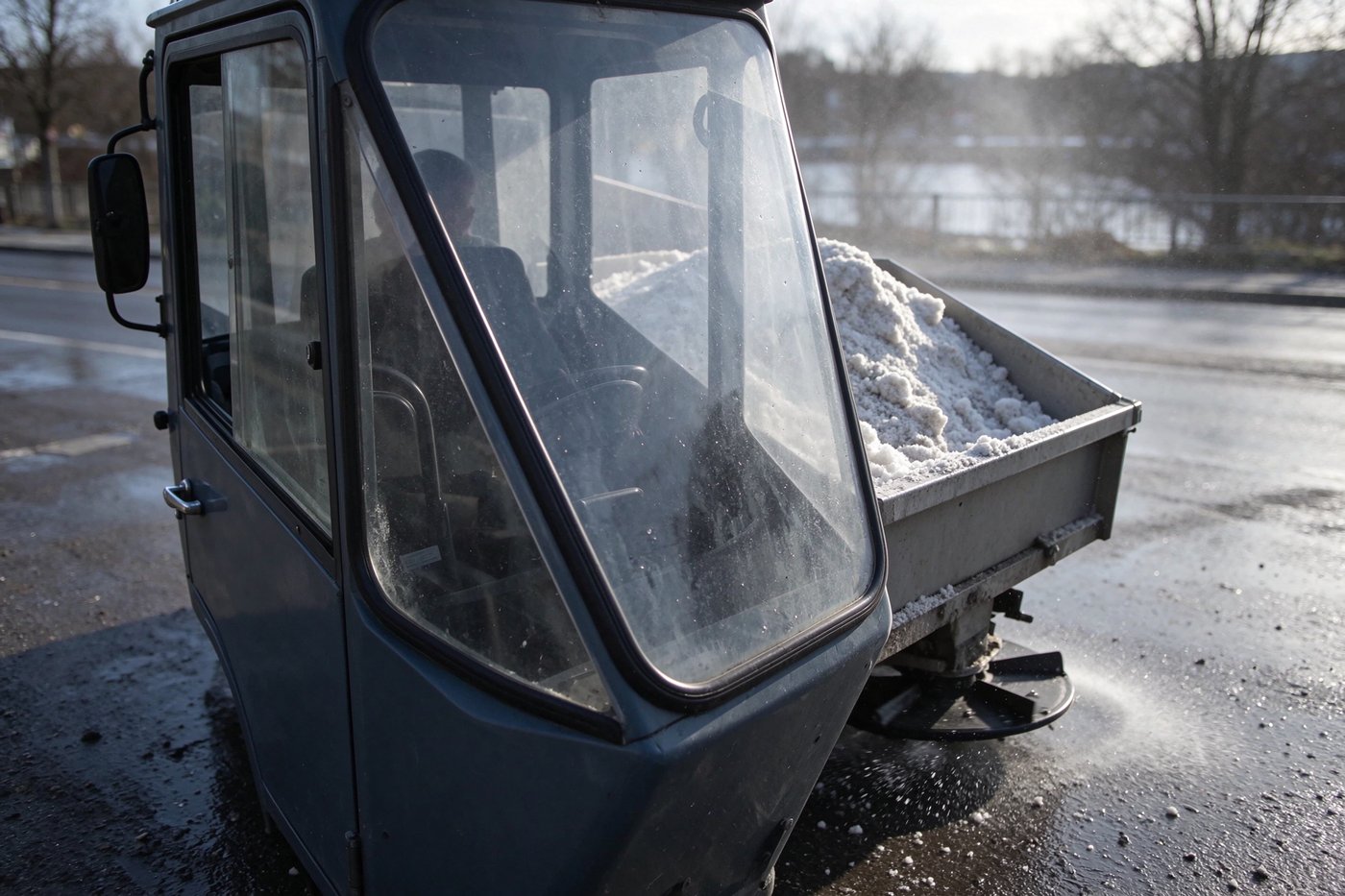
A highways depot in the north replaced glass windows on 18 spreader bodies with 6 mm polycarbonate over two winters. The first season went well. In the second, five panels were hazy and two had cracks from the wiper spindle, both on trucks that spread brine rather than dry salt.
A polycarbonate salt spreader window faces a combination that glass handles badly and polycarbonate handles well, with one exception: brine. Salt solution left on the panel abrades under the wiper and, over months, turns a clear sheet into a translucent one.
Frame, wiper and the spindle crack
Use a sealed frame with an EPDM gasket rather than a direct bolt-through to the cab. Wiper spindles should pass through a bearing in the frame, not through a hole in the panel: the spindle is the highest-stress point on the window and the usual origin of a crack.
Six millimetre is the practical minimum for a window over 500 mm wide on a vibrating chassis. A thinner panel will flex under the wiper load and lose gasket contact at the bottom edge, which is where the brine then collects.
Brine, grit and the cleaning routine
- Rinse the panel with fresh water at the end of every shift; brine left to dry crystallises under the wiper
- Use a mild soap and a soft brush, never a scraper, on a frosted or grit-covered panel
- Replace the wiper blade before it starts to chatter; a chattering blade scratches the sheet in a visible arc
- Check the gasket at the bottom edge each week, where brine pools
The hazy panels at the depot were on trucks that were washed once a week. The two cracked ones had wiper spindles bolted through the sheet with no bearing. Both problems are in the mounting and the routine, and neither requires a different material.
Optics for a low sun and a wet screen
A clear panel with a good wiper is better than a tinted one for winter work, because the operator needs contrast against grey road and grey sky. Keep the panel clear, keep the wiper in condition, and add a heater only where the cab already has one: a retrofit heater strip close to polycarbonate can soften the sheet.
RP River People Plexiglass cuts salt spreader windows to the cab opening, with sealed frames, wiper bearing plates and edge polishing. Send the cab outline and the wiper position for a quotation.
Send the cab opening, wiper position and spreader model to oversales@rpplexiglass.com for a sealed window quotation.
Winter municipal vehicles share the same brine and vibration problem, described in our snow plow window guide.
Frequently Asked Questions
Why did the polycarbonate go hazy?
Brine left on the panel under a wiper abrades the surface. Rinsing with fresh water at the end of each shift prevents most of it.
Why do cracks start at the wiper spindle?
Because the spindle passes through a hole in the sheet with no bearing. The spindle should pass through the frame, not the panel.
Is 6 mm enough for a large spreader window?
For most cab windows, yes. Above about 700 mm wide on a vibrating chassis, use 8 mm or a mid-frame.