
A municipal depot in Alberta kept a log of winter failures for three seasons. Of nineteen cab glazing replacements, fourteen were caused by scraper abrasion, three by wing mirror strikes, and two by something the driver never saw. The polycarbonate snow plow window that ended up on the specification was 8 mm hard-coated sheet with sealed edges.
Cold-weather failure modes of a polycarbonate snow plow window
Polycarbonate retains useful impact strength to about minus 40, but it becomes notch sensitive as temperature falls. A scratch that is cosmetic in summer becomes a crack origin at minus 25 when the panel is loaded by wind pressure at road speed.
- Sheet: 8 mm polycarbonate, UV-stabilised, hard coat on both faces.
- Cold bend: minimum radius about 100 times sheet thickness, and never bend below 5 degrees ambient.
- Edge: sealed with a compatible edge sealant, because salt water entering a cut edge freezes and splits the panel.
- Fixings: 2 mm clearance holes and 30 mm edge margin, so thermal contraction does not load the hole.
Scraper discipline and the hard coat
A hard coat raises abrasion resistance, it does not make the panel scraper-proof. The depot routine that worked was a two-stage approach: a soft brush to clear loose snow, then a purpose-built polycarbonate scraper used wet with screen fluid. Dry scraping on a frosted panel is what wears the coat through in a single season.
Ice should be removed with washer fluid and time, not with a blade. A driver who chips ice off a frosty morning will leave a star mark that grows through the season as the cab flexes.
Salt, condensation and the inside face
Salt spray reaches the inside of a plow cab through the door seals, and it collects at the bottom edge of the window. Rinsing the frame channel at every shift change is the cheapest way to extend panel life, and it costs less than one replacement window per truck.
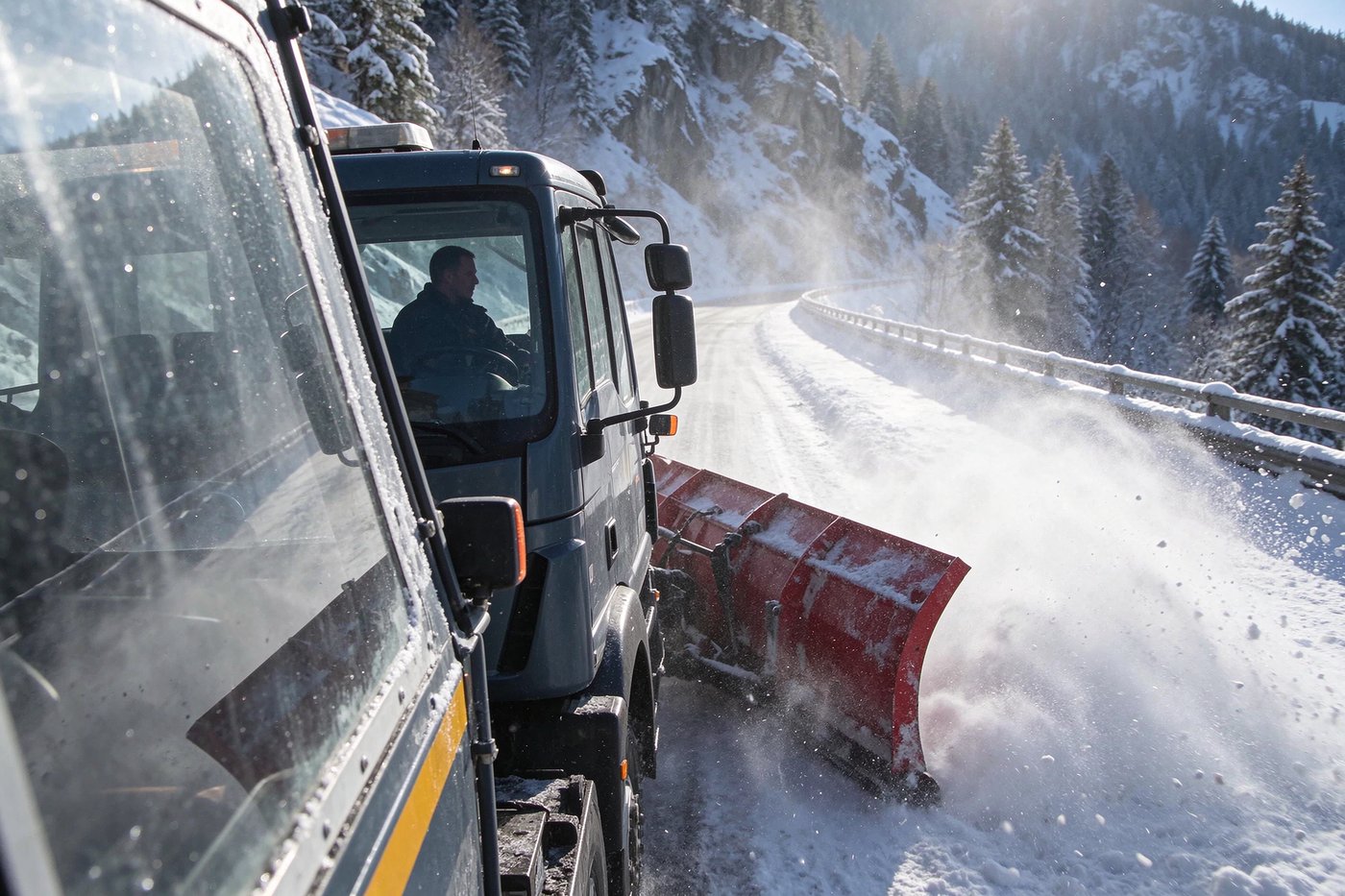
River People production
River People cuts 8 mm polycarbonate sheets to template, seals cut edges on request, and supplies panels with gasket pre-taped for the existing frame. Municipal fleet orders are nested and labelled per vehicle, with a retained pattern so a mid-winter replacement can ship quickly.
Send a frame template or OEM part number to oversales@rpplexiglass.com for a winter fleet panel quote.
Heavy vehicle cabs see similar vibration and impact duty, described in the polycarbonate haul truck window guide.
Frequently Asked Questions
Will polycarbonate crack in extreme cold?
A sound panel with proper edge margins will not. A panel with a chipped edge or a bolt too close to the edge can crack at minus 25 under wind load.
Is glass better for visibility in winter?
Glass is harder and resists scratching better, but it shatters on mirror strikes and adds weight. Most winter fleets accept the abrasion trade-off for impact safety.
Can the window be heated?
Yes, with a low-temperature heating film or a cab heater duct aimed at the glass. Direct high heat can soften the panel, so keep the surface below 60 degrees.