
A polycarbonate sawmill cabin window takes thrown slabs and cab vibration in the same pane.
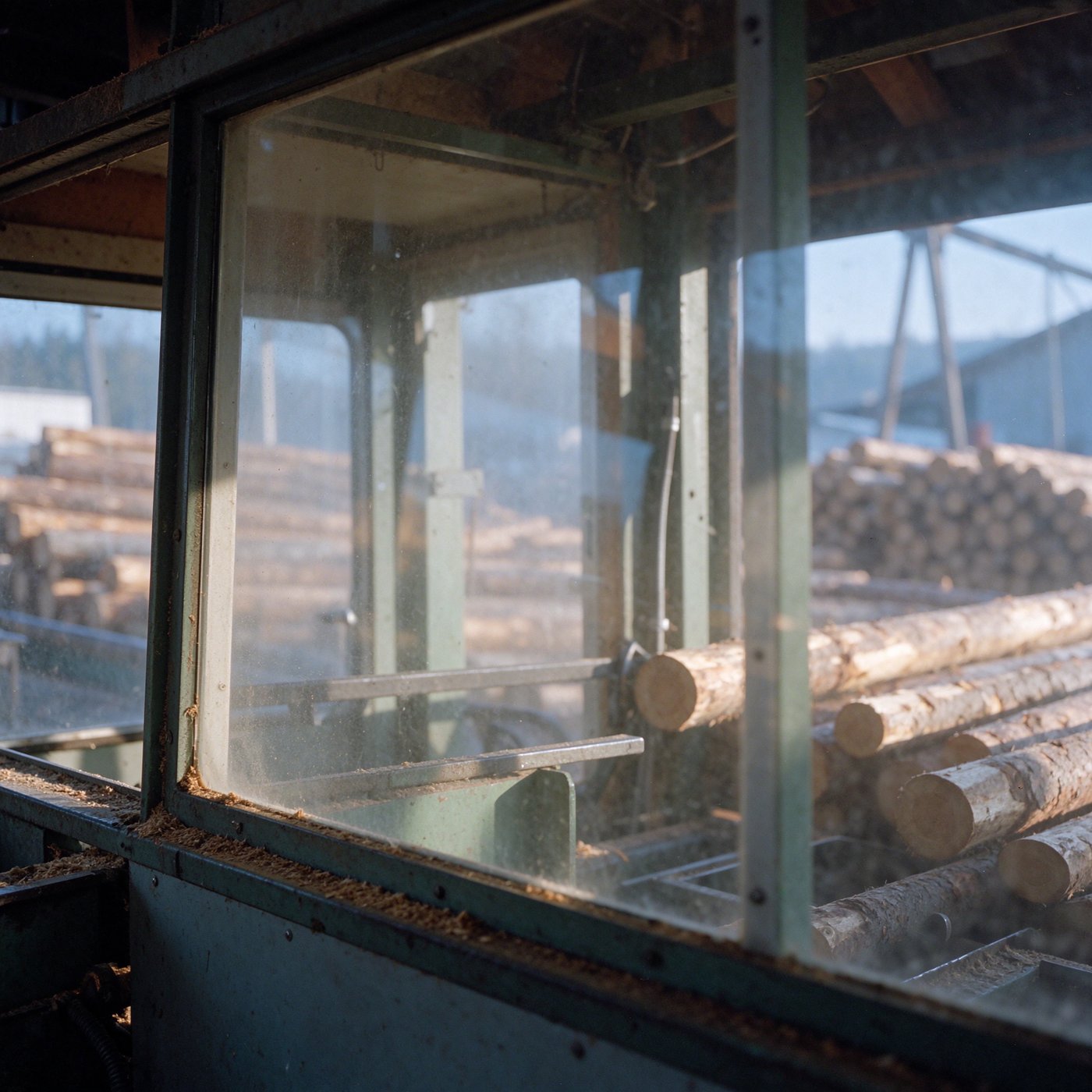
A sawmill in Carlisle replaced four glass windows in its head rig cabin in one year. The cause each time was a thrown slab, and the pattern was always the same: the glass broke inward, the operator was unhurt, and the machine was down for a shift while a glazier was found.
What actually reaches a sawmill cabin
A bandsaw head rig throws offcuts and slab ends at 20 to 40 m/s. A 300 by 100 by 50 mm piece of green softwood weighs about 700 g, which is roughly 140 J at 30 m/s, delivered over a small contact area. Glass fails at that energy. Eight millimetre polycarbonate absorbs it with a permanent dent and no crack, which is why sawmills specify it even though the optics are worse than glass.
Eight millimetre is the floor for a cabin at the head rig. Ten millimetre or laminated 6 mm plus 6 mm is used where the window also faces the chipper feed or a slab drop zone. The laminated build matters when the sheet is expected to hold a piece rather than just survive it.
Polycarbonate sawmill cabin window: mounting for a vibrating cab
- Thickness: 8 mm for head rig cabins; 10 mm or 6 plus 6 laminated at chipper and drop zones.
- Clearance: 6 mm each side, with the pane floating in a gasketed rebate rather than clamped rigid.
- Fixings: clamp strips with EPDM gaskets; through-bolts only with 12 mm clearance holes and washers.
- Surface: hard-coated on the cabin side, because sawdust wiped dry on uncoated sheet scratches within weeks.
- Wiper: a 20 mm clear band top and bottom where a wiper or wash system runs, kept free of fixings.
Carlisle: glass, then polycarbonate, then a better frame
The mill first fitted 8 mm polycarbonate into the existing glass frame. It survived, but the pane cracked at two corners within six months because the frame had been built for a rigid pane and clamped the polycarbonate tight.
The second fit rebuilt the rebate with a 6 mm clearance and EPDM gaskets at all four edges, and the same sheet has now run three years with two dents and no cracks. The mill also added a hard-coated sheet on the cabin face, which stopped the daily dry wipe from hazing the surface.
The unexpected benefit was acoustic. The polycarbonate pane reduced the perceived noise at the operator position noticeably compared with the glass it replaced, and the operator stopped wearing ear defenders inside the cab for the first time in years.
Ordering a cabin window against a machine drawing
Send the rebate dimensions, the clearance available behind the frame, which zone the cabin window faces and whether a wiper runs across it. Thickness and coating follow from the zone. River People PLEXIGLASS supplies 8 mm and 10 mm UV-stabilised polycarbonate cut to rebate size with clearance allowance, hard-coated on one face if requested, and laminated 6 plus 6 where impact retention is needed. Send the rebate drawing and zone and we will quote the panes and gaskets.
Send the rebate drawing and say which zone the cabin faces, and we will quote 8 mm or 10 mm panes with hard coating and gaskets: oversales@rpplexiglass.com.
Cab glazing on working machines follows the same rebate rules as our tractor window guide.
Frequently Asked Questions
Why does polycarbonate replace glass in a sawmill cabin?
A thrown slab carries roughly 140 J at 30 m/s, which breaks glass and only dents 8 mm polycarbonate. The trade is optical clarity for a window that stays intact and keeps the machine running.
What thickness for a head rig cabin window?
Eight millimetre is the floor. Use 10 mm, or laminated 6 plus 6, at the chipper feed and slab drop zones where the pane may have to hold a piece rather than just survive the strike.
Why did a polycarbonate pane crack at the corners?
It was clamped rigid in a frame built for glass. Polycarbonate needs 6 mm clearance on each edge and a gasketed rebate so it can deflect; clamped tight, the corner takes the whole impact.