
A skylight that leaks around the sheet is not a glazing failure — it is a spec failure. The polycarbonate skylight roofing sheet has to match the span, the load and the roof slope so it stays watertight, and the UV layer so it stays clear for its whole life.
Span, load and slope set the sheet
The span and the snow or wind load set how thick the skylight sheet must be and how close the supports sit. The roof slope sets how water runs off and whether a multi-wall sheet can shed it or needs a steeper pitch. The UV layer protects the surface from yellowing and embrittlement in sunlight. Solid sheet gives maximum light and is common on canopies; multi-wall sheet insulates and suits roofs where heat matters. The right sheet is the one that carries the load, sheds the water and stays clear for the specified life.
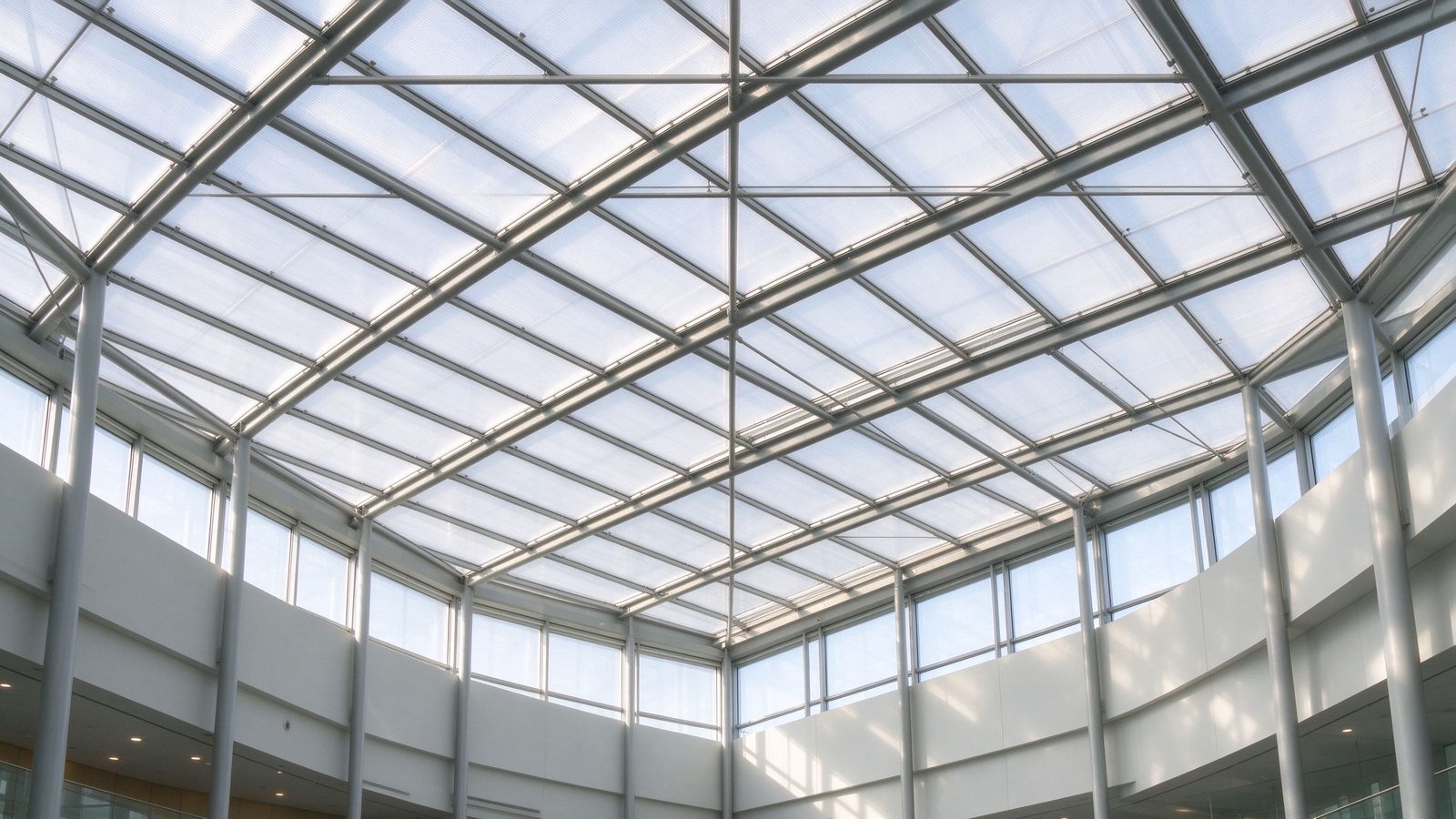
Spec the whole roof, not just the sheet
- Span and snow or wind load for the thickness.
- Roof slope so water sheds off the panel.
- UV-protected surface for a long outdoor life.
- Solid for maximum light or multi-wall for insulation.
How PC skylight sheets are specified is covered in the polycarbonate skylight sheets spec guide, and the wider roof-glazing comparison in acrylic skylights and roof glazing.
Frequently Asked Questions
Q: What sets the thickness of a polycarbonate skylight roofing sheet?
A:The span and the snow or wind load set the thickness and how close the supports sit. The roof slope then decides how water sheds, and the UV layer decides how long the sheet stays clear outdoors.
Q: Solid or multi-wall polycarbonate for a skylight?
A:Solid sheet gives maximum light and is common on canopies. Multi-wall sheet insulates and suits roofs where heat retention matters, as long as the slope sheds water properly.
For a polycarbonate greenhouse or skylight sheet quoted to your span, load and UV-return period, email oversales@rpplexiglass.com with the panel type, thickness, dimensions and whether it is a roof or a wall.