
Trail riders replace a polycarbonate snowmobile windshield for two reasons: a branch took it out, or the view has hazed to the point where low winter sun becomes a white wall. Both are predictable, and both are answered by a short specification rather than by a catalogue page.
Here is what we ask a dealer before cutting a screen.
Cold performance and the polycarbonate snowmobile windshield grade
- Sheet: 3 mm optical polycarbonate, 4 mm above 500 mm height
- Impact at cold: retains strength below minus 40 C, unlike acrylic
- Bend radius: 150 mm minimum at 20 C, 250 mm if formed cold
- Coating: anti scratch on the outside face, 3H pencil hardness
- Edge: 2 mm radius, flame treated only where a trim strip covers it
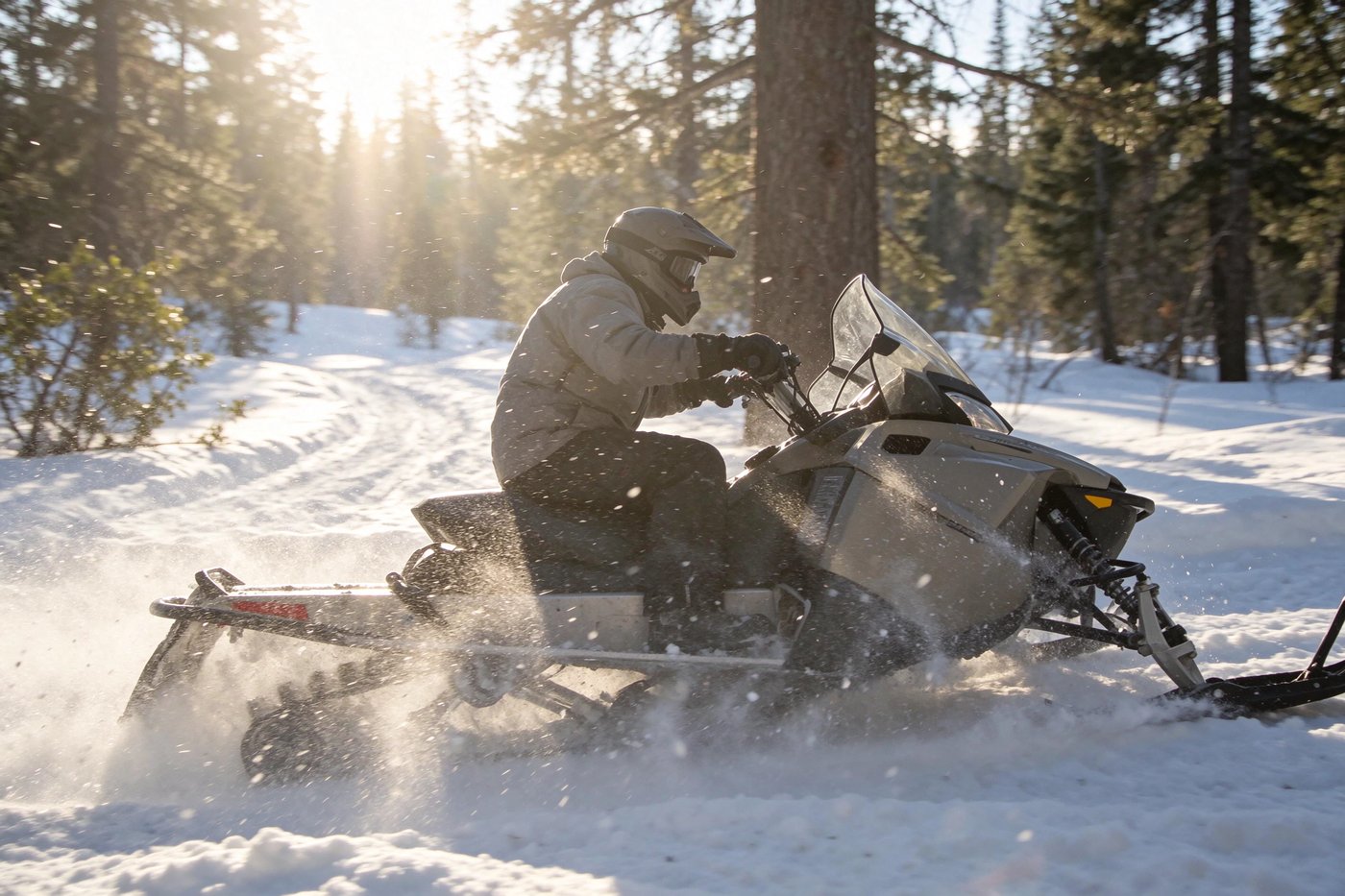
The temperature number is the reason polycarbonate owns this application. Acrylic is optically cleaner and cheaper per square metre, and it is the wrong material on a sled because a strike at minus 25 C produces shards at face height. Coextruded polycarbonate keeps its ductility at those temperatures and deforms instead.
Mounting pattern and the polycarbonate snowmobile windshield flex
Sled screens are mounted on four to six points and they flex continuously. Holes should be 2 mm oversize and washered on both faces with a soft washer, never bolted directly against a hard plastic cowl. A tight hole in a flexing screen is a crack waiting for the first cold morning. Where the original pattern cannot be changed, we drill to the pattern but open each hole by 1 mm and supply a bonded washer.
Optical quality and the polycarbonate snowmobile windshield view
Riders look through the screen at a shallow angle, so optical distortion matters more than on a car. Sheet is specified as optical grade with a low haze value, and forming is done in a matched mould rather than by hand bending over a frame former, which is the practice that produces the wavy band riders complain about at speed.
Dealers order these in batches of five to twenty with the stock height and a colour tint choice. Tints are limited to clear, light grey and smoke, because a dark tint on a trail screen at dusk is a safety problem, not a styling one.
Send the sled model, stock height and mounting pattern to oversales@rpplexiglass.com for a formed polycarbonate windshield quote.
Trail screens are often curved on a frame former in the field, and the cold bending limits set out in that guide explain why a hand formed screen distorts. polycarbonate cold bending practice covers that part of the specification.
Frequently Asked Questions
Will polycarbonate crack at minus 30 C?
No. Coextruded polycarbonate keeps usable impact strength well below minus 40 C, which is why it replaced acrylic on sleds. Acrylic at that temperature shatters on a branch strike.
Does the windshield need a coating?
For trail use, yes on the outside face. Uncoated sheet collects fine scratches from ice and trail grit and hazes within a season at the height of the rider view.
What thickness for a tall touring screen?
4 mm above 500 mm height. A 3 mm screen that tall flutters at trail speed and the flex works the mounting holes.