
A polycarbonate toll booth window is a transaction interface, and the cash opening takes more contact than the weather does.
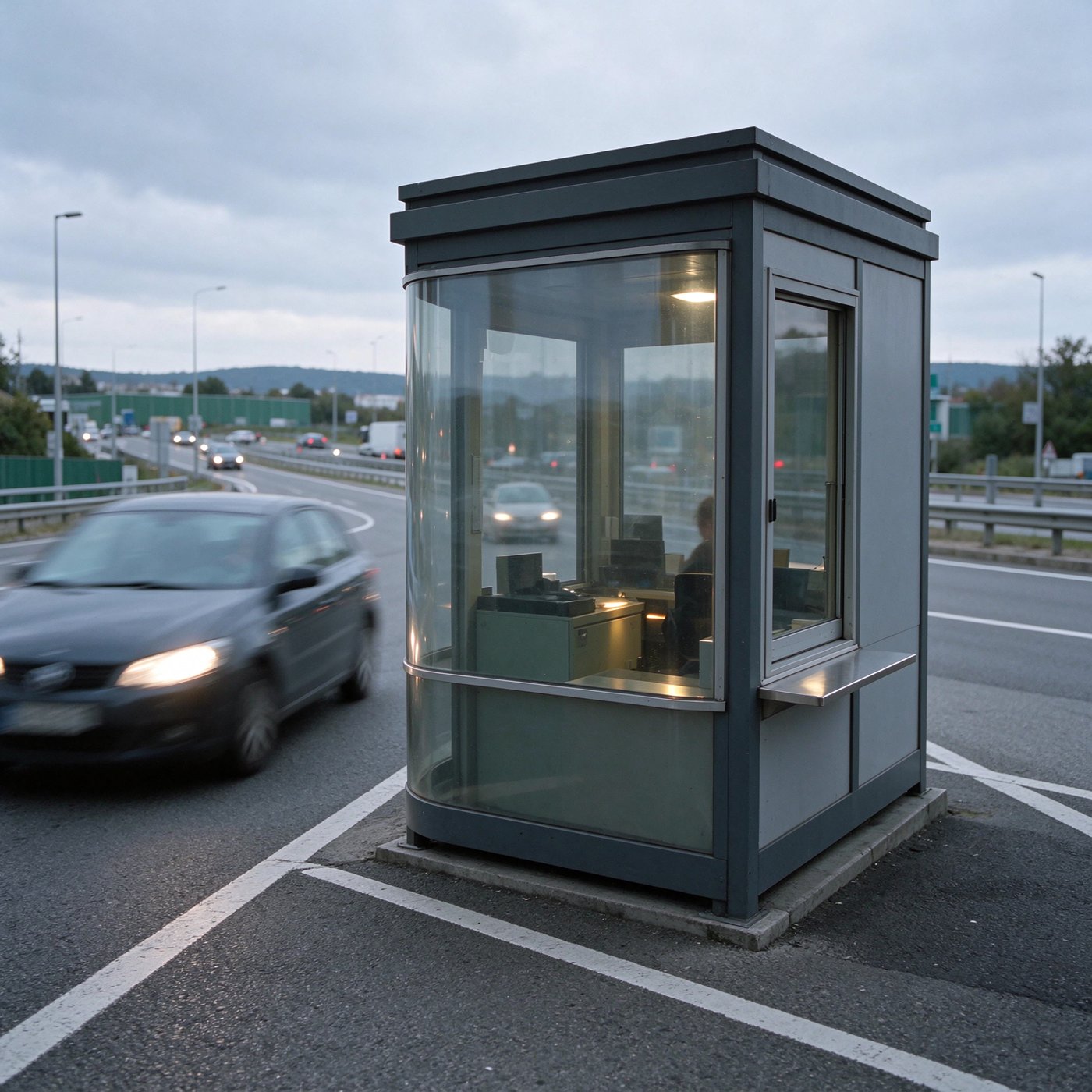
A toll operator in the north of England was replacing booth glazing every fourteen months, and the cause was not weather. It was the cash drawer. Attendants were sliding notes and coins through a 200 mm opening, and the pane edge at that opening was taking a shoulder and forearm impact several hundred times a shift.
A booth window is a transaction interface
The glazing in a toll booth is asked to do three jobs at once: keep weather out, let an attendant see a vehicle and a driver, and survive constant contact at the transaction opening. Glass does the first two well and fails at the third. Eight millimetre polycarbonate does all three, provided the transaction opening is designed as a separate element rather than a cut edge in the main pane.
That is the detail most booth refits miss. A slot cut into a polycarbonate pane leaves an exposed arris that takes every impact, and the crack always starts at the slot corner. A separate 6 mm transaction window, set in its own frame with a 15 mm overlap and a stainless sill, moves the contact load off the main glazing entirely.
Polycarbonate toll booth window: the three-part build
- Main pane: 8 mm polycarbonate, full booth width, clamped at 600 mm centres.
- Transaction window: 6 mm polycarbonate in its own frame, 15 mm overlap, stainless sill at hand height.
- Speech slot: two 8 mm holes at the transaction window corners, not a routed slot in the main pane.
- Seal: EPDM gasket, outer lip only, with drainage at the sill.
- Security: laminated 6 plus 6 where the booth is unmanned at night or holds cash overnight.
Fourteen months, then three years
The operator rebuilt six booths with the three-part arrangement: main pane, separate transaction window and a stainless sill. The replacement cycle moved from fourteen months to beyond three years on the booths converted so far.
The first conversion used a single pane with a routed slot, and it failed at the slot corner in nine months, which confirmed the diagnosis rather than contradicting it. The slotted pane also collected grit in the slot, and attendants were cleaning it with a screwdriver.
Two booths were specified with laminated 6 plus 6 because they are unmanned overnight. The laminate holds a forced entry attempt long enough for the alarm response, and the interlayer keeps the fragments on the inner face rather than in the booth.
Specifying glazing for a booth rebuild
Send the booth opening dimensions, the transaction sill height, the level of cash handling and whether the booth is manned at night. Thickness and laminate follow from the last two. River People PLEXIGLASS supplies 8 mm polycarbonate main panes, 6 mm transaction windows with frames and laminated 6 plus 6 security glazing, cut to opening size with clamp allowance. Send the booth dimensions and duty pattern and we will quote the glazing set.
Send booth opening dimensions, sill height and whether the booth is manned at night, and we will quote main panes, transaction windows and laminated glazing: oversales@rpplexiglass.com.
Where a booth also needs to resist a deliberate attack, the levels are set out in our forced entry glazing guide.
Frequently Asked Questions
What thickness polycarbonate for a toll booth window?
Eight millimetre for the main pane, with a separate 6 mm transaction window. Use laminated 6 plus 6 where the booth is unmanned at night or holds cash overnight.
Why do toll booth panes crack at the cash opening?
A slot cut into the main pane leaves an exposed edge that takes shoulder and forearm contact hundreds of times a shift, and the crack starts at the slot corner. A separate framed window moves that load off the glazing.
Is polycarbonate or glass better for a toll booth?
Polycarbonate. Glass handles weather and optics but fails at the transaction interface, which is where most booth glazing is damaged. Eight millimetre polycarbonate survives both, at some cost in scratch resistance.