
A polycarbonate snow groomer window fails in the cycle between minus 25 C outside and a heated cab inside.
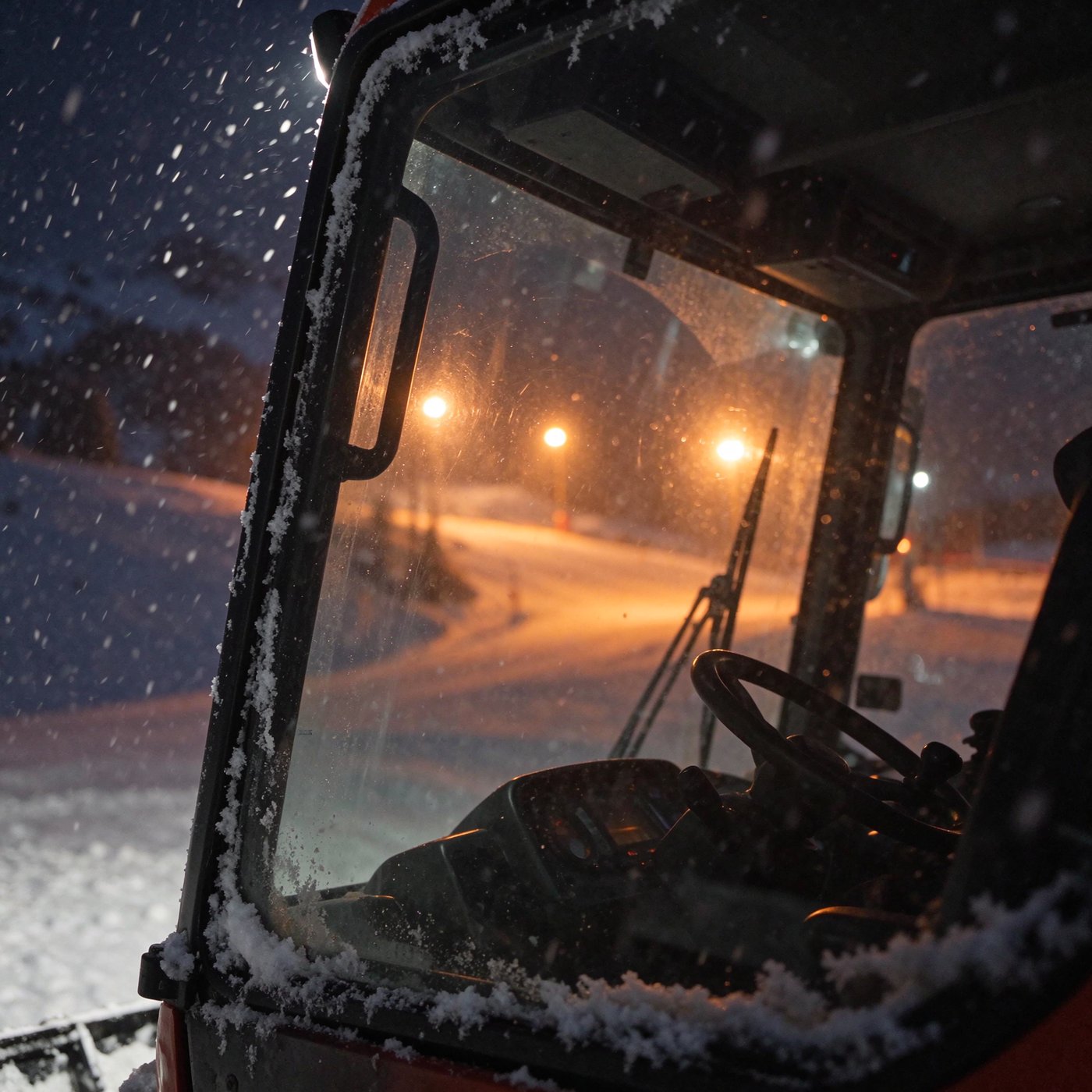
A ski resort in the French Alps ran four groomers through a season at minus 25 C and replaced eleven cab windows. The failures were not from branches or ice; they were crazed circles around each fixing, opening into cracks once the cab heater brought the glass above freezing.
Cold, then warm, then cold again
Polycarbonate at minus 25 C is not brittle, but it is stiff, and a pane clamped tight in a frame that also contracts has nowhere to go. When the cab heater lifts the inner face to 20 C, the pane grows while the frame stays cold, and the fixing holes take the difference. Repeated cycles produce the ring crazing that the resort was seeing.
Eight millimetre is the working thickness for a groomer cab window up to 700 by 500 mm. It gives enough stiffness at low temperature and enough thickness at the fixing to spread the load. Six millimetre is adequate for a small utility groomer; 10 mm where the window faces the blade and the snow it throws.
Polycarbonate snow groomer window: cold-climate fixing rules
- Holes: 12 mm clearance for M6 fixings, 30 mm from any edge; a tight hole at low temperature is a crack starter.
- Clearance: 7 mm each edge, more than a temperate installation, because the frame and pane move differently.
- Gasket: closed-cell EPDM, not foam; open-cell foam absorbs meltwater and freezes against the pane.
- Heating: keep the cab heater outlet off the pane face; a 20 C differential across 8 mm causes visible bow.
- Wiper: a heated wiper band, or a 25 mm clear strip where the blade runs.
Alps: eleven windows, then one season without a failure
The resort rebuilt all four cabs with 8 mm polycarbonate, 12 mm clearance holes and closed-cell EPDM gaskets, and moved the heater outlets 300 mm back from the glazing. The following season, with the same temperature range, no window failed.
The first rebuild attempt had kept the original 8 mm holes and open-cell foam, and three of the eleven cracked in the first cold snap. The lesson was that a cold cab is a movement problem, not an impact problem, and the fixings have to be looser than a temperate installation would ever need.
The resort also fitted a 3 mm sacrificial polycarbonate strip on the blade side of the two front windows, because snow thrown by the blade abrades the surface. The strip is replaced each season at a fraction of the pane cost.
Ordering a cab window for a cold season
Send the cab frame dimensions, the lowest operating temperature, the heater outlet position and whether the pane faces the blade. Thickness, clearance and gasket type follow. River People PLEXIGLASS cuts 8 mm and 10 mm UV-stabilised polycarbonate to frame size with cold-climate clearance allowance and can supply closed-cell EPDM gasket strip. Send the frame drawing and operating temperature and we will quote the panes and the gasket.
Send cab frame dimensions, the lowest operating temperature and heater position, and we will quote 8 mm panes with closed-cell gasket strip: oversales@rpplexiglass.com.
Winter municipal vehicles see the same brine and temperature swing, described in our snow plow window note.
Frequently Asked Questions
Why do polycarbonate snow groomer windows crack in cold weather?
The pane is clamped tight while the frame contracts at minus 25 C, then the cab heater expands the inner face. The fixing holes absorb that cycle until they craze and crack.
What clearance do cold-climate polycarbonate windows need?
About 7 mm on each edge and 12 mm clearance holes for M6 fixings, more than a temperate installation, because the pane and the steel frame move at different rates.
Which gasket suits a groomer cab window?
Closed-cell EPDM. Open-cell foam absorbs meltwater, freezes against the pane and holds it rigid exactly when the frame is contracting.