
A service team in northern Jutland logged 11 window failures across 60 turbines in one winter, all at the same corner bolt. The panels were 6 mm and bolted through a steel frame that moved with the tower. Each replacement required a crane-assisted crew and a full day on site. The polycarbonate wind turbine nacelle window specification was rewritten around the cost of the access, not the cost of the sheet.
At 90 m the economics change completely: a panel that costs 40 euros in material costs 4,000 euros to change. Everything in the design should assume one visit, not two.
Thermal and mechanical range of a nacelle window
A nacelle interior runs warm from gearbox losses while the exterior skin sees -40 C in a Nordic winter and 60 C surface temperature in summer sun. Polycarbonate keeps usable impact strength down to -40 C, which is why it is preferred to acrylic on this application.
- Sheet: 8 mm hard-coated polycarbonate, clear or bronze tint for sun-exposed units.
- Temperature range: -40 to 60 C continuous, with a 3 mm per metre allowance for expansion.
- Bolts: M8 stainless at 200 mm centres, 15 mm edge distance, each with a bonded sealing washer.
- Frame: 25 mm engagement, with a compressible gasket that accommodates tower sway rather than resisting it.
The bolt pattern is the whole reliability story
A tower sways, and the nacelle skin deforms by a few millimetres in gust conditions. A panel bolted at 100 mm centres with no gasket is effectively part of the structure, and every sway cycle loads the hole. At 200 to 250 mm centres with a compressible gasket, the panel moves with the skin and the bolt load stays in the elastic range.
Sealing detail decides the second failure mode. Offshore units see salt fog from below and humid air from inside; a panel that is sealed on the outside only will collect condensate behind the gasket and corrode the frame. A breathable backer on the inner face lets the cavity dry.
Tint and inspection
A bronze tint reduces solar gain inside the nacelle and cuts glare for technicians working at height. It also makes crack detection harder, so inspection should use a torch at a low angle rather than a visual pass in daylight.
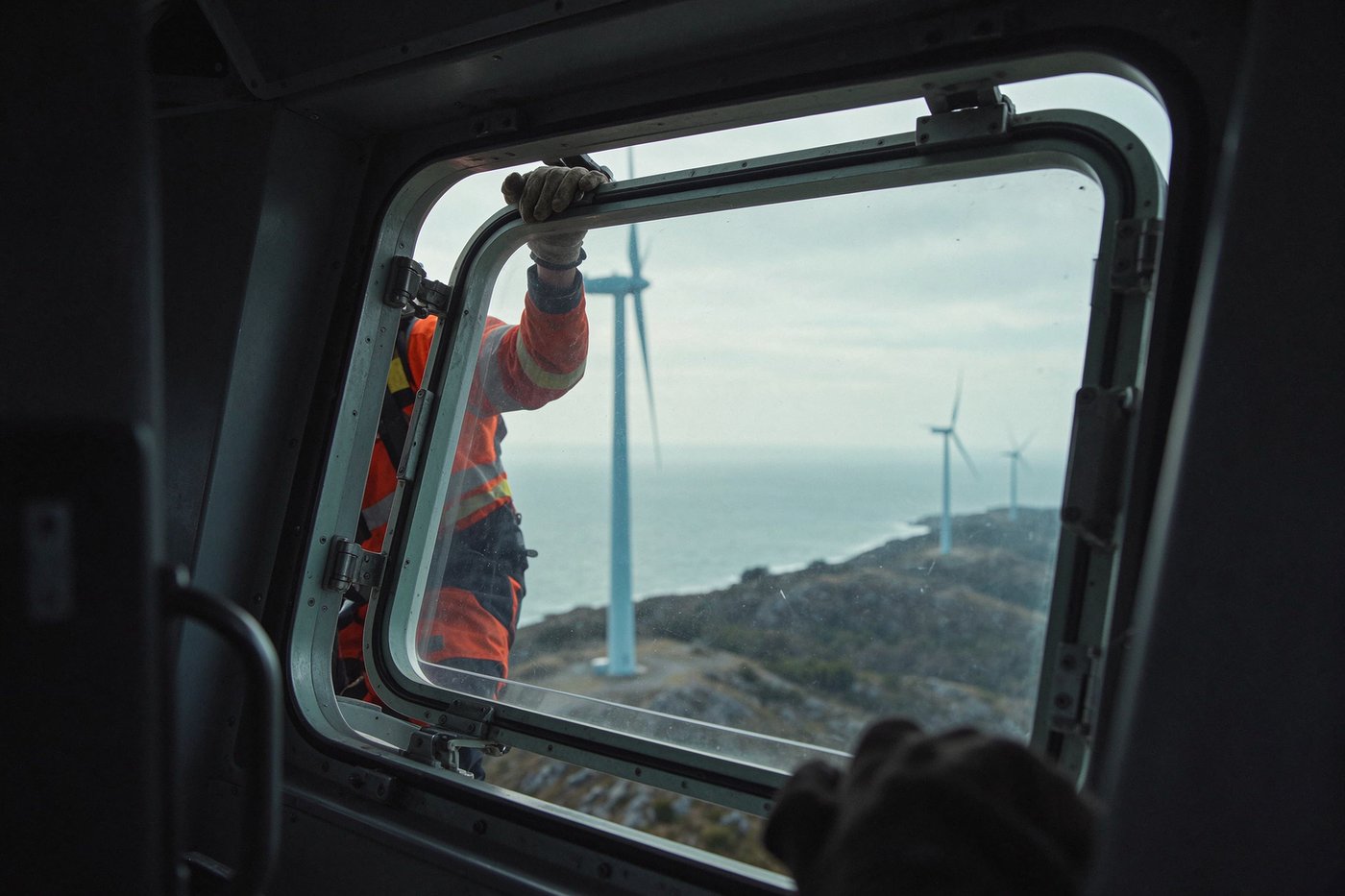
River People supply
River People cuts 8 mm hard-coated polycarbonate to nacelle drawings, seals the edges, and supplies panels with the gasket and washer set matched to the bolt pattern. Orders of 20 to 200 units for a wind farm ship in 18 to 22 days, palletised flat to protect the coat.
Send your nacelle opening drawing and site temperature range to oversales@rpplexiglass.com for a panel and gasket quote.
Energy site glazing shares the UV and thermal concerns covered in our polycarbonate solar panel cover guide.
Frequently Asked Questions
Why polycarbonate rather than acrylic at altitude?
Acrylic becomes brittle below about -20 C and can shatter on a screwdriver tap during winter service. Polycarbonate retains impact strength to -40 C, which is the deciding property for a Nordic or offshore site.
Does the tint affect the warranty?
Bronze and grey tints are standard and do not change the mechanical warranty. The coat and the edge seal determine service life; the tint only changes solar gain.
Can the panel be replaced from inside the nacelle?
On most platforms yes, which is why the bolt pattern is designed for access from the hub side. Confirm the hatch geometry before ordering, since the panel has to pass through it.