
A rolling stock refurbisher in Valencia pulled 120 saloon windows from three trains after graffiti removal left the panels opaque on the inside face. The cleaning crew had used a solvent gel designed for metal, and the bare polycarbonate absorbed it through scratches left by a previous abrasive pad. The replacement polycarbonate railcar window used a hard-coated 4 plus 4 laminate with the coat specified on the saloon side.
Rail glazing is a different discipline from road or marine work: the panel must retain fragments, resist vandalism, and tolerate a body that flexes through every curve and every station stop.
Build and compliance for a polycarbonate railcar window
EN 15152 sets out the performance expectations for railway windscreens and saloon glazing, including fragment retention and resistance to impact from ballast. A 4 plus 4 mm laminated polycarbonate gives an 8 mm build with a 0.76 mm interlayer, and it holds together when struck, which is the behaviour that matters in a tunnel or at line speed.
- Build: 4 mm hard-coated polycarbonate plus 4 mm hard-coated polycarbonate, 8 mm total, 0.76 mm interlayer.
- Coat: abrasion-resistant on the saloon face, the side that gets cleaned and touched.
- Frame: 20 mm engagement, 2 mm clearance per metre, gasket rather than clamped edge.
- Edge: sealed to prevent moisture ingress along the interlayer.
Graffiti and the cleaning trap
Rail panels collect graffiti on the outside and fingerprints on the inside, and both are cleaned with whatever the depot has. A solvent gel on bare polycarbonate dulls the surface permanently; on a hard coat it is tolerable for short contact but not for a soak. The routine that preserves the panel is a pH-neutral cleaner with a soft pad, and a solvent only on the frame, never on the glazing.
Scratch depth is the hidden variable. A panel with a 20 micron scratch field will haze under any cleaner, because the scratches hold residue. Replacing the panel on a condition score, rather than on a calendar, keeps the fleet clear.
Body flex and the gasket
A carriage body twists through curves, and the window opening moves by 1 to 2 mm relative to the frame. A rigidly bolted panel cracks at the corner within a year; a gasketed panel with clearance survives the overhaul interval.
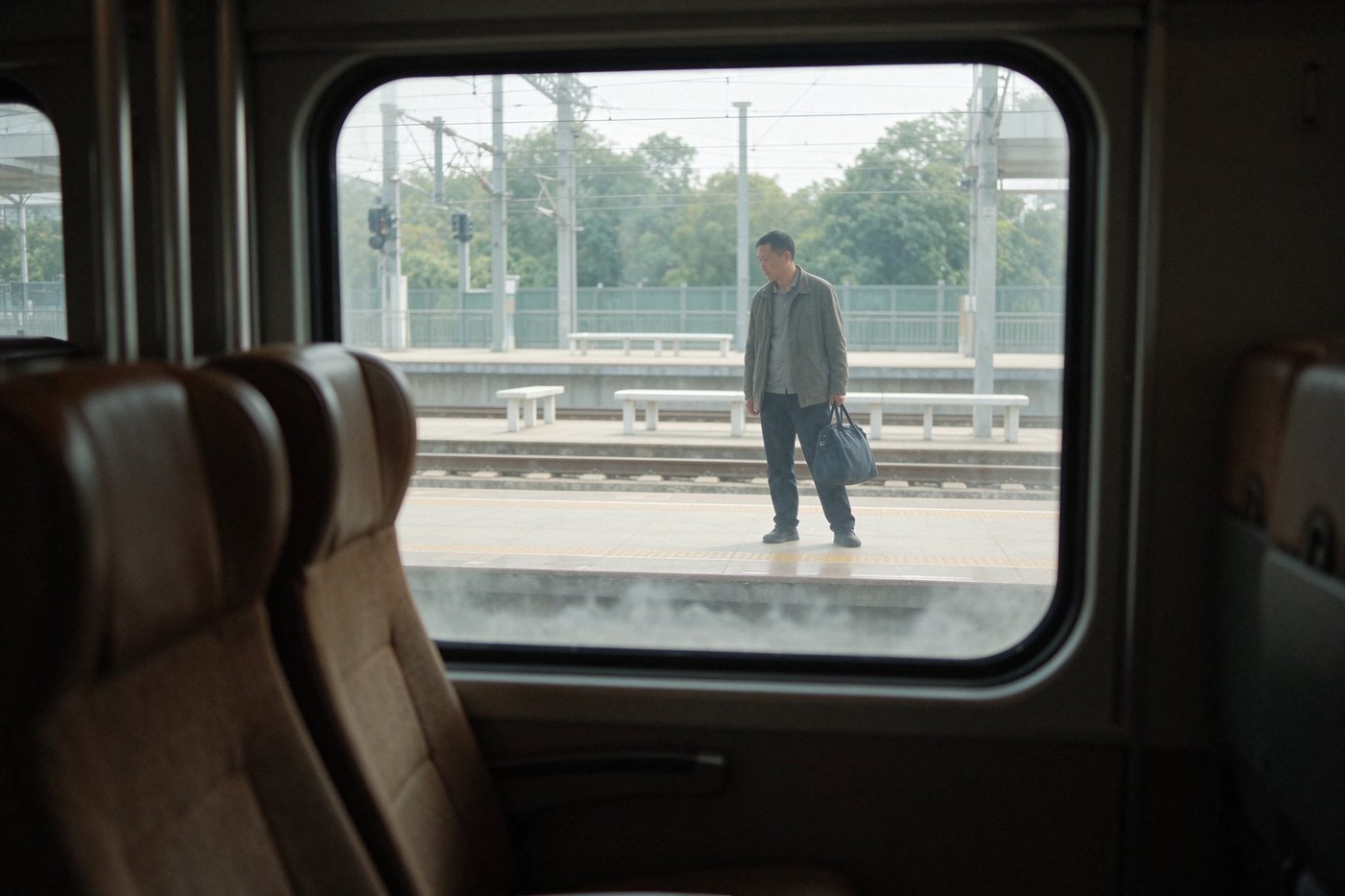
River People supply
River People laminates hard-coated polycarbonate for rail panels, seals every edge, and cuts to saloon drawings with a plus or minus 0.5 mm tolerance. Refurbishment orders of 50 to 600 panels ship in 18 to 22 days, packed vertically with interleaving so the coated faces do not touch.
Send your saloon opening drawing and cleaning constraints to oversales@rpplexiglass.com for a laminated panel quote.
Saloon glazing sits in the same frame family as light rail vehicles, described in our polycarbonate tram window note.
Frequently Asked Questions
Is laminated polycarbonate accepted for rail interiors?
Laminated polycarbonate is widely used for saloon glazing where fragment retention and vandal resistance are the priorities. Fire performance must be confirmed against the operator specification, since rail interiors usually require additional documentation.
Can the panel be polished to remove scratches?
Not without removing the hard coat. Light marks can be cleaned; a scratched coat is replaced, because polishing exposes bare polycarbonate that hazes faster.
Why 4 plus 4 rather than a single 8 mm sheet?
A single sheet has better optical clarity but fails as one piece. The laminate keeps the pane in the frame after impact, which is the governing requirement in a tunnel.