
A specifier once asked for a transparent acoustic barrier and assumed every clear panel had the same noise rating. It does not. A barrier that reflects sound and one that absorbs it are different products with different acoustic classes, and choosing the wrong one fails the noise test.
How the sound class is set
In Europe, EN 1793 gives the acoustic performance classes and EN 1794 covers safety and mechanical performance. The key is whether the panel is sound-reflecting or sound-absorbing. A transparent barrier is normally reflective — it bounces traffic noise back rather than absorbing it. That works on a single carriageway, but on a dual carriageway where the two directions reflect into each other, an absorbing or angled panel may be needed. The class, not the transparency, is what the specifier has to pin down.
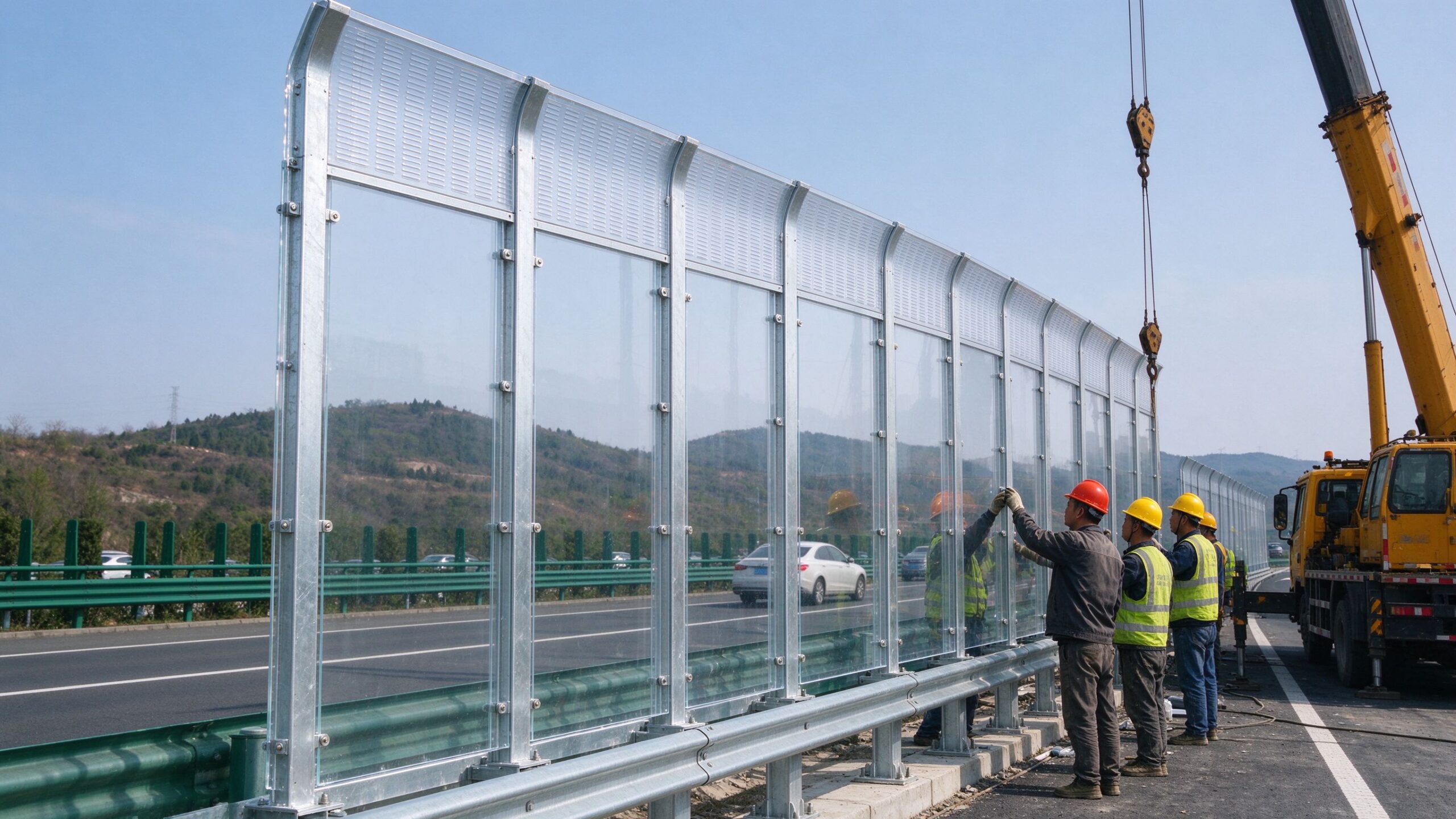
Check the class, not just the clarity
- EN 1793 acoustic class, whether reflecting or absorbing.
- EN 1794 safety and mechanical performance.
- UV-stable surface for a 20-plus year outdoor life.
- Test report from an accredited laboratory.
How the report is read is covered in the transparent noise barrier panels with test report guide, and the supplier questions to ask in acrylic highway noise barrier supplier.
Frequently Asked Questions
Q: Are transparent acoustic barriers reflecting or absorbing?
A:Most transparent barriers are sound-reflecting, bouncing traffic noise back rather than absorbing it. On a dual carriageway the two directions can reflect into each other, so an absorbing or angled panel may be needed.
Q: What standard do transparent acoustic barrier panels need to meet?
A:In Europe, EN 1793 covers acoustic performance classes and EN 1794 covers safety and mechanical performance. The panel should also carry a test report from an accredited laboratory.
For a transparent acrylic or polycarbonate noise barrier quoted to your project standard, thickness and panel layout, email oversales@rpplexiglass.com with the barrier height, length, acoustic class and test-report requirement.