
Finding a custom curved acrylic aquarium window supplier is easy; finding one that can actually hold a radius, a water column and a public crowd is the real task. The supplier is not selling sheet — it is selling a structural curved panel that will sit under tonnes of water for decades, and the verification has to start before the first drawing.
What a curved aquarium panel supplier must prove
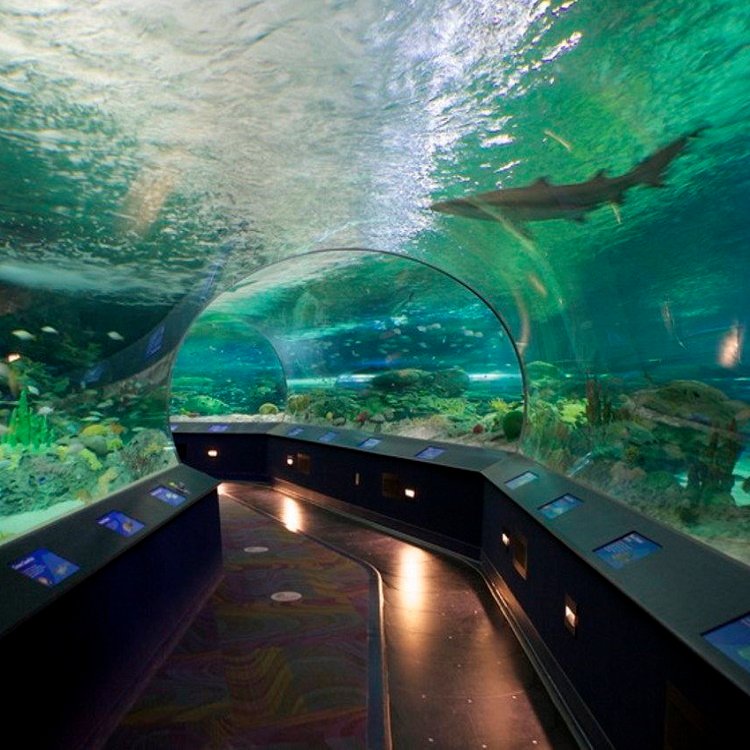
A curved viewing panel is thermoformed or cast to a radius, and its strength depends on the uniformity of the wall at every point on the curve — the thickest spot and the thinnest spot both matter under hydrostatic load. The supplier should show how it achieves wall-thickness tolerance across the radius, how it bonds curved edges, and the load case it has actually designed for, not a generic deflection figure. Material alone is not proof of capability.
Verification checklist before you order
- Confirmed wall-thickness tolerance across the full radius.
- A documented hydrostatic load case for the actual water depth.
- Bonding process and seam QC for the curved joins.
- Reference curves of similar radius already in service.
For how thickness is actually calculated, see the acrylic aquarium window thickness calculation, and for what a viewing panel has to withstand, acrylic aquarium water pressure and load design.
Frequently Asked Questions
Q: How do I verify a curved aquarium window supplier?
A:Ask for wall-thickness tolerance across the radius, a documented hydrostatic load case for your depth, and reference curves already in service, not just material data.
Q: Why does the curve make thickness harder to control?
A:Thermoforming a radius thins or thickens the wall unevenly, so every point on the curve must be checked, not just the panel centre.
For an aquarium or pool acrylic panel quote with thickness calculation, email oversales@rpplexiglass.com with the tank depth, panel span and water pressure.