
Most acrylic channel letters material problems begin at the face sheet, not at the LED modules. A sign shop in Melbourne quoted a national retail rollout at a fixed price per letter set. The first 40 shops were fine. Shop 41 came back with faces that glowed unevenly, because the supplier had switched the face material from cast to extruded to protect the price and nobody noticed until the lights were on.
Acrylic channel letters material is not one product. It is a face sheet, a back sheet and sometimes a trim, and each has a different job in the assembly.
Specifying acrylic channel letters material for a rollout
The face carries the colour, the light and the brand impression. The back forms the enclosure and often the mounting surface. The trim, where used, is the thin border that hides the seam between face and body.
The face is the only one the public sees lit, so it gets the specification attention. The back and trim are structural and are usually a cheaper grade, provided they are still the same polymer family so that bonding and thermal movement stay compatible.
Why the face should be cast, not extruded
Cast acrylic has better optical clarity, lower internal stress and far better colour stability under the heat of a LED module. Extruded face sheet is cheaper, but it shows a faint extrusion pattern when backlit and yellows faster in a south-facing sign.
For a lit letter, the practical minimum is 3 mm cast for faces up to 300 mm high and 5 mm for larger letters, where the face has to span further between the letter sides without sagging into the light path.
- 3 mm cast: letters up to 300 mm cap height, standard LED pitch.
- 5 mm cast: 300 to 600 mm letters, or tight LED spacing where heat is higher.
- 8 mm cast: very large letters and fascia signs where the face is also structural.
- Back and trim: 3 to 5 mm cast or extruded, matched in colour family.
Colour, diffusion and the glow the brand expects
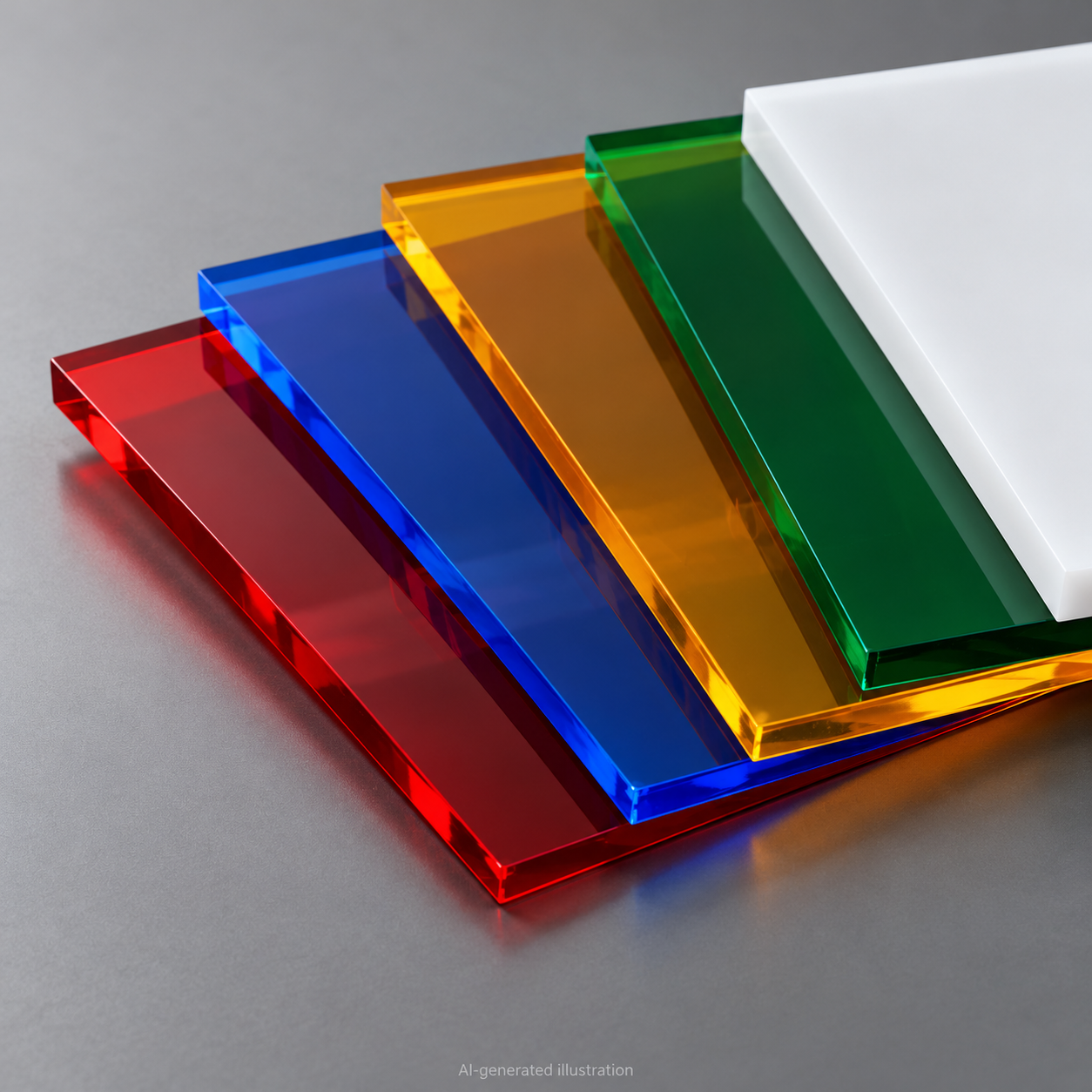
A translucent coloured acrylic face and a white face with a coloured LED produce two very different looks. Coloured face sheet gives a saturated, even colour at low brightness; white face with coloured LED gives a punchier but more directional glow.
Ask for the face colour as a code, not a name. Cherry red, warm white and signal yellow mean different things in different factories. A physical chip approved beside the LED module is the only reliable reference.
Where the letter is deep and the LED modules sit close to the face, add a diffuser layer or increase the distance. A hot spot at the module position is the most common complaint on a completed install.
Masking, bonding and the seam that shows
Face sheet arrives masked. Keep the mask on through cutting and bonding, and remove it only after the letter is assembled and cleaned. Masking adhesive that has been left in sunlight for weeks can leave a residue that shows as a dull patch under light.
Bond the face to the body with a compatible solvent cement or a structural acrylic adhesive, and use a jig that holds the letter square while it cures. A face bonded slightly proud on one side shows a light line at night that no amount of polishing fixes.
Sign makers who also produce flat fascia panels often order acrylic sheet for LED signage from the same batch, which keeps the face and the panel colour matched on a shopfront.
Specifying for a multi-store rollout
Write the face grade, thickness, colour code and LED module type on the purchase order, and require the supplier to keep the colour batch on file for repeat orders. Rollouts fail on colour drift far more often than on material quality.
River People supplies cast acrylic face sheet in 3 to 8 mm across a wide colour range, cut to letter profiles with masking intact, and holds colour batches for repeat store orders.
Send the letter profile, cap height, LED specification and colour reference to oversales@rpplexiglass.com and we will quote acrylic channel letters material with the face grade and batch matched to your rollout.
Frequently Asked Questions
What thickness acrylic for channel letter faces?
Use 3 mm cast up to 300 mm cap height, 5 mm for 300 to 600 mm letters, and 8 mm for very large letters or fascia work. Thicker faces resist sagging into the light path.
Why do my channel letters glow unevenly?
Usually because the face is too close to the LED modules, the face sheet is extruded rather than cast, or the modules are spaced too widely for the letter depth. Add distance or a diffuser layer before changing the LEDs.
Can acrylic channel letters be repaired on site?
Small damage can be polished out, but a cracked face or a failed bond needs the letter returned to a shop. Keep a spare face set per store so a repair does not hold up an opening.