
A cold-process soap studio in Portland scrapped 11 of 40 bars from one batch, all with the same white crazing along the demoulding edge. The moulds were 3 mm extruded sheet cut on a laser with no annealing, and batter was poured at 42 C. The replacement was a 5 mm cast acrylic soap mold built as a three-piece box, and the defect rate went to zero across the next nine months and roughly 60 batches.
What an acrylic soap mold has to survive
Soap batter is not an aggressive chemical, but it is warm, alkaline and heavy. At trace the mix sits near pH 10 to 11, pours at 35 to 42 C, and the saponification reaction carries the block to 55 or 60 C in the first hour inside the mould. Extruded acrylic softens around 70 C and carries far more internal stress from the extrusion line, which is why a laser-cut extruded box opens cracks at the cut edge.
- Sheet: 5 mm cast acrylic for blocks up to 1.2 kg; 8 mm above 2 kg.
- Box build: base plate plus four wall strips, bonded on the outside face so no solvent residue sits on the soap contact surface.
- Corner treatment: 8 mm minimum inside radius, cut on a CNC router rather than a laser to avoid a heat-affected edge.
- Clearance: 2 mm per side above the nominal bar footprint so a wire cutter or knife can pass without dragging the wall.
Bonding and release practice that keeps the face clean
A box mould fails at the corners long before the sheet fails. Dichloromethane bonding gives a joint stronger than the parent sheet, but it needs a 6 mm bond line, eight hours clamped, and 24 hours before the first pour. A mould used four hours after bonding will show a white haze at the corner because residual solvent plasticises the sheet under the warm batter.
Release is the second half of the problem. Soap needs 24 to 48 hours in the mould, and a cast acrylic face with a flame-polished finish releases with a light tap. A matte or sanded face grips the bar and tears the surface. Workshops that fight sticking usually need a longer cure, not a release agent, since silicone spray on acrylic builds a film that dulls the finish within 20 batches.
Where the cost sits
The difference between a mould that lasts 300 batches and one that lasts 40 is the anneal and the corner radius, not the sheet gauge. Cast sheet at 5 mm costs more per square metre than extruded, but a box that does not leak saves more batter than the sheet price.
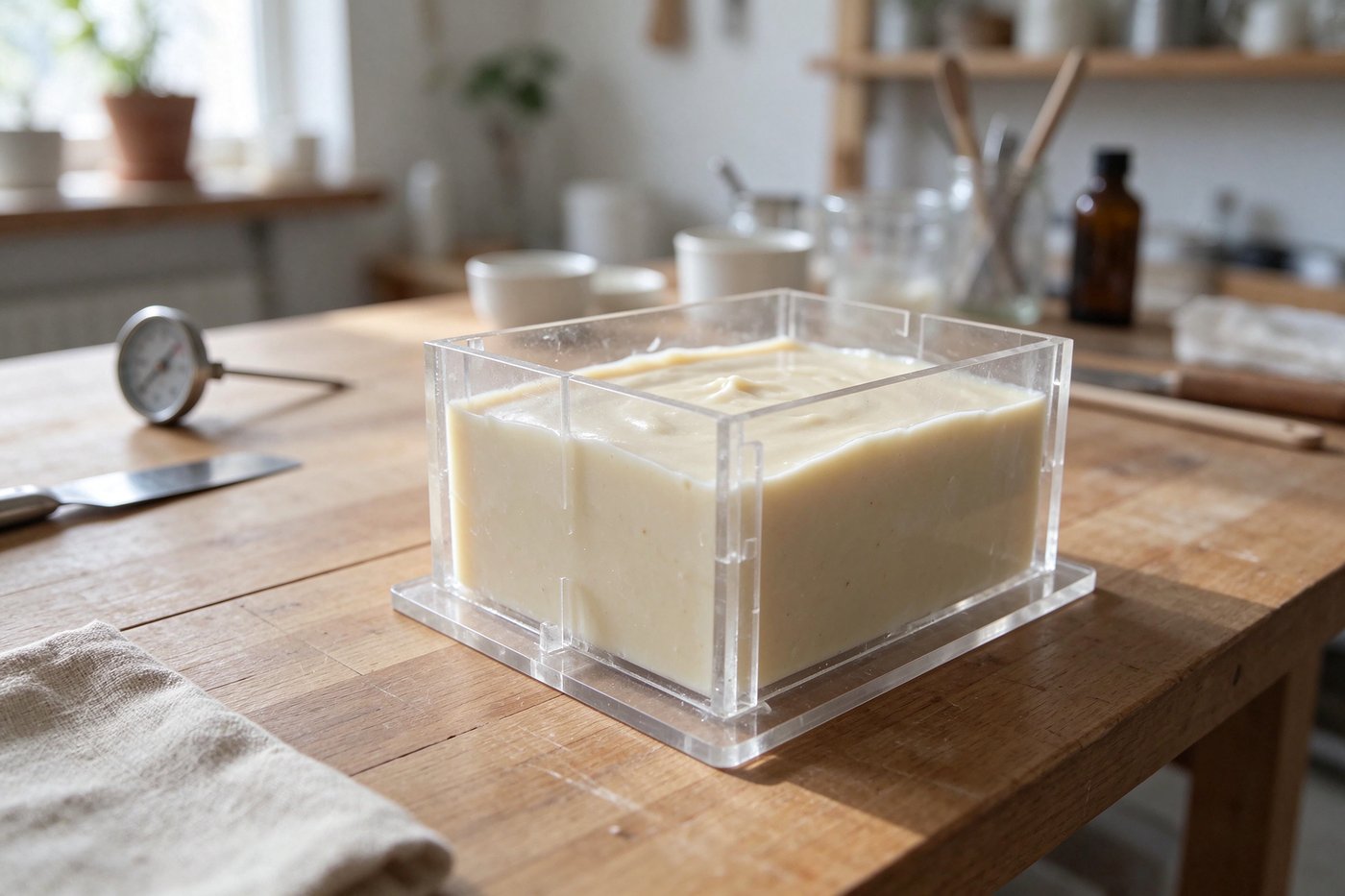
How River People builds moulds for soap makers
River People routers and bonds cast acrylic moulds to order, with inside dimensions held to plus or minus 0.5 mm, corners at 8 to 12 mm radius, and a flame-polished contact face. Single moulds and sets of 20 ship in 12 to 15 days, and wall strips are cut as matched pairs so a replacement wall fits an existing base without rework.
Send your bar dimensions and batch weight to oversales@rpplexiglass.com and we will confirm sheet thickness, corner radius and a mould set drawing.
Workshops that order several mould sizes at once should look at the tolerance and edge rules in our note on acrylic sheet cut to size before fixing a blank size.
Frequently Asked Questions
Can an acrylic soap mold be used for hot process soap?
Hot process batter arrives at 70 to 80 C, close to the continuous service limit of cast acrylic. For hot process, specify 8 mm cast sheet and pre-warm the mould, or use a silicone liner inside an acrylic outer box.
Will essential oils attack the acrylic?
At the levels used in cold process, fragrance and essential oils do not attack cast acrylic. Concentrated citrus terpenes left standing in a cracked mould can dull the surface, so wipe the box after each batch.
How many batches will a 5 mm cast mould last?
With flame-polished faces and hand washing in warm water, a well-bonded 5 mm box typically runs 200 to 400 batches before the corners need re-bonding.