
An acrylic table number holder is a lever, and the joint at its base takes twice the force of any knock at the top.
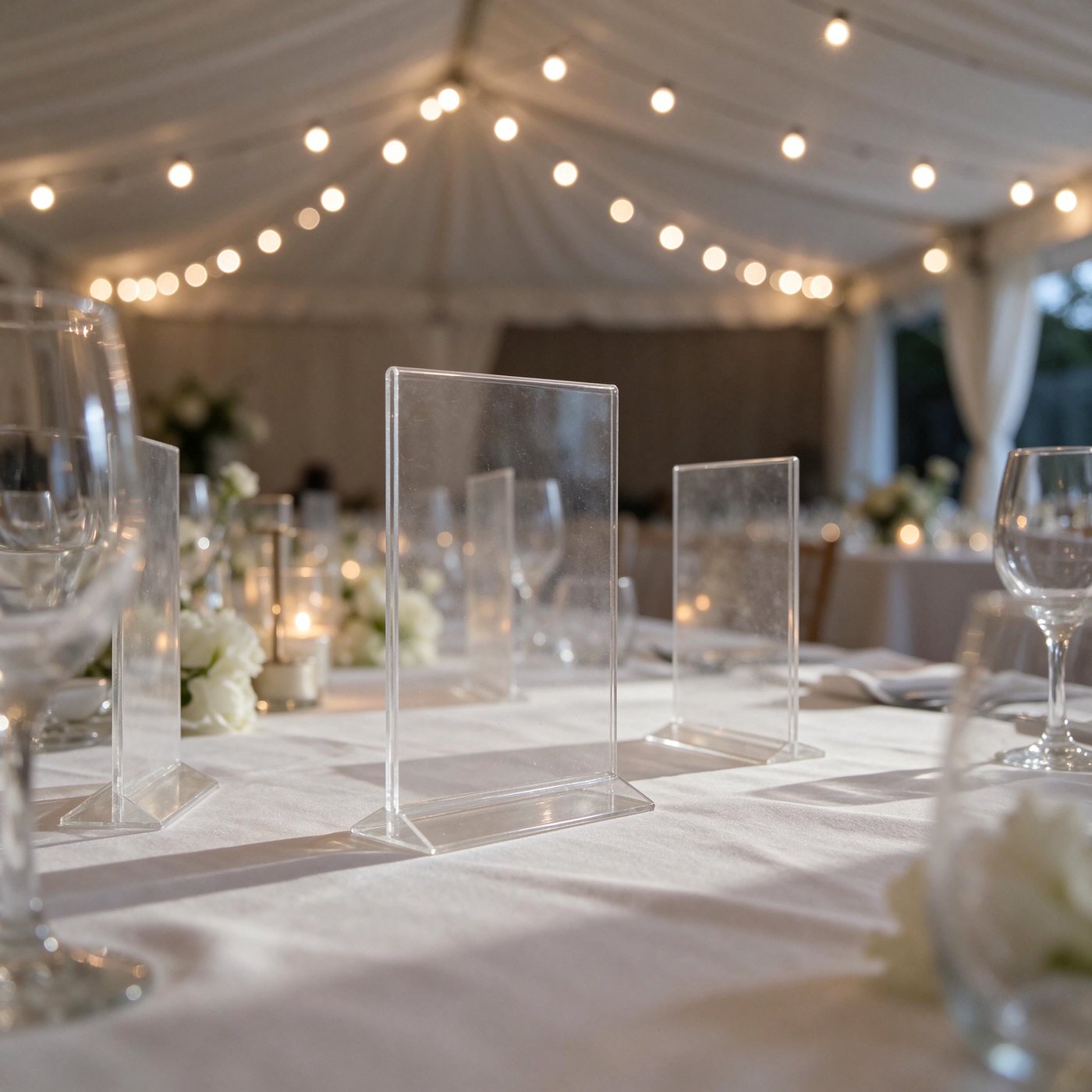
A wedding planner in York ordered two hundred acrylic table number holders for a marquee wedding and had sixty break before the guests arrived. The stands had been packed loose in a carton, stacked face to face, and a 3 mm base snapped where the upright met the foot. The design was fine on a table and wrong in a box.
A stand is a lever, so the joint is the design
A 3 mm acrylic table number holder is a 120 mm upright on a 60 mm foot. Any sideways knock at the top of the card applies a bending moment at the base roughly twice the force applied, and a butt-jointed foot takes all of it in a 3 mm line. The joint that survives handling is a 3 mm gusset on each side, or a base plate with a routed 3.2 mm slot that the upright seats into and is solvent cemented along its full length.
Three millimetre cast is right for a 100 by 150 mm card. It is optically clear, light enough that a knock tips the stand rather than breaking it, and cheap enough to replace. Five millimetre makes the stand top heavy relative to its foot and increases breakage in transit rather than reducing it.
acrylic table number holder: card size, base and pack
- Upright: 3 mm cast, sized to the card plus 6 mm reveal on each side.
- Card slot: two 3 mm rails, 4 mm apart, so a printed card slides in without a fold.
- Base: 3 mm plate 60 by 120 mm, upright seated in a routed slot and cemented along its length.
- Gusset: 3 mm triangular gusset on both sides where the stand is expected to be moved repeatedly.
- Packing: individual paper sleeve, ten per cell tray, never loose stacked.
The marquee wedding and the second order
The replacement two hundred stands were built with a cemented base slot and a 3 mm gusset on each side, and packed in cell trays of ten with a paper sleeve per stand. The planner dropped one tray from table height during setup and lost two stands instead of the whole carton.
The second order also changed the card slot. The first design held the card between two rails 5 mm apart, which let a 350 gsm card lean forward. Tightening the rails to 4 mm and adding a 1 mm felt strip at the base of the slot kept every card upright through a long evening.
A restaurant that bought the same stand for daily use took a different route: 4 mm upright, weighted 6 mm base, no gusset. The extra base mass matters more than the extra upright thickness when the stand is moved fifty times a day.
Ordering numbers as one set, not as parts
Send the card size, the quantity, whether the stand is single-use or reused weekly, and how it will be packed. The base and joint follow from the reuse answer. River People PLEXIGLASS cuts and cements 3 mm and 4 mm cast acrylic stands, routes the card slot to your card thickness and supplies them in cell trays with sleeves. Send the card size and quantity and we will quote the stands and the packing.
Send card size, quantity and how often the stands will be reused, and we will quote the stands, card slots and cell-tray packing: oversales@rpplexiglass.com.
Event stands sit on the same base and joint principles as the larger units in our acrylic display stand range.
Frequently Asked Questions
What thickness should an acrylic table number holder be?
Three millimetre for a 100 by 150 mm card at events. Go to 4 mm with a 6 mm weighted base for a restaurant that moves the stand daily, because base mass, not upright thickness, is what stops tip-over damage.
Why do acrylic number stands snap at the base?
A butt-jointed foot takes the full bending moment of any knock at the top in a 3 mm line. A base plate with a routed slot, cemented along the upright, plus a small gusset, moves that load into the plate.
How should acrylic stands be packed for shipping?
Individually sleeved in cell trays of ten. Loose stacking face to face in a carton is the standard cause of a sixty-stand breakage on a single delivery.