
A bird that sees open sky through a transparent screen does not register the panel and flies straight into it. That is why a bird-deterrent acrylic noise barrier is never just a noise panel: the deterrent is the pattern, and the pattern has to interrupt the line the bird expects.
Why clear is dangerous and striped is safer
Birds judge transparent glazing by what is on the other side. If the screen reads as a continuation of the landscape, it is invisible to them. Applied stripes, dots or a UV-reflective pattern break that line at the spacing the species responds to, and edge marking tells the bird the panel ends there. The same sheet that silences the road can be made bird-safe without losing the transparency buyers want.
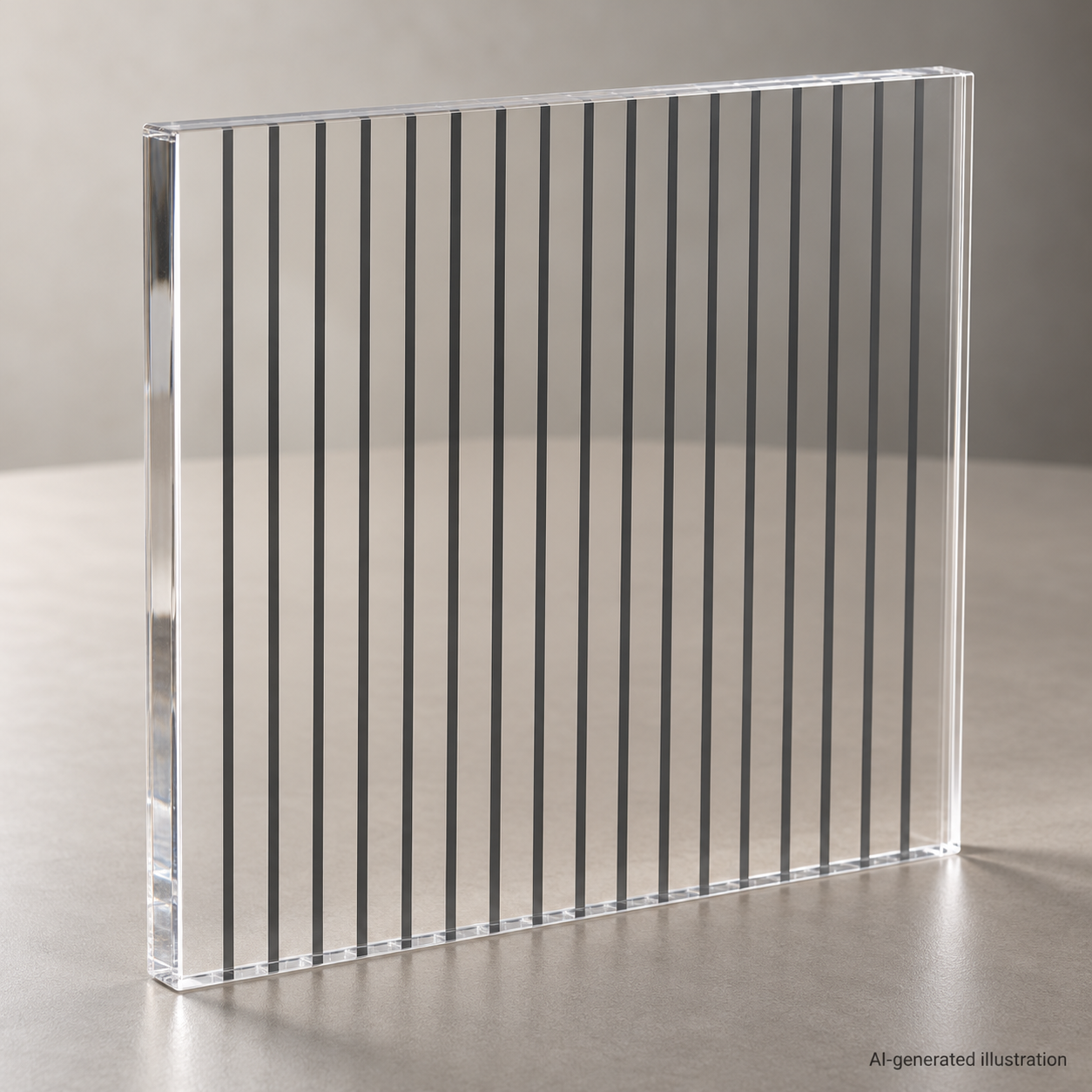
The pattern parameters that matter
- Stripe width and spacing relative to the bird’s flight approach.
- High-contrast edge marking so the panel boundary is visible.
- Pattern applied to both faces where birds approach from both sides.
- Retention of the acoustic surface and UV-stable stripe material.
For how a transparent screen protects both residents and wildlife, see the bird-safe transparent noise barrier overview, and for the underlying acoustic panel spec, the transparent noise barrier panels guide.
Frequently Asked Questions
Q: Does the deterrent pattern reduce the noise barrier’s acoustic effect?
A:No, if the stripes are applied on the surface or embedded without holes. The panel still reflects and blocks sound; only the visual pattern changes, which is what the bird reacts to.
Q: What stripe spacing works for bird-deterrent acrylic noise barriers?
A:Spacing has to suit the species and approach. High-contrast stripes plus edge marking cover most road and rail corridors, and the pattern can be tuned to the site’s bird survey.
For a transparent acrylic barrier quoted to your route, loading and test standard, email oversales@rpplexiglass.com with the corridor length, panel height, thickness and the standard you need to meet.