
A contractor that bought custom drilled acrylic noise barrier panels with holes spaced for steel posts found the pattern off by four millimetres on every second sheet, and the crew spent two days drilling on site. Field drilling of cast acrylic is where the sheet most often cracks, so the hole pattern has to be decided before the panel is cut, not after it arrives.
The hole pattern is the spec
The fixing geometry does more than hold the panel; it decides whether the acrylic can expand without stress cracks. Hole centres, edge distance, countersink depth and hole diameter all have to be engineered together with the frame. Oversize the holes, use slotted patterns where temperature movement is high, and deburr every hole so no sharp edge starts a crack.
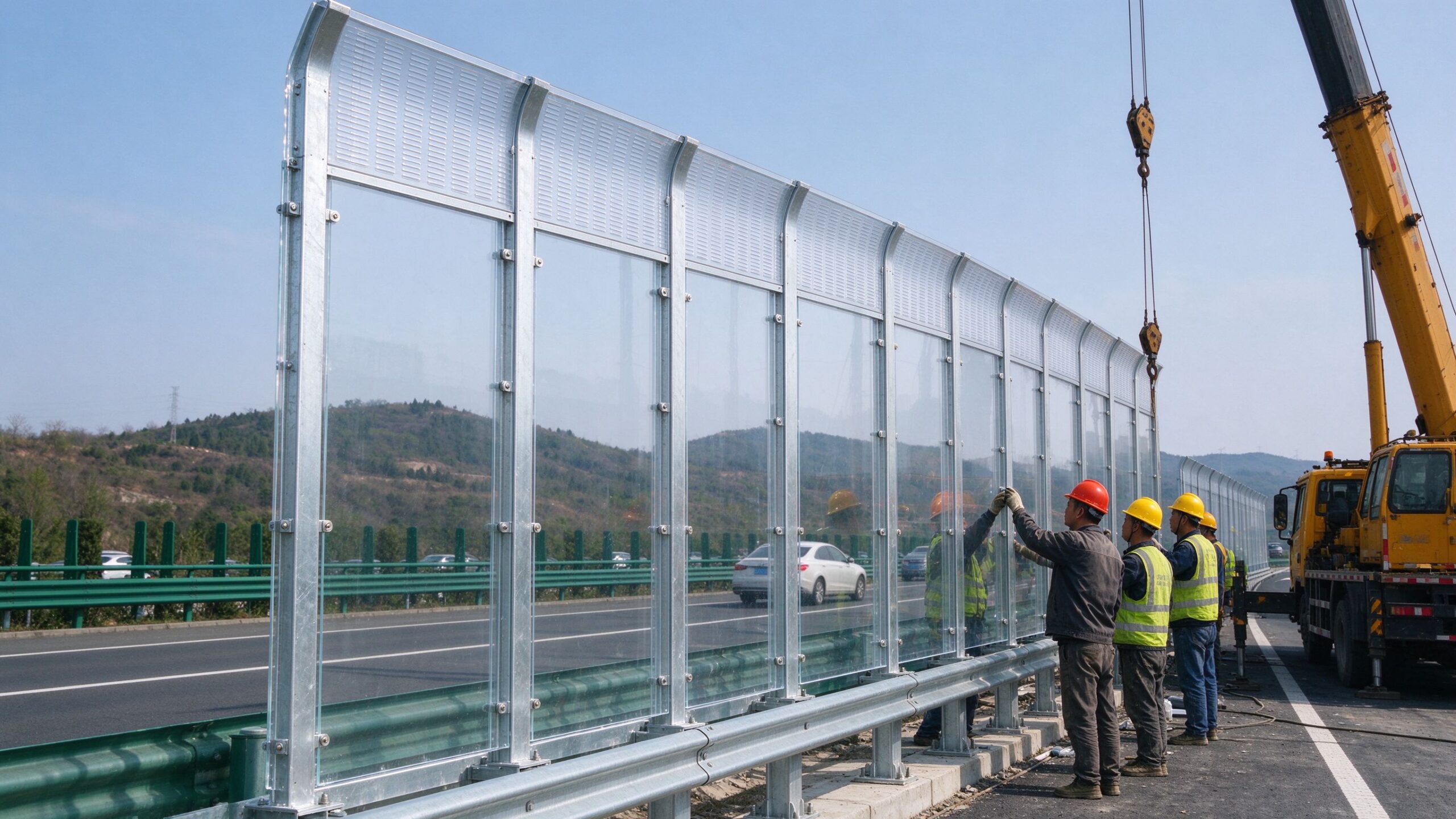
What to lock before the sheet is cut
- Post spacing and the exact hole centres from the steel drawings.
- Edge distance so the holes do not sit too close to the sheet edge.
- Countersink depth matched to the fixing head and washer.
- Slotted holes where the panel is long and temperature swing is large.
How the fixing interacts with acoustic performance is covered in the embedded-thread barrier guide, and what a specifier must verify before buying is in the test-report checklist.
Frequently Asked Questions
Q: Why are custom drilled acrylic noise barrier panels better than drilling on site?
A:Field drilling cracks cast acrylic far more often than factory drilling. Pre-drilled panels are deburred, countersunk and tolerance-checked, so the sheet stays sound and the screen goes up faster.
Q: Do the fixing holes affect the acoustic performance?
A:If holes are oversized or the fixing is not sealed, noise leaks around the fixing line. Correct hole diameter, slotted patterns and sealed washers keep the barrier acoustically tight.
For a transparent acrylic barrier quoted to your route, loading and test standard, email oversales@rpplexiglass.com with the corridor length, panel height, thickness and the standard you need to meet.