
There is no moment in aquarium design quite like speccing a cylindrical acrylic aquarium tank. The cylinder gives every visitor a 360-degree view and the fewest seams of any tank shape, but it concentrates hydrostatic pressure around the radius, so the wall thickness and the cylinder-forming process are the entire story.
Why the cylinder changes the thickness maths
In a flat panel, the load is carried by bending; in a cylinder, the circumferential wall carries it in hoop tension, which is why a cylindrical tank can be thinner than a flat window of similar depth while still handling the water column. The panel is thermoformed or cast to the radius, and the top and bottom joints have to be sealed to the structure. Getting the radius tolerance and the joint right decides whether a tank that looks perfect on paper holds water for decades.
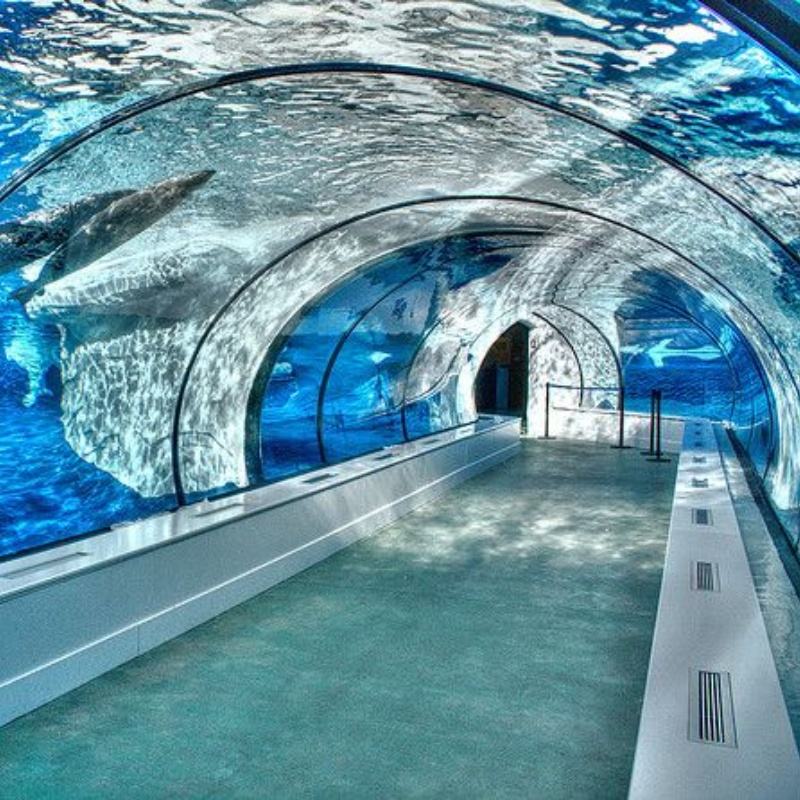
Building a sound cylinder
- Confirm the hoop-tension thickness for the tank depth.
- Hold the radius tolerance across the full circumference.
- Seal the top and bottom joints to the structure.
- Check the thermoform or cast process for the chosen gauge.
For how cylinder sections are formed and joined, see curved acrylic tunnel and radius joining, and for the load design, acrylic aquarium water pressure and load design.
Frequently Asked Questions
Q: Is a cylindrical aquarium thinner than a flat one?
A:For similar depth, yes — a cylinder carries load in hoop tension rather than bending, so it can be thinner than a flat window while still handling the water column.
Q: What makes a cylindrical tank leak?
A:Usually the top or bottom joint to the structure, or a radius tolerance that does not match the seal — not the panel wall itself.
For a cast acrylic sheet or thick panel quote with grade, thickness and size confirmation, email oversales@rpplexiglass.com with your sheet size, thickness and application.