
Building a home for a whale shark means the aquarium is not an exhibit, it is a mega-structure. A whale shark aquarium tank needs panels so large and so thick that standard sheet limits do not apply — the enclosure is assembled from cast acrylic sections that push the limits of both casting and bonding.
What a mega aquarium demands
An exhibit for large pelagic species runs to many metres across and is metres deep, so the viewing panels must be cast to extreme thickness (well into the hundreds of millimetres) to hold the water column, and the sections must be bonded into a seamless whole. Every panel is a one-off structural component with its own hydrostatic load case, and the supply chain has to handle panels that are too big and heavy for standard handling. That is why a whale shark tank is a project, not a purchase.
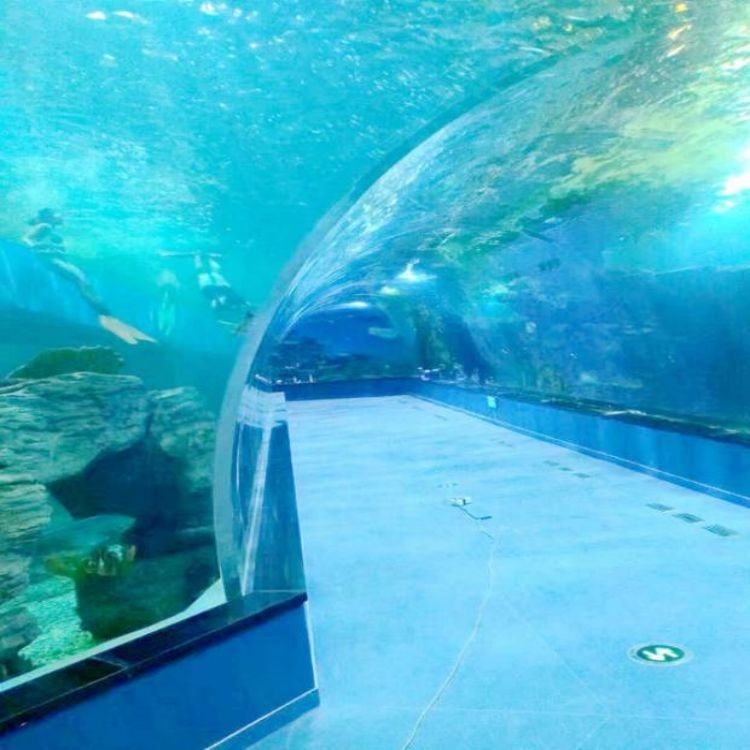
Planning the mega panel project
- Define the hydrostatic load case for the full depth and span.
- Confirm the panel thickness and section size the tank allows.
- Plan bonding and on-site joining for the oversized sections.
- Arrange transport and rigging for panels beyond standard limits.
For how thick cast aquarium panels are specified, see the large acrylic aquarium thick cast panel specs, and for the pressure side, acrylic aquarium water pressure and load design.
Frequently Asked Questions
Q: Why do whale shark tanks need such thick panels?
A:Water depth at scale drives extreme hydrostatic pressure, so the viewing panels are cast to very high thickness to hold the column, far beyond standard sheet.
Q: Can oversized aquarium panels be bonded on site?
A:Yes, large sections are joined with near-invisible chemical welds on site, but each seam must be planned and QC’d as part of the structural design.
For a cast acrylic sheet or thick panel quote with grade, thickness and size confirmation, email oversales@rpplexiglass.com with your sheet size, thickness and application.