
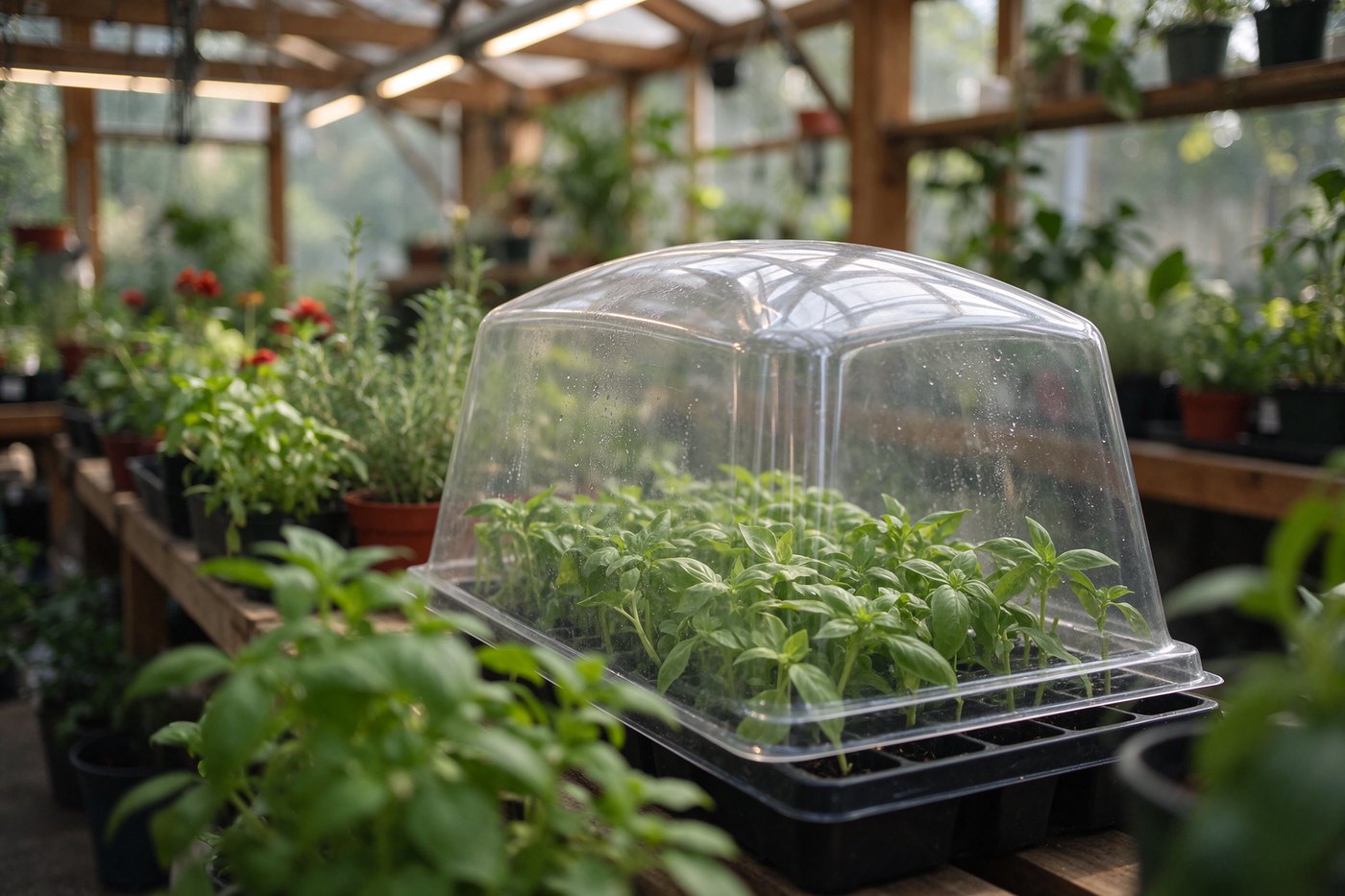
A nursery in Liguria ran a side-by-side trial of two domes over identical basil cuttings. The glass side rooted in 11 days. The side under a 1.0 mm petg propagation dome rooted in 10, with no condensation drip on the leaves and a lower loss rate. The difference was not the material alone; it was the vent area and the dome height.
Optical and thermal behaviour of a petg propagation dome
PETG transmits roughly 88 to 90 percent of visible light at 1 mm, close to glass and better than most PVC films. It also blocks a useful part of the UV range, which reduces leaf scorch under strong spring sun without slowing rooting.
- Sheet: 1.0 mm PETG, clear, food-contact grade for edible crops.
- Dome height: 100 to 120 mm above the tray rim, so leaves do not touch the condensate film.
- Vent: two adjustable 30 mm slots at opposite ends, opened after the first true leaf.
- Radius: corner radius of at least 20 mm to avoid stress whitening during forming.
Condensate is the real design problem
A sealed dome saturates the air within hours, and water condenses on the inner face. If the dome is low, droplets land on leaves and cause damping-off. If the dome is tall and vented, droplets run down the wall and return to the substrate instead of the canopy.
Vent area is a balance. A 60 mm total opening on a 600 x 400 mm dome holds relative humidity around 85 to 90 percent, which is enough for rooting without saturating the air. Opening the vents fully at first true leaf prevents stretch.
Cleaning and re-use across seasons
PETG domes clean with a dilute detergent and a soft sponge. Chlorine-based sanitisers are acceptable at working strength for short contact but degrade the surface if panels are soaked. Stacking domes wet is the fastest way to scratch them; dry them face up on a rack.
River People production
River People thermoforms 1.0 mm PETG domes with vent slots cut in the same cycle, gives formed light transmission data per batch, and can supply a stackable nesting profile for greenhouse logistics. Runs of 500 to 5,000 units run on a three-week cycle.
Send your tray footprint and vent requirement to oversales@rpplexiglass.com for a dome quote with light data.
The tray below the dome is specified separately, and the PETG seedling tray note sets out drain and stack detail.
Frequently Asked Questions
How long does a PETG dome last?
Two to three seasons under normal nursery use with careful cleaning. UV exposure and repeated chlorine sanitising shorten life.
Can the dome be used outdoors?
Short-term outdoor use is fine for spring hardening off. Long-term direct sun makes PETG brittle, so a greenhouse or tunnel is the intended environment.
Is the material safe for edible crops?
Food-contact PETG grade with a declaration of compliance is available. Confirm the grade before using domes over leafy crops sold fresh.