
A polycarbonate equestrian arena viewing panel is chosen at the 1.5 m line, where a viewing surface becomes a kick surface.
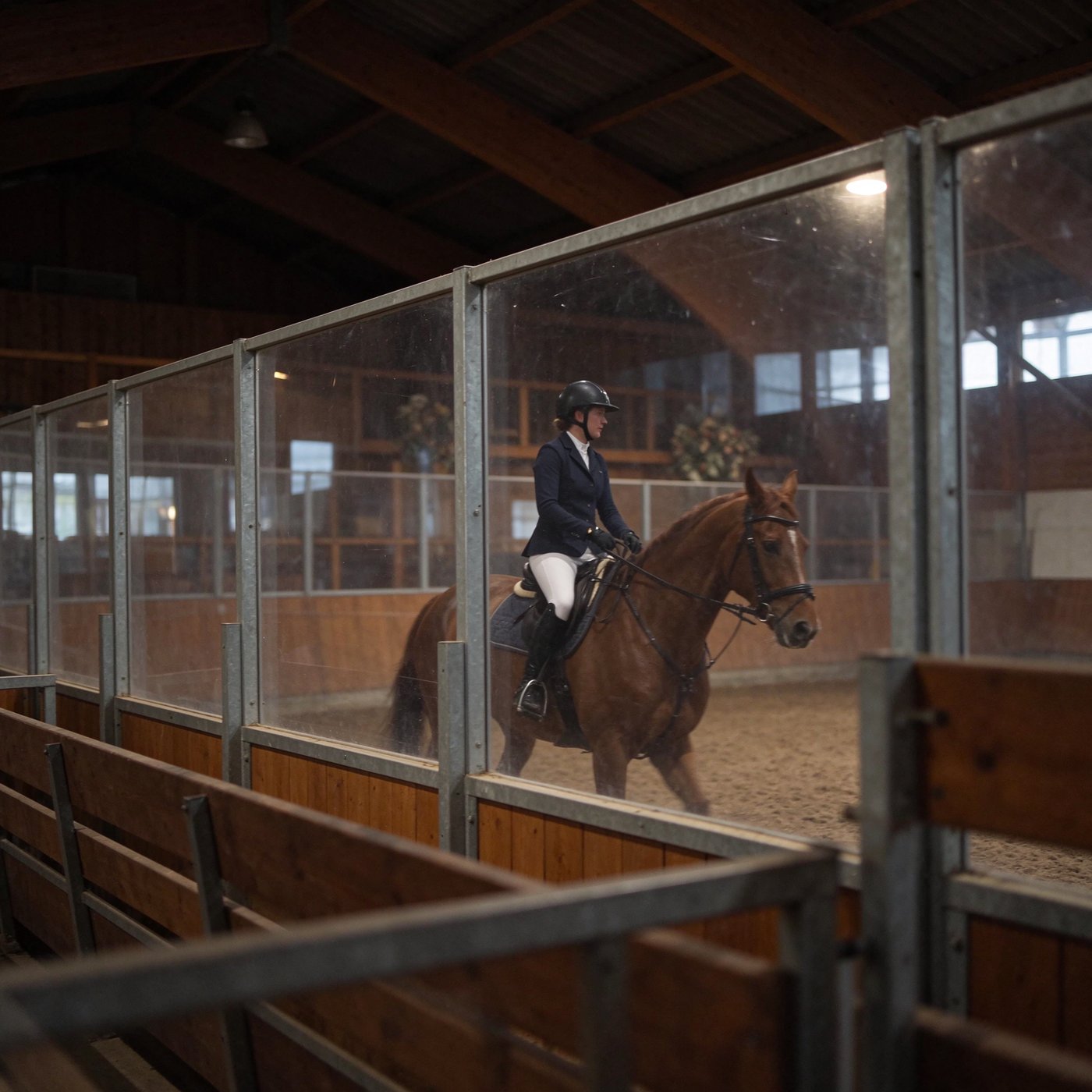
An indoor arena in Gloucestershire spent 1800 pounds replacing acrylic viewing panels after one season. The cause was a single horse that spooked at the far end, turned into the barrier and kicked. Acrylic is optically the better material for a viewing panel and the wrong one for a kick zone.
Where the viewing panel sits decides the material
A panel set back from the kick line, above 1.5 m or behind a timber kick board, can be acrylic and will look better for it. A panel at the kick line, between 0.6 and 1.5 m from the ground, needs polycarbonate. Ten millimetre polycarbonate takes a shod hoof at full extension without cracking; it deforms and recovers, and the deformation is the point.
The load figure that matters is not a data sheet number. A 500 kg horse kicking with one hind leg delivers a localised impact over roughly a 150 mm area, and the panel has to spread that into the frame without transferring it to the fixings. That means 10 mm sheet, a 1200 mm maximum span and a frame that is independent of the panel.
Polycarbonate equestrian arena viewing panel: frame and clearance
- Thickness: 10 mm for panels at the kick line; 8 mm for panels above 1.5 m or behind a kick board.
- Span: 1200 mm maximum between vertical mullions; 1000 mm where young stock are turned out.
- Clearance: 6 mm at each edge for movement, with the panel seated on EPDM blocks rather than jammed.
- Fixings: clamp bars top and bottom; no through-bolts in the lower 1.5 m of the panel.
- Kick board: 25 mm timber to 1.2 m in front of the glazing, so the hoof reaches timber first.
The Gloucestershire rebuild and the 1.2 m line
The arena replaced six panels in the kick zone with 10 mm polycarbonate and kept acrylic above 1.5 m where the sight lines matter most. A 25 mm kick board was fitted to 1.2 m, and the polycarbonate was clamped rather than drilled. Two seasons on, one panel has a scuff from a hoof and no cracks; the acrylic above is unchanged.
The yard also changed the mullion spacing from 1500 mm to 1200 mm. The wider bays had been the ones to fail, not because the sheet was thin but because a 1500 mm unsupported span lets a kick drive the panel into the next bay and load the clamp line.
One further detail is worth passing on: the panels were supplied with a 2 mm sacrificial polycarbonate wear strip on the arena side in the two busiest bays. The strip takes scuffs and is replaced annually for a fraction of the panel cost.
Specifying glazing for a working arena
Send the barrier layout with heights, the mullion spacing, whether a kick board is present and the type of stock using the arena. The thickness answer changes at the 1.5 m line and again for young stock. River People PLEXIGLASS supplies 8 mm and 10 mm polycarbonate sheet cut to bay size with clearance allowance, together with clamp bars, EPDM blocks and sacrificial strips. Send the layout and stock type and we will quote the panels and the fixing set.
Send the barrier layout with heights, mullion spacing and stock type, and we will quote the panels, clamp bars and wear strips: oversales@rpplexiglass.com.
Animal contact loads are treated from another angle in our zoo viewing panel note.
Frequently Asked Questions
Why use polycarbonate instead of acrylic for an arena viewing panel?
Acrylic is clearer but brittle under a shod hoof. Polycarbonate at 10 mm deforms and recovers instead of cracking, which is the right behaviour at the kick line between 0.6 and 1.5 m. Above 1.5 m, acrylic is the better optical choice.
How thick should an equestrian arena viewing panel be?
Ten millimetre at the kick line, 8 mm above 1.5 m or behind a kick board. Go to 10 mm throughout where young stock are turned out, because unpredictable movement produces impacts at heights a specification often misses.
Should the panel be bolted or clamped?
Clamped, with bars top and bottom and EPDM blocks at the edges. Through-bolts in the lower 1.5 m put the impact load into a hole, which is exactly where 10 mm polycarbonate will start to crack.